
Children Herpes Treatment: Safe Options, Signs, and What Works
When a child gets children herpes treatment, the medical approach to managing herpes simplex virus infections in kids, often caused by HSV-1 and presenting as cold sores or mouth blisters. Also known as pediatric herpes care, it’s not just about popping a pill—it’s about understanding how the virus behaves in young bodies and what actually helps without causing harm. Many parents panic when they see a blister near the lip or a fever with mouth sores, but herpes in kids is common, usually mild, and often goes away on its own. The real goal isn’t to erase the virus—there’s no cure—but to reduce pain, speed healing, and stop it from spreading to others or to other parts of the body.
Herpes in children often shows up as cold sores in children, fluid-filled blisters around the mouth, lips, or nose caused by HSV-1, sometimes triggered by fever, stress, or sun exposure. The first outbreak can be worse: fever, sore throat, swollen gums, trouble eating. After that, it usually stays quiet until stress, illness, or sunlight wakes it up again. You won’t always see the blisters—some kids just get a sore throat or act fussy. That’s why it’s easy to miss. But if your child has a cluster of tiny sores, especially after a cold or sunburn, it’s likely herpes. antiviral for kids, medications like acyclovir or valacyclovir prescribed for children to shorten outbreaks and reduce viral spread are the only proven way to speed things up. Over-the-counter creams? They help with discomfort but won’t touch the virus inside.
Doctors don’t always prescribe antivirals for every cold sore. If your child is otherwise healthy and the outbreak is mild, they might just recommend rest, cool drinks, and pain relief like acetaminophen. But if the sores are spreading, the child is under one year old, or they’re having trouble drinking, treatment becomes urgent. Herpes can spread to the eyes or brain in rare cases—especially in newborns—which is why timing matters. You don’t need to rush to the ER for every blister, but you do need to know when to call the pediatrician.
What you won’t find in most guides: how to stop the virus from spreading in daycare or at home. Herpes is contagious even when there are no visible sores. Kids touch their face, then grab toys, then other kids touch those toys. Washing hands, not sharing cups or towels, and avoiding kissing on the lips when a sore is present are simple but powerful steps. And yes—parents can pass it to kids, even if they don’t have a visible cold sore. The virus can shed silently.
There’s a lot of noise out there about natural cures, essential oils, or immune-boosting supplements. None of them have strong proof for kids. What does work? Proper antiviral use when needed, keeping the area clean, and avoiding triggers. The posts below give you real comparisons: which antivirals are safe for toddlers, how acyclovir stacks up against newer options, what to do when your child refuses to take medicine, and how to tell if it’s herpes or something else—like hand-foot-and-mouth disease or canker sores. You’ll find no fluff, no marketing. Just clear, practical info from real cases and medical guidelines.
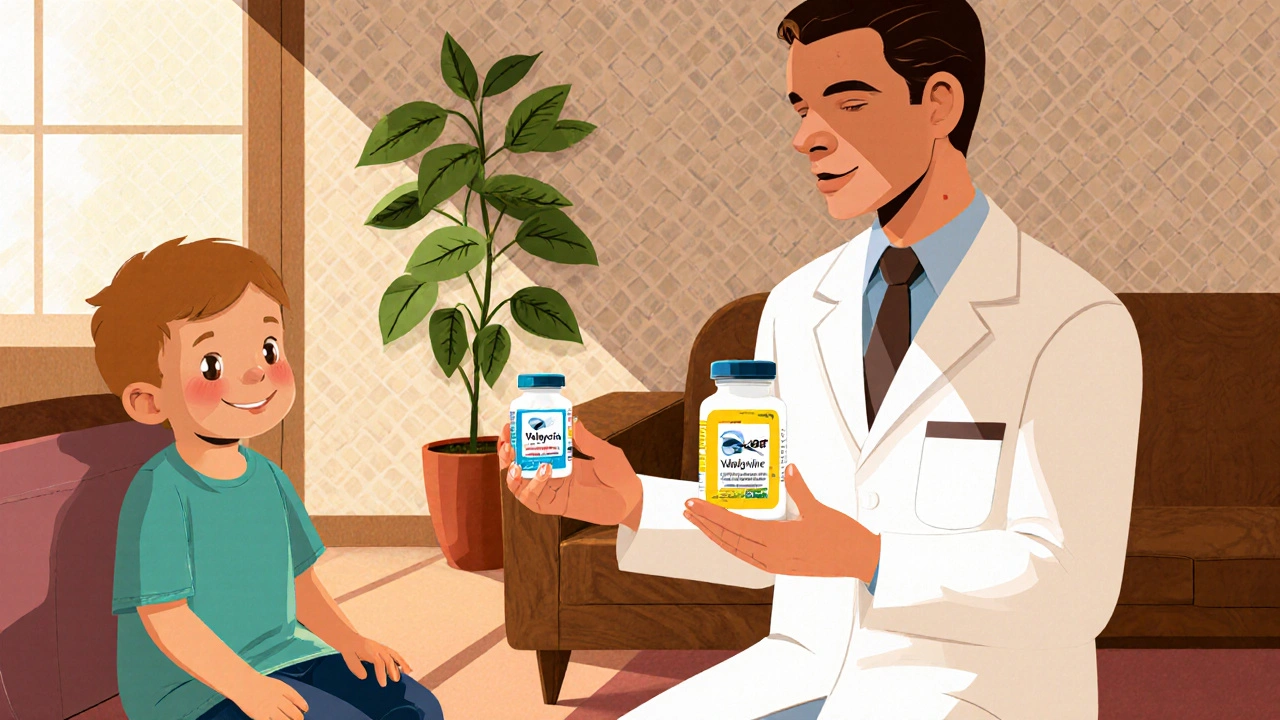
Valacyclovir for Children: Safe Dosing and What Parents Need to Know
Valacyclovir can safely treat herpes infections in children when dosed correctly by weight. Learn the right doses for chickenpox and cold sores, signs of side effects, and what to avoid.