
Liver Enzyme Levels: What They Mean and Why They Matter
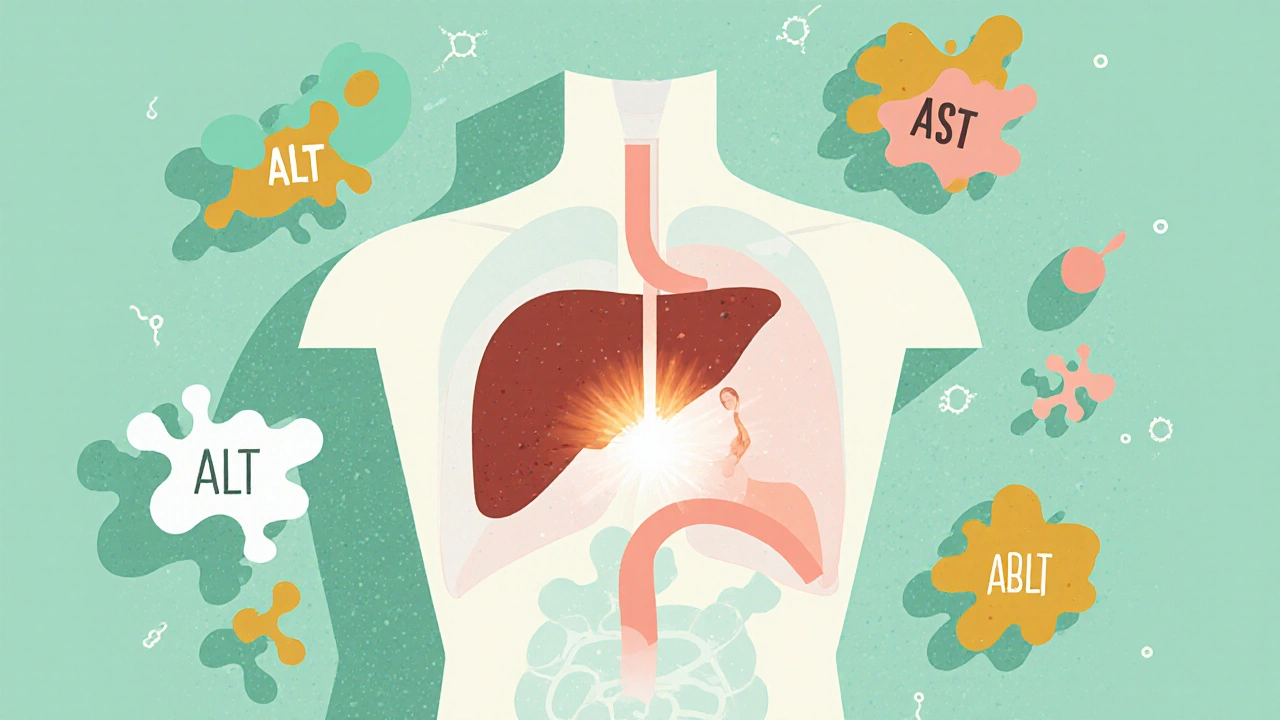
When your doctor talks about liver enzyme levels, chemicals produced by the liver that show up in blood tests to measure how well the organ is working. Also known as liver function tests, these numbers aren’t just random figures—they’re early warning signs your body might be under stress. Most people don’t think about their liver until something goes wrong, but enzymes like ALT and AST are always working behind the scenes. If they spike, it’s not always a crisis—but it’s never something to ignore.
Two of the most common liver enzymes are ALT (alanine aminotransferase), a protein mostly found in liver cells that leaks into the blood when those cells get damaged and AST (aspartate aminotransferase), a similar enzyme that’s also in the heart, muscles, and kidneys, so high levels could mean trouble elsewhere too. Normal ranges vary by lab, but if your ALT is way above 40 U/L or AST is over 35 U/L, something’s off. It could be from drinking too much, taking certain meds, fatty liver, or even a virus like hepatitis. But here’s the thing: sometimes enzyme levels rise without you feeling a thing. That’s why blood tests matter.
What you do next depends on how high the numbers are and what else is going on. A small bump might just mean you had a rough week with alcohol or took ibuprofen for days straight. A big jump? That’s when you need to dig deeper. Doctors look at the ratio of ALT to AST, check for other markers like bilirubin and ALP, and ask about your meds, diet, and lifestyle. You might not need a biopsy right away—but you will need to change something. Cut back on sugar, stop drinking, lose weight, or get tested for hepatitis. These aren’t just suggestions—they’re the first steps to protecting your liver before it’s too late.
You’ll find posts here that break down how specific drugs like acetaminophen, fentanyl patches, or even herbal supplements can affect these numbers. Others show how conditions like autoimmune disease or sleep disorders tie into liver stress. Some even explain how to safely buy medications online without risking your liver further. This isn’t about scare tactics—it’s about giving you the facts so you can act before your liver starts sending louder signals.
Liver Function Tests Explained: ALT, AST, Bilirubin, and What They Really Mean
Understand what ALT, AST, and bilirubin levels mean in liver function tests. Learn how patterns, not single numbers, reveal liver damage, fatty liver, alcohol injury, or bile blockage.