
Pharmacy Reimbursement: How You Get Paid Back for Medications
When you pick up a prescription, pharmacy reimbursement, the process where insurance or government programs pay part or all of your drug costs. Also known as drug payment coverage, it’s what keeps many people from skipping doses because they can’t afford their meds. It’s not just about your copay—it’s about who pays what, when, and why. If you’ve ever been shocked by a pharmacy bill, or wondered why your insurance covered one drug but not another, you’re seeing pharmacy reimbursement in action.
Pharmacy reimbursement doesn’t happen in a vacuum. It’s shaped by insurance coverage, the rules set by your health plan about which drugs are covered and at what cost, and drug pricing, how manufacturers set prices and how pharmacies negotiate discounts. These two factors directly control whether you pay $5, $50, or $500 for the same pill. For example, a generic version of a drug might be fully covered under your plan, while the brand-name version gets you stuck with a high coinsurance rate—even if they work the same way. And it’s not just private insurance: Medicare Part D, the federal program that helps seniors pay for prescriptions, has its own formularies, deductibles, and coverage gaps that change how reimbursement works year to year.
Pharmacy reimbursement also depends on where you fill your scripts. A drug might be cheaper at a big-chain pharmacy because they’ve struck a deal with your insurer, but more expensive at a local pharmacy that doesn’t participate in the same network. Some plans even require you to use mail-order for maintenance meds—like blood pressure or diabetes drugs—or you’ll pay more. And don’t assume your doctor’s recommendation automatically means coverage. Many drugs need prior authorization, step therapy, or quantity limits before your insurer will pay. That’s why knowing your plan’s formulary matters as much as knowing your diagnosis.
What you’ll find in the posts below isn’t just a list of articles—it’s a practical guide to navigating the real-world mess of pharmacy reimbursement. You’ll see how generic drugs save billions, how heat and humidity can ruin your meds before your insurance even kicks in, and why some pills look different but cost a fraction of the brand name. You’ll learn how to spot hidden costs, challenge denials, and use tools like patient assistance programs to cut your bills. This isn’t theory. It’s what people actually deal with when they walk up to the counter with a prescription in hand. If you’ve ever felt like the system is stacked against you, you’re not wrong. But you’re not powerless either.
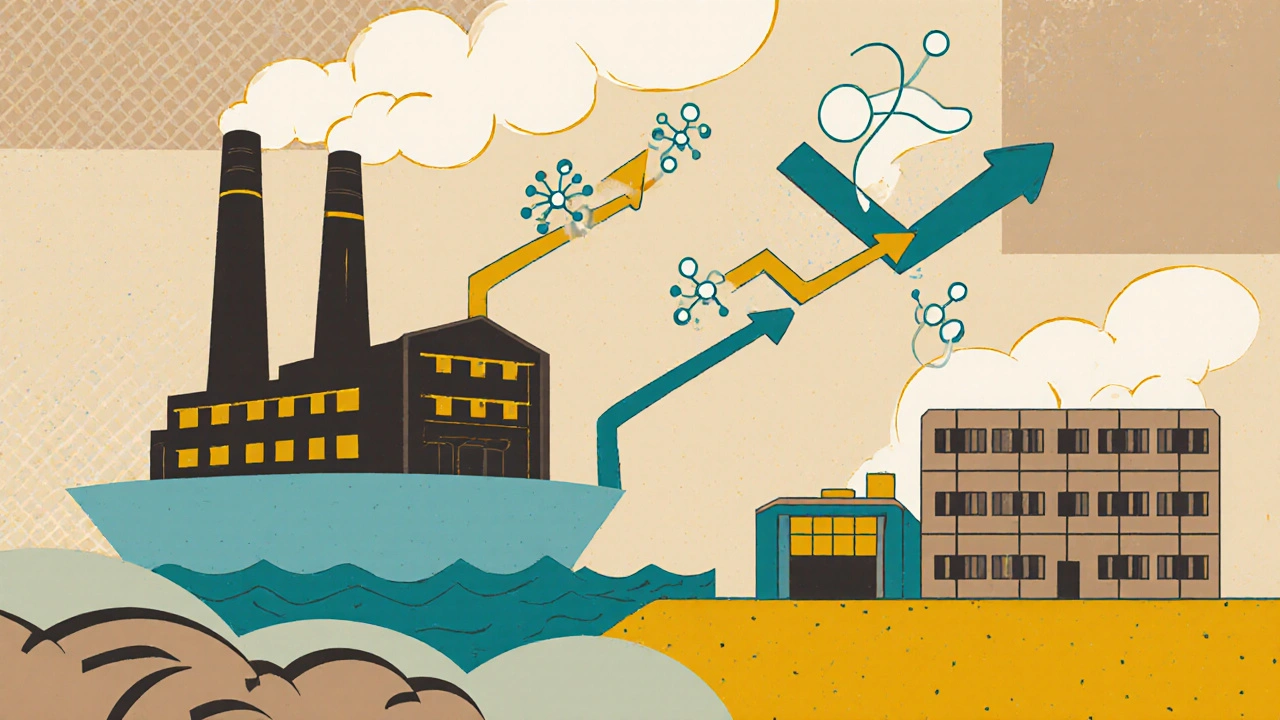
Generic Drug Supply Chain: How Medicines Reach Pharmacies
Discover how generic drugs travel from factories in China and India to your local pharmacy, and why the system that keeps prices low is also pushing manufacturers and pharmacies to the brink.