
Sleep Apnea Test: What It Is, How It Works, and What to Expect
When you or someone you know keeps waking up gasping for air, feels exhausted even after a full night’s rest, or hears loud snoring that sounds like choking, it might not just be bad sleep—it could be sleep apnea, a condition where breathing repeatedly stops and starts during sleep. Also known as obstructive sleep apnea, it’s one of the most common but underdiagnosed sleep disorders. Left untreated, it doesn’t just make you tired—it raises your risk for high blood pressure, heart attacks, stroke, and even type 2 diabetes.
A sleep apnea test, a medical evaluation that monitors your breathing, oxygen levels, and brain activity during sleep is the only way to know for sure if you have it. These tests, often called sleep studies, overnight monitoring sessions that track how your body functions while you sleep, can be done at home or in a lab. At-home tests are simpler—they usually involve a finger clip, a nasal sensor, and a belt around your chest. In-lab tests are more detailed, with wires attached to your scalp, face, and legs to catch every little change in your sleep cycle.
What do these tests look for? They check for pauses in breathing that last 10 seconds or longer, drops in blood oxygen, and how often your brain wakes you up just to restart breathing. These aren’t full awakenings—you won’t remember them—but they keep you from reaching deep, restorative sleep. If the results show moderate to severe sleep apnea, doctors often recommend CPAP therapy, a device that delivers steady air pressure through a mask to keep your airway open. It’s not glamorous, but it works—and for many, it’s life-changing.
People often delay getting tested because they think snoring is normal, or they’re embarrassed to talk about it. But if you’re tired all day, have trouble focusing, or your partner says you stop breathing at night, don’t ignore it. The test itself is non-invasive, painless, and often covered by insurance. The real cost is what happens when you don’t get tested—daytime crashes, mood swings, and long-term health damage.
Below, you’ll find real-world guides on how sleep apnea connects to other health issues, what alternatives exist if CPAP doesn’t work for you, and how conditions like obesity, heart disease, and even head injuries can make sleep apnea worse. These aren’t just articles—they’re practical steps from people who’ve been there.
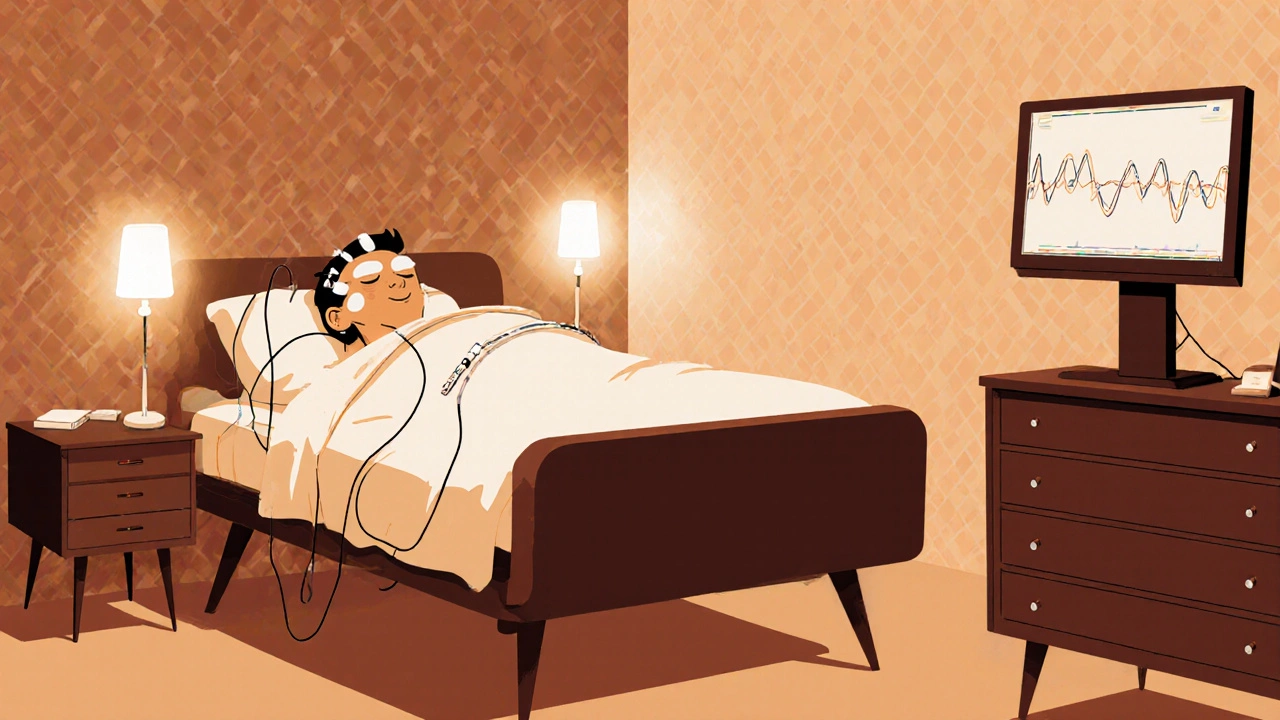
Polysomnography: What to Expect During a Sleep Study and How Results Are Interpreted
Polysomnography is the gold standard sleep study used to diagnose sleep apnea, narcolepsy, and other sleep disorders. Learn what happens during the test, how results are interpreted, and why it's more accurate than home tests.