
Why Generic Prescribing Can’t Be Left to Doctors Alone
Imagine you’re a doctor. You’ve got 15 minutes with a patient who’s on seven medications, has diabetes, high blood pressure, and high cholesterol. You’re tired. You know a cheaper generic version exists for one of those drugs-but you’re not sure if the patient took it before, if it worked, or if their kidney function changed last month. You scribble a prescription and move on. That’s the old way. And it’s broken.
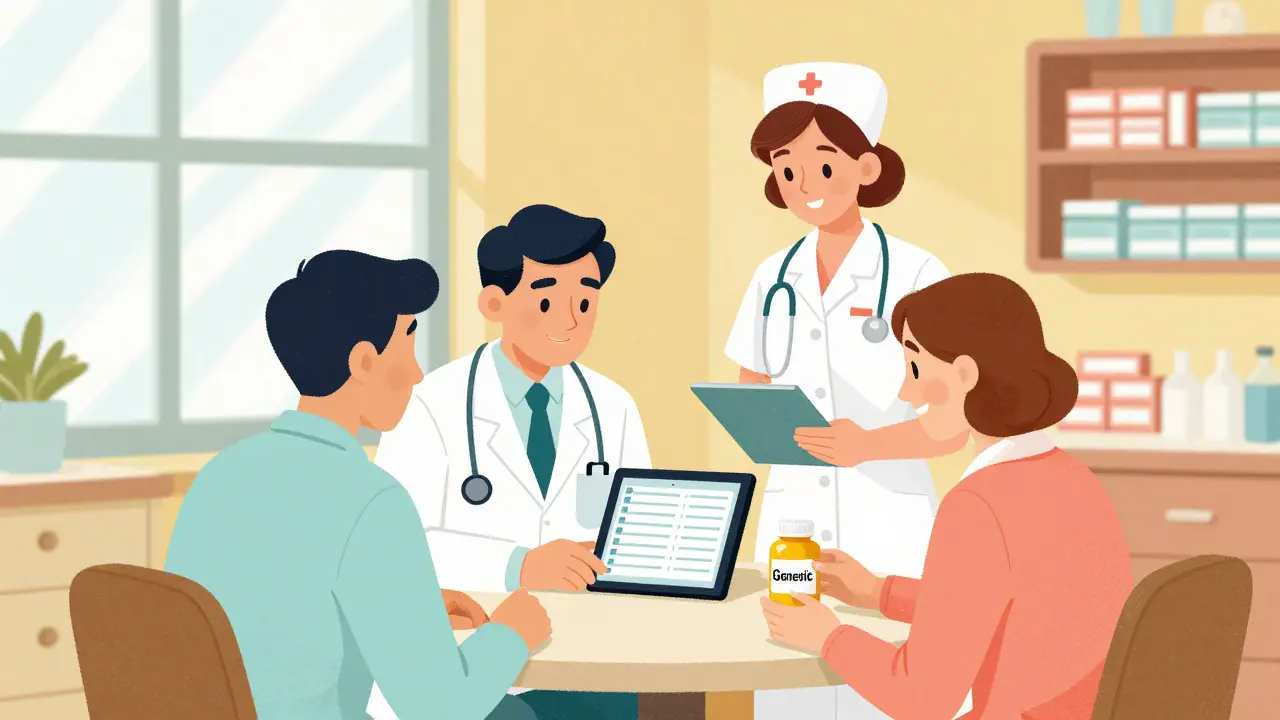
Now imagine a team: a pharmacist who reviewed every pill last night, a nurse who called the patient yesterday to check for side effects, a care coordinator who flagged a $200 monthly savings opportunity, and the patient themselves, who finally understands why switching to the generic isn’t just about cost-it’s about safety. This isn’t science fiction. It’s happening in clinics across the U.S., and it’s changing how medications are prescribed-especially generics.
What Team-Based Care Really Means for Medications
Team-based care isn’t just adding more people to a visit. It’s a structured system where each member has a clear, defined role in managing medications. The physician still leads, but they’re no longer the only one making decisions about drugs. Pharmacists handle the details: checking for interactions, confirming therapeutic equivalence of generics, and catching errors doctors miss. Nurses monitor symptoms and adherence. Care coordinators make sure the patient doesn’t fall through the cracks between appointments.
This model didn’t appear overnight. It grew out of the Institute of Medicine’s 2001 report Crossing the Quality Chasm, which called out fragmented care as a major cause of medical errors. By 2003, Medicare Part D forced the issue by requiring Medication Therapy Management (MTM) for high-risk patients. That’s when pharmacists were officially brought into the fold-not as order-takers, but as clinical partners.
Today, MTM includes nine specific services, from reviewing all medications to educating patients on how to take them. And it’s not just for seniors. Patients with three or more chronic conditions, five or more prescriptions, and annual drug costs over $4,000 are eligible. That’s millions of people.
How Pharmacists Turn Generic Substitutions Into Better Outcomes
Generic drugs aren’t just cheaper-they’re just as effective. But getting patients to switch isn’t easy. Many think generics are ‘inferior.’ Some have had bad experiences with a different brand. Others simply don’t understand why the change was made.
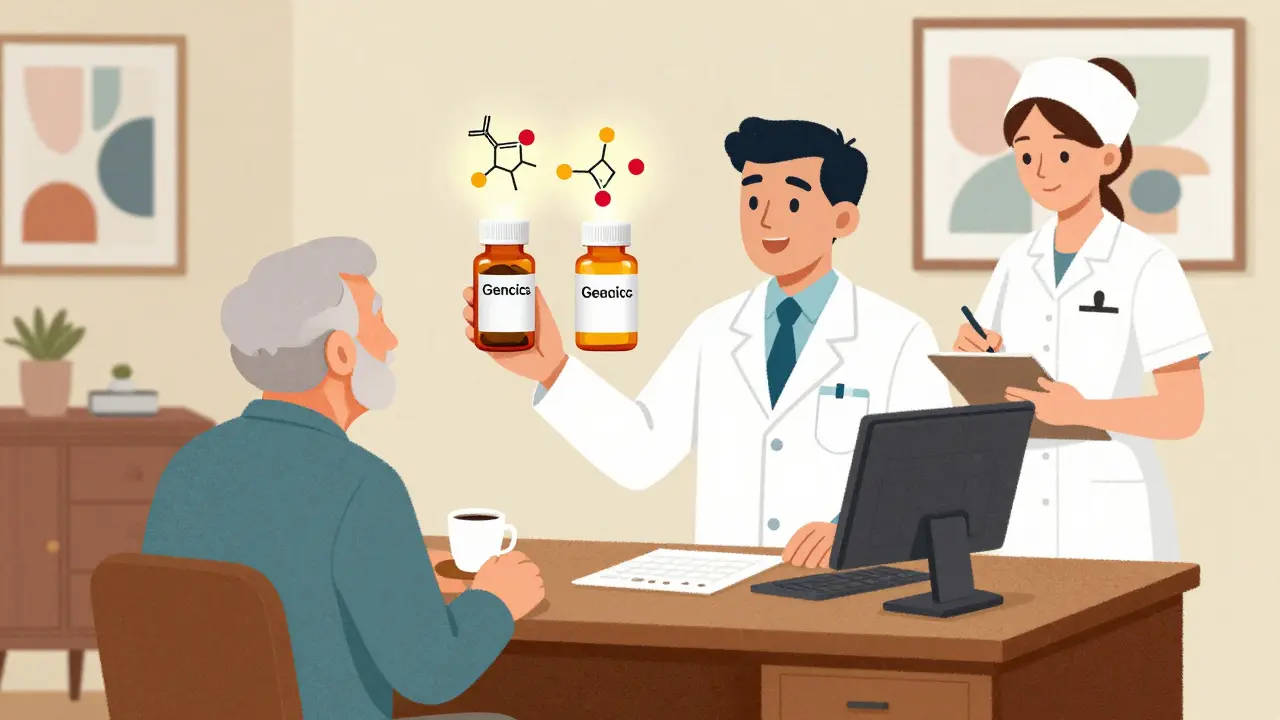
That’s where pharmacists come in. In a 2022 case study from SICHC, nurses did ‘warm handoffs’-introducing patients directly to the pharmacist during the visit. Result? 42% more patients accepted generic switches, and none reported worse symptoms. Why? Because the pharmacist explained it in plain language: ‘This pill has the same active ingredient, same dose, same effect. The only difference is the color and the price.’
And it works. Research from the National Center for Biotechnology Information shows pharmacist-led teams reduce medication errors by 67% and improve adherence by 28%. That’s not luck. It’s expertise. Pharmacists know the subtle differences between brands, how generics are manufactured, and which ones have proven bioequivalence data. They also know which patients are most likely to benefit-and which ones need extra monitoring.
The Hidden Costs of Not Using a Team
When one doctor tries to manage everything alone, the hidden costs pile up. Duplicative tests. Missed interactions. Hospital readmissions. A 2022 analysis by ThoroughCare found team-based care reduces hospital readmissions by 17.3% and cuts unnecessary testing by 22.8%. Why? Because someone is always checking the full picture.
One patient in Seattle, diagnosed with heart failure, was on five drugs. Her primary care doctor switched her to a cheaper generic beta-blocker, but didn’t check her kidney function. The pharmacist, reviewing her file during a team huddle, noticed her creatinine had spiked. They held off on the switch, adjusted the dose, and avoided a potential kidney injury. That’s one patient. Multiply that by hundreds, and you’re talking real savings.
On average, team-based medication management saves $1,200 to $1,800 per patient per year. That’s not just drug costs-it’s avoided ER visits, fewer lab tests, less time lost from work. And it’s all tied to better generic prescribing decisions.
What the Team Actually Does-Day to Day
It’s not magic. It’s routine.
- Pharmacists run weekly medication reviews, flagging duplicates, outdated prescriptions, and high-risk combinations. They recommend generic alternatives based on clinical evidence, not just cost.
- Nurses call patients after a new prescription to ask: ‘Are you taking it? Any side effects? Can you afford it?’
- Care coordinators make sure specialists and primary care providers are on the same page. No more conflicting drug lists.
- Physicians focus on complex decisions: when to escalate care, when to change a diagnosis, when a generic isn’t enough.
Every morning, teams have a 15-minute huddle. No emails. No voicemails. Just quick updates: ‘Maria’s new generic caused dizziness-let’s switch back.’ ‘John’s cholesterol med was discontinued-renewed with generic.’
This isn’t optional anymore. The CDC’s 2022 guidelines on collaborative practice agreements (CPAs) spell out exactly how these roles should work together. And Medicare Advantage plans are now required to have these systems in place.
Where It Falls Short-and How to Fix It
Team-based care isn’t perfect. A 2022 Commonwealth Fund review found 12% of patients experienced confusion when team members didn’t communicate. One patient got a new blood pressure med from her cardiologist, but her primary care doctor didn’t know. The pharmacist caught it-but only because she checked the record.
Another issue: technology. Many small practices still use paper charts or outdated EHRs. Without shared digital records, teams can’t see each other’s notes. That’s why successful clinics invest in integrated systems that reduce medication reconciliation time by 35%.
And then there’s resistance. Some doctors feel like they’re losing control. But the data says otherwise. On Reddit’s r/medicine, physicians reported a 30% drop in time spent on medication management after adding pharmacists to their teams. That’s not a loss of authority-it’s a gain of efficiency.
The fix? Training. Protocols. Trust. A 2017 National Academy of Medicine report says mutual trust is the foundation. Teams that respect each other’s expertise-pharmacists as drug experts, nurses as patient advocates, doctors as clinical leaders-get the best results.
What’s Next for Generic Prescribing?
Change is accelerating. In 2023, Medicare expanded MTM eligibility to patients taking four or more medications-adding 4.2 million more people to team-based programs. That’s huge.
And now, AI is stepping in. Mayo Clinic pilots use algorithms to suggest generic alternatives based on patient history, lab results, and drug interactions. These tools don’t replace pharmacists-they empower them. One pilot showed a 22% increase in appropriate generic use and a 9.3% drop in adverse events.
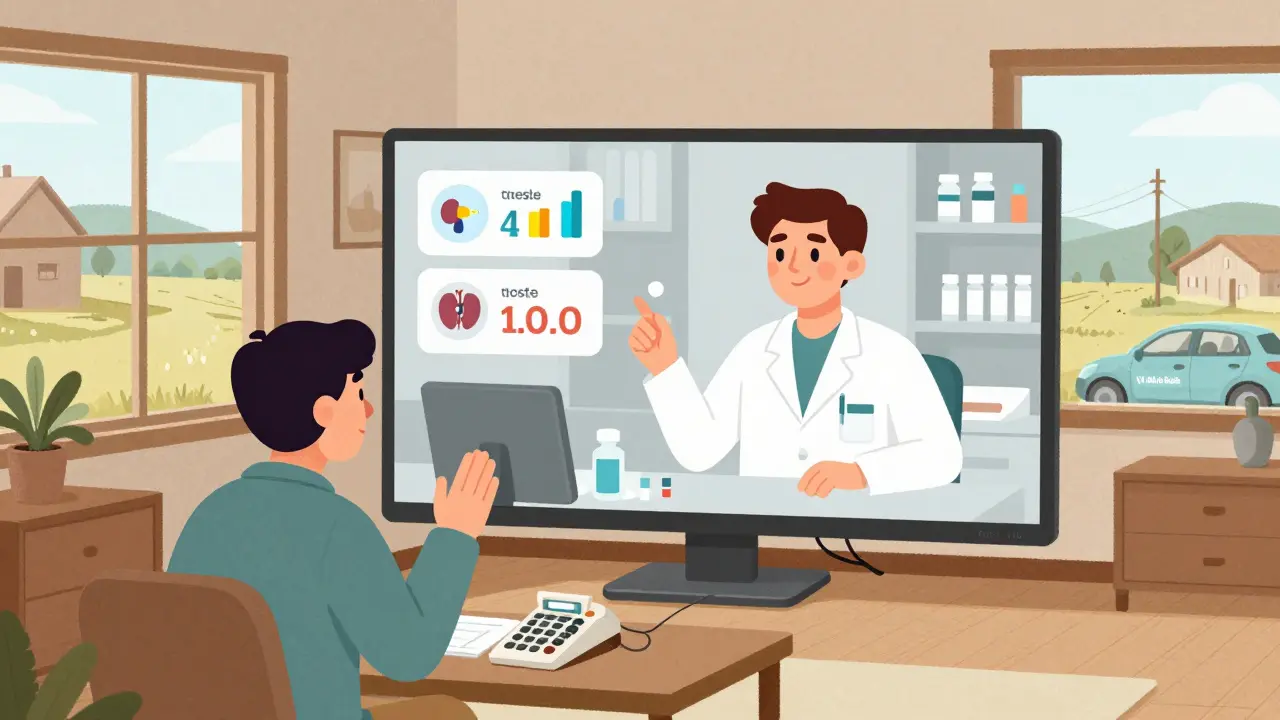
Meanwhile, telepharmacy is bringing this model to rural areas. A patient in eastern Washington can now have a virtual medication review with a pharmacist in Spokane, who coordinates with their local clinic. No travel. No wait. Just better care.
The market is growing fast. Team-based care was worth $28.7 billion in 2022. By 2027, it’ll hit $53.2 billion. And 92% of healthcare leaders plan to expand it.
Is This Right for Your Practice?
If you’re a provider wondering whether to join this shift, ask yourself: Are you spending too much time on routine med checks? Are patients still getting readmitted because of drug issues? Are generics sitting on shelves because no one explained them?
Starting a team doesn’t mean hiring five new people. It means rethinking roles. Start small: train your pharmacist to do weekly med reviews. Have your nurse call patients after new scripts. Use a shared EHR. Hold a 10-minute huddle twice a week.
The upfront cost? Around $85,000-$120,000 per practice, according to VA research. But the return? Lower costs, fewer errors, happier patients. And in the long run, it’s not an expense-it’s an investment in better care.
Real Stories, Real Results
One patient on Healthgrades wrote: ‘The pharmacist caught three medication interactions my doctor missed and switched me to generics that saved me $200 monthly.’ That’s the kind of feedback you don’t get from a solo doctor rushing through 20 patients a day.
Another, a veteran with diabetes and hypertension, said: ‘I didn’t know I could get help with my meds until the VA team sat down with me. They didn’t just give me pills. They gave me control.’
These aren’t outliers. They’re the new normal.
What is team-based care in medication management?
Team-based care in medication management is a collaborative model where physicians, pharmacists, nurses, and care coordinators work together to optimize drug therapy. Each member has a defined role: pharmacists review medications and recommend generics, nurses monitor adherence and side effects, and physicians focus on complex clinical decisions. This approach improves safety, reduces errors, and lowers costs through coordinated, patient-centered care.
Can pharmacists really prescribe generic drugs?
In many states, pharmacists can initiate or modify prescriptions under Collaborative Practice Agreements (CPAs) with physicians. These agreements, formalized by the CDC and supported by the 21st Century Cures Act, allow pharmacists to switch brand-name drugs to generics, adjust doses, or manage refills for chronic conditions-without needing a new doctor’s note every time. This is standard in Medicare Part D MTM programs and increasingly common in clinics nationwide.
Why aren’t more doctors using team-based care for generics?
Many doctors still operate under the old model of solo decision-making. There’s also fear of losing control, lack of training in team workflows, and outdated electronic health records. Plus, setting up the system requires upfront time and money-around $85,000-$120,000 per practice. But once implemented, teams reduce physician workload by 30% and cut medication errors dramatically, making the investment worthwhile.
Are generic drugs as safe and effective as brand-name ones?
Yes. The FDA requires generics to have the same active ingredient, strength, dosage form, and route of administration as the brand-name drug. They must also meet the same strict standards for purity, stability, and bioequivalence. Pharmacists are trained to verify this and choose generics with proven track records. Studies show no difference in outcomes for conditions like hypertension, diabetes, and high cholesterol when using FDA-approved generics.
Who qualifies for team-based medication management?
Under Medicare Part D, patients qualify if they have three or more chronic conditions, take five or more medications, and spend over $4,000 annually on drugs. As of 2023, eligibility expanded to include those taking four or more medications, adding millions more. Private insurers and accountable care organizations often use similar criteria. The goal is to target high-risk, high-cost patients who benefit most from coordinated care.
How do I start implementing team-based care in my clinic?
Start with a 6-month plan: Month 1-2, define roles and create protocols. Month 3-4, update your EHR to support team communication. Month 5, train staff (16-24 hours per person). Month 6, run a pilot with 10-20 patients. Use CDC templates for Collaborative Practice Agreements. Begin with one pharmacist and one nurse. Track outcomes like generic substitution rates, medication errors, and patient satisfaction. Adjust as you go.
Gaurav Meena
January 30, 2026 AT 15:11Beth Beltway
January 31, 2026 AT 07:54Diksha Srivastava
January 31, 2026 AT 20:22Amy Insalaco
February 1, 2026 AT 14:07Jodi Olson
February 2, 2026 AT 23:54Sarah Blevins
February 3, 2026 AT 10:03Marc Bains
February 3, 2026 AT 21:33Russ Kelemen
February 5, 2026 AT 06:41Mike Rose
February 6, 2026 AT 02:05Carolyn Whitehead
February 6, 2026 AT 21:44Sheila Garfield
February 7, 2026 AT 05:26Diana Dougan
February 8, 2026 AT 16:04Rohit Kumar
February 10, 2026 AT 10:22Shawn Peck
February 11, 2026 AT 19:43Katie and Nathan Milburn
February 12, 2026 AT 04:54