
Nocebo Effect Symptom Checker
Estimate your risk of experiencing nocebo effects based on symptom patterns and information sources
Nocebo Risk Assessment
Your risk level
Important note: This is an informational tool only. It does not replace professional medical advice. Always consult your healthcare provider for proper diagnosis and treatment.
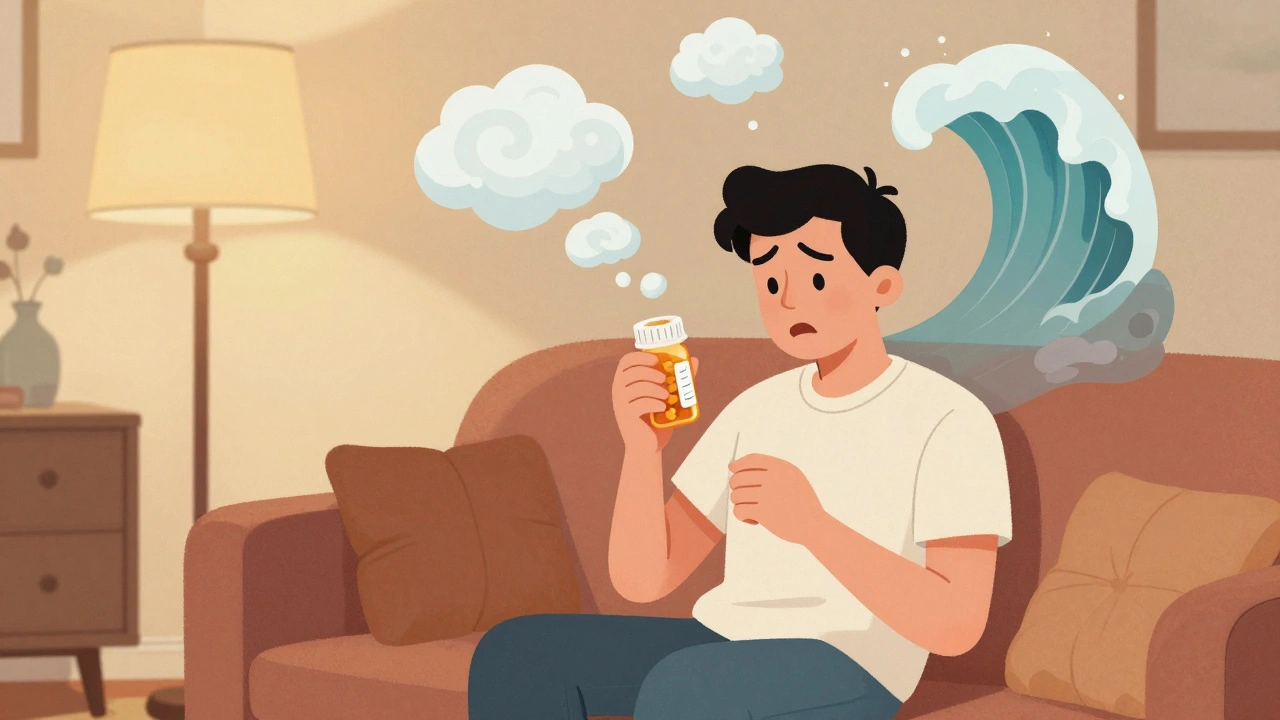
Have you ever started a new medication and suddenly felt dizzy, nauseous, or tired-even though your doctor said it was safe? Then, after a few weeks, those symptoms disappeared… but you never took the pill again? You might not have had a side effect at all. You might have had a nocebo effect.
What Exactly Is the Nocebo Effect?
The nocebo effect isn’t a glitch in your body. It’s a real, measurable response your brain creates based on what you expect to happen. The word comes from Latin: nocebo means “I shall harm.” It’s the dark twin of the placebo effect. Placebo makes you feel better because you believe the treatment will help. Nocebo makes you feel worse because you believe it will hurt you. In clinical trials, about 20% of people who take a sugar pill-a completely inactive substance-still report side effects like headaches, fatigue, or stomach upset. Nearly 10% of them quit the trial because they thought the medicine was making them sick. But here’s the catch: the pill had no active ingredients. The symptoms were real to them. Their bodies reacted to their fears, not to chemicals. This isn’t rare. Studies show that between 26% and 50% of side effects people report when starting a new drug may actually be nocebo-driven. That means if you’re told a medication can cause insomnia, you’re more likely to notice every time you lie awake at night-and blame the pill. If you’re warned it might cause nausea, you’ll start scanning your stomach for any flutter, and suddenly, you’re sick.How Your Brain Turns Worry Into Physical Symptoms
Your brain doesn’t just imagine these symptoms. It creates them. Brain scans show that when people expect pain or side effects, areas like the anterior cingulate cortex and the insula light up-regions tied to pain processing and bodily awareness. It’s not “all in your head” in the dismissive sense. It’s in your head, in a very real, biological way. Think of it like this: your brain is constantly predicting what your body should feel. If you’ve been told that a certain drug causes dizziness, your brain starts tuning into any slight wobble in your balance. A normal shift in blood pressure? That’s the medication. A tired morning? Must be the pills. Your brain amplifies normal sensations and labels them as dangerous. This is called heightened symptom awareness. In one famous study, patients were given an opioid painkiller called remifentanil. When researchers told them the drug would make their pain worse after the initial relief, the pain relief vanished-even though the drug dosage stayed the same. Negative expectations canceled out the medicine’s power. Positive expectations doubled it. Your mindset doesn’t just color your experience-it changes your biology.Why Generic Drugs Trigger More Side Effects
One of the clearest real-world examples of the nocebo effect is what happens when you switch from a brand-name drug to a generic version. In New Zealand in 2017, doctors switched thousands of patients from brand-name venlafaxine to its generic equivalent. The active ingredient was identical. The dosage was the same. The manufacturer changed, but the chemistry didn’t. Before the switch, adverse effect reports were stable. After the switch, reports spiked-especially after media stories warned people about “dangerous generics.” Patients started reporting dizziness, mood swings, and nausea. But here’s the kicker: when researchers looked at the data, they found no increase in actual physiological harm. The symptoms were tied to expectation, not chemistry. Reddit threads are full of similar stories. People write: “I switched to generic sertraline and got terrible insomnia. Went back to the brand name-and it vanished.” Or: “The generic made me feel like I was floating. My doctor said it’s probably nocebo. I don’t care-I’m staying on the brand.” Why? Because brand-name pills come with years of trust. Generic pills look different. They’re cheaper. And you’ve been told, often by well-meaning pharmacists or online forums, that “they’re not the same.” Your brain doesn’t care if they’re chemically identical. It cares what you believe.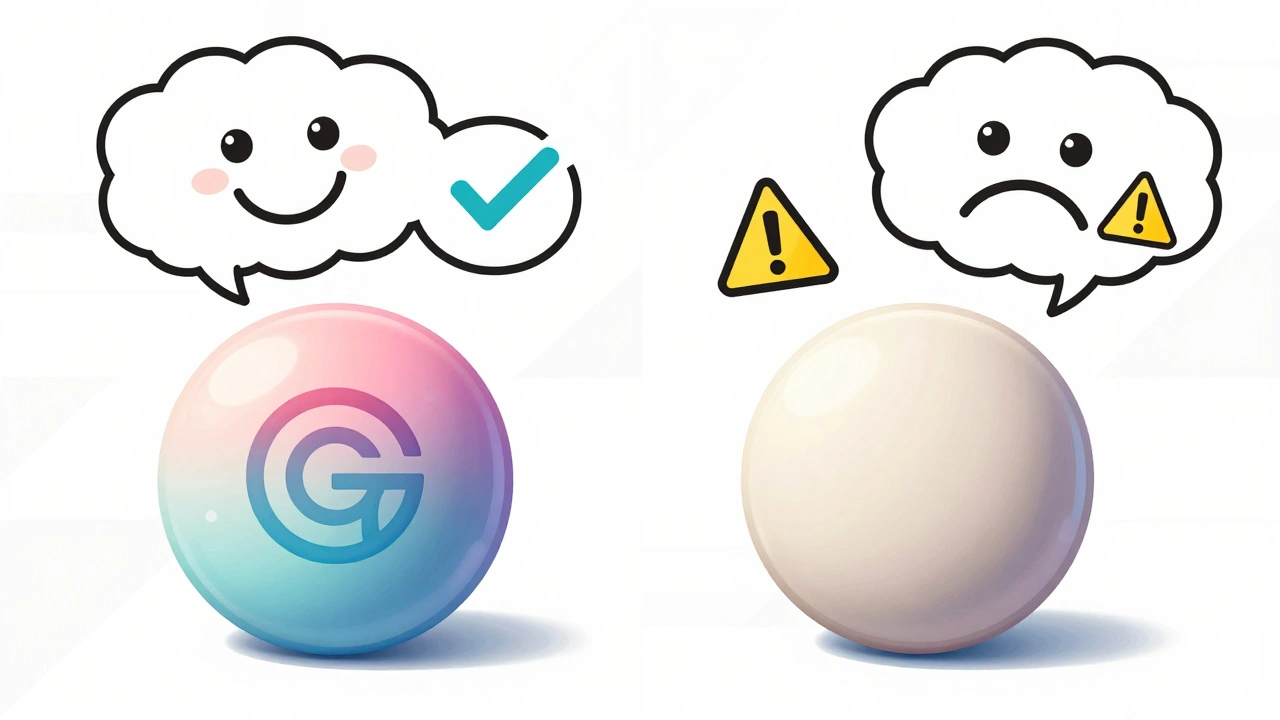
How Information Makes Things Worse
Medication leaflets are designed to protect you. They list every possible side effect-even ones that happen in 1 in 10,000 people. But that’s not helpful. It’s triggering. Studies show: the longer the list of side effects, the more people report experiencing them. If your pill’s pamphlet says “possible side effects include: depression, weight gain, hair loss, suicidal thoughts, liver damage,” your brain goes into overdrive. You start checking for every symptom. You assume the worst. You feel worse. Doctors and pharmacists aren’t to blame. They’re following legal guidelines. But the way we communicate risk matters. Saying, “About 1 in 10 people feel a little nauseous at first, but it usually fades in a week,” is very different from saying, “Nausea is common and may be severe.” One informs. The other frightens. A 2021 European study found that 68% of doctors had seen patients develop symptoms after being warned about side effects-symptoms that disappeared once the fear was addressed.Who’s Most at Risk?
Not everyone is equally affected. Some people are more likely to experience the nocebo effect:- People with anxiety or depression-1.7 times more likely to report side effects
- Women-23% more likely to report side effects in placebo groups than men
- People who are highly observant of their bodies
- Those who’ve had bad experiences with medications before
- People who get health info from social media or forums
What Can You Do About It?
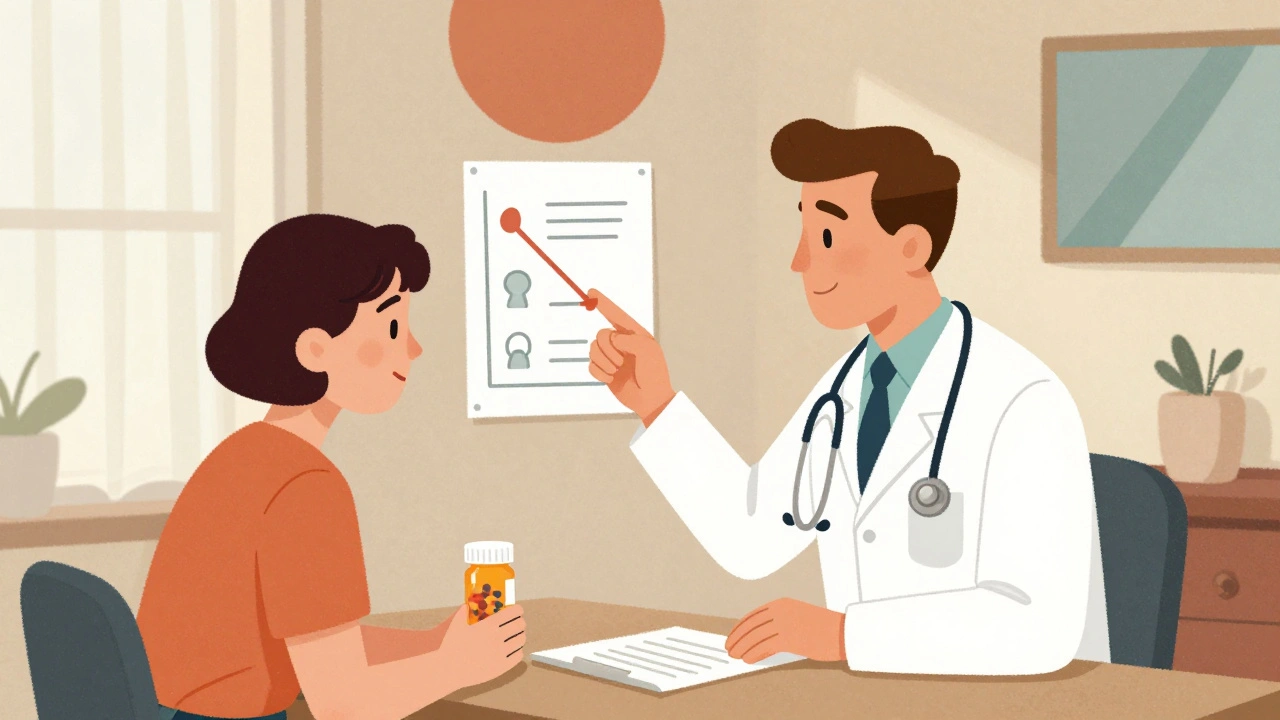
You can’t ignore the risk of side effects. But you can control how you respond to them.- Ask for context. Don’t just read the leaflet. Ask your doctor: “How common is this really? What’s the chance I’ll actually feel this?”
- Don’t assume the worst. If you feel a little tired after starting a new pill, wait a few days. It could be your body adjusting-not a side effect.
- Track symptoms objectively. Keep a simple log: “Day 1: Headache? No. Day 2: Headache? Yes, mild. Day 3: Headache? No.” This helps you spot patterns instead of jumping to conclusions.
- Don’t self-diagnose from Google. Online forums are full of people who think every symptom is the drug’s fault. Most aren’t.
- Don’t quit without talking to your doctor. If you’re worried, talk to them. They can help you tell the difference between a real reaction and a nocebo effect.
Why This Matters Beyond Your Pill Bottle
The nocebo effect isn’t just about individual discomfort. It’s a public health issue. An estimated 15-20% of patients stop taking effective medications because they think they’re causing side effects-side effects that may have never been real. That leads to worse health outcomes, more hospital visits, and higher costs. Health systems are starting to pay attention. New Zealand trained pharmacists to reframe how they talk about generics. The NHS in the UK rolled out communication programs that cut reported side effects by 14%. The FDA now asks drug companies to consider expectation effects when designing clinical trials. By 2030, experts predict most doctors will screen for nocebo risk before prescribing high-stakes medications. It’s not about hiding information. It’s about delivering it in a way that doesn’t accidentally harm.The Bottom Line
Your expectations shape your experience with medicine. That’s not weakness. It’s human biology. The nocebo effect reminds us that healing isn’t just about chemicals. It’s about trust, communication, and how we talk about health. A pill can work better-or worse-depending on what you believe. If you’re starting a new medication, give yourself time. Don’t jump to conclusions. Talk to your doctor. And remember: not every ache, every headache, every wave of fatigue is the drug’s fault. Sometimes, it’s just your brain trying to protect you… by making you feel worse than you are.Can the nocebo effect cause real physical damage?
The nocebo effect doesn’t cause permanent organ damage or disease progression. But it can trigger real physiological responses like increased heart rate, muscle tension, nausea, and pain. These are temporary and linked to stress and expectation, not the drug’s chemistry. In rare cases, chronic stress from believing you’re being harmed can indirectly affect health over time-but that’s not the same as the drug causing direct harm.
Is the nocebo effect the same as psychosomatic illness?
They’re related but not the same. Psychosomatic illness refers to physical symptoms caused primarily by mental factors like stress or trauma, often without a clear trigger. The nocebo effect is more specific: it’s a symptom triggered by a belief about a treatment. For example, if you think a new pill will give you headaches, and you get one, that’s nocebo. If you get headaches from chronic anxiety with no medication involved, that’s psychosomatic.
Can doctors tell the difference between a nocebo effect and a real side effect?
It’s hard-especially at first. Real side effects usually follow a pattern: they appear within hours or days, get worse with higher doses, and go away when you stop the drug. Nocebo effects often appear suddenly after a warning, don’t worsen with dose, and disappear when the patient’s belief changes. Doctors look at timing, context, and whether symptoms match known drug profiles. Sometimes, a brief pause in the medication (if safe) helps clarify.
Why do generic drugs trigger nocebo effects if they’re identical?
Because they look different. Pills vary in color, shape, size, and even taste. People associate brand names with reliability. Generics feel unfamiliar-and that triggers doubt. Media stories, online forums, and even pharmacy staff comments can reinforce the idea that generics are “lesser.” Your brain doesn’t care about chemical equivalence. It cares about trust. If you don’t trust the pill, your body responds as if it’s dangerous.
Should I avoid medications that have lots of side effects listed?
No. The number of listed side effects doesn’t mean the drug is dangerous. It means the manufacturer is being legally cautious. Many side effects are extremely rare. Focus on what’s common and what’s serious. Ask your doctor: “What’s the most likely side effect? How often does it happen? What should I watch for?” A drug with 50 listed side effects can still be safer and more effective than one with only five-if the real risks are low.
Michael Dioso
December 4, 2025 AT 12:40Oh great, so now my headaches are just in my head? Thanks for telling me my suffering is a marketing ploy. I’ll just ignore the fact that my hands were shaking and my stomach was in knots-clearly just ‘heightened symptom awareness.’ Real helpful.
Krishan Patel
December 5, 2025 AT 17:44You misunderstand the fundamental flaw in your argument. The nocebo effect does not negate biological reality-it reveals the terrifying power of belief to hijack physiology. To dismiss it as ‘just psychology’ is to ignore centuries of neurophenomenological evidence. The mind does not merely interpret the body-it constructs it. This is not weakness. It is evolution’s most potent, and most dangerous, feedback loop.
Katie Allan
December 6, 2025 AT 22:45This is such an important post. I’ve seen patients quit life-saving meds because they read a Reddit thread saying generics ‘don’t work.’ We need more doctors who can reframe this without sounding condescending. The science is clear-it’s not about being ‘weak,’ it’s about how fear rewires perception. Compassion in communication saves lives.
Lucy Kavanagh
December 7, 2025 AT 18:55Wait… so you’re saying Big Pharma *wants* us to think generics are bad? That’s why they fund studies to ‘debunk’ the nocebo effect? And why do brand-name pills always cost 10x more? Coincidence? I don’t think so. They profit from our fear. The leaflets? Designed to scare us into staying loyal. The ‘side effects’? A sales tactic wrapped in legal jargon.
Annie Grajewski
December 7, 2025 AT 23:44lol so if i feel dizzy after taking a pill it's because i read the label? cool. so next time my doctor gives me something, i'm just gonna say 'nah i'm not reading the pamphlet' and hope for the best. yeah right. also why is the generic pill always a weird color? who designed that? it looks like a toy from a 90s cereal box.
William Chin
December 8, 2025 AT 06:00It is imperative to acknowledge that the nocebo phenomenon, while empirically validated, must not be weaponized to invalidate patient-reported outcomes. To suggest that somatic distress is merely cognitive is to engage in epistemic injustice. The physician’s duty is not to diagnose belief, but to alleviate suffering-regardless of its origin. To do otherwise is to abdicate the ethical foundation of medicine.
Chris Brown
December 9, 2025 AT 03:34It's unfortunate that this article reduces complex physiological reactions to a psychological buzzword. Patients are not gullible children. If a drug causes nausea, it causes nausea-regardless of what the patient was told. The real problem is lazy medicine. Instead of investigating real biological causes, doctors now shrug and say, ‘It’s probably the nocebo effect.’ That’s not science. That’s dismissal.
Harry Nguyen
December 10, 2025 AT 07:47So let me get this straight. Americans are so weak they get sick from reading a pill label? Meanwhile, in the real world, people take pills with no idea what’s in them and don’t complain. Maybe the problem isn’t the nocebo effect-it’s the culture of hypochondria and entitlement. Stop reading the leaflet. Stop Googling. Stop acting like your body is a broken iPhone.
Carole Nkosi
December 11, 2025 AT 15:46It’s not about fear. It’s about control. When you’re told your body is betraying you because of what you think, you’re being told your experience doesn’t matter. That’s gaslighting dressed up as neuroscience. I’ve been on six different antidepressants. The generic made me feel like I was drowning in slow motion. The brand? I felt human again. Call it nocebo if you want. I call it survival.