

Getting a rash, an acne breakout, or a stubborn fungal infection while pregnant is stressful enough without worrying about whether the cream you’re using might harm your baby. You want relief, but you also want safety. The good news? Most topical medications are significantly safer than their oral counterparts because very little of the drug actually enters your bloodstream. However, "safe" isn't a blanket term-it depends entirely on what’s in the tube, where you apply it, and how far along you are.
This guide cuts through the confusion by breaking down exactly which creams, ointments, and gels are generally considered safe, which ones to avoid at all costs, and how to use them effectively without risking fetal health. We’ll look at specific ingredients for common issues like acne, eczema, athlete’s foot, and pain, backed by current guidelines from organizations like the American College of Obstetricians and Gynecologists (ACOG) and the American Academy of Dermatology.
The Golden Rule: Low Absorption Means Lower Risk
Before diving into specific products, it helps to understand why doctors often prefer creams over pills during pregnancy. When you take an oral medication, it goes through your digestive system and liver before entering your blood, exposing the fetus to higher concentrations of the drug. With topical treatments, the skin acts as a barrier. According to pharmacokinetic studies, systemic absorption for most topical drugs ranges from just 1% to 10%, depending on the formulation and application site.
However, this barrier isn’t perfect. Absorption rates spike if you apply medication to thin-skinned areas like the eyelids, face, neck, armpits, or groin. It also increases if the skin is broken, inflamed, or covered with an occlusive dressing (like plastic wrap). This is why applying a potent steroid to your face requires more caution than applying a mild one to your forearm.
Skin Care Basics: Acne and Rosacea
Hormonal surges during pregnancy can wreak havoc on your skin, leading to breakouts that feel impossible to manage. The key is to stick to ingredients with a long track record of safety.
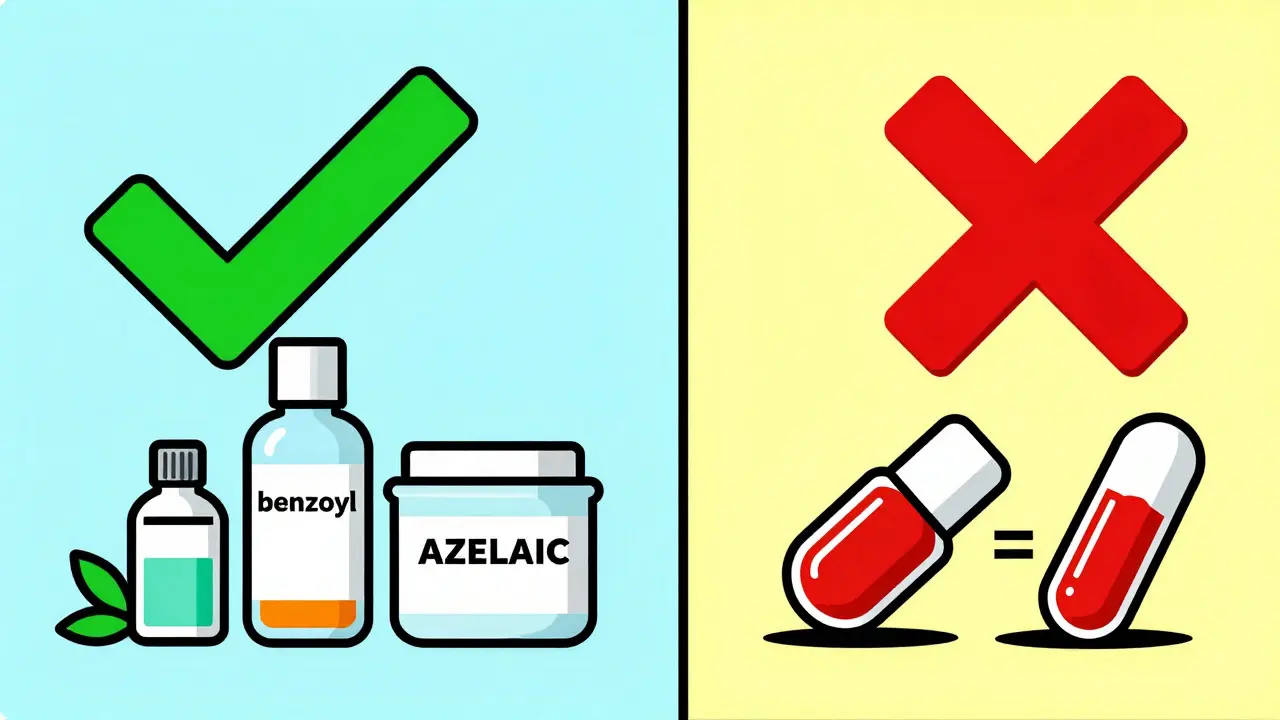
- Benzoyl Peroxide: Generally considered safe. It works locally on the skin to kill bacteria and has minimal systemic absorption. Stick to lower concentrations (2.5% to 5%) to reduce irritation without losing effectiveness.
- Topical Antibiotics: Clindamycin and Erythromycin are widely recommended. Studies show they have low absorption rates (around 4-5% for clindamycin solutions) and no significant risks to the fetus when used topically.
- Azelaic Acid: A fantastic option for both acne and melasma (the "mask of pregnancy"). It’s classified as FDA Category B, meaning animal studies have shown no risk, and it’s been used safely in humans for decades.
- Salicylic Acid: Use with caution. While high-dose oral salicylates are risky, low-concentration topical salicylic acid (under 2%) in washes or light lotions is generally accepted for short-term use. Avoid peels or high-strength leave-on treatments, especially in the first trimester.
The Big No-No: Retinoids. If you use retinoids for acne or anti-aging, stop immediately upon finding out you’re pregnant. Topical tretinoin, adapalene, and tazarotene are linked to potential congenital malformations in case reports. Even though absorption is low, the risk isn’t worth it. Switch to azelaic acid or benzoyl peroxide instead.
Managing Eczema, Psoriasis, and Inflammation
Itchy, inflamed skin is miserable. Corticosteroids are the go-to treatment, but potency matters immensely here. Not all steroids are created equal.
| Potency Level | Common Examples | Safety Recommendation |
|---|---|---|
| Mild | Hydrocortisone 1% | Generally safe for limited use on small areas. |
| Moderate | Triamcinolone, Betamethasone | Safe for short-term use; monitor for side effects. |
| High/Potent | Clobetasol, Halobetasol | Avoid unless prescribed by a specialist for severe cases. Long-term use linked to low birth weight. |
For mild flare-ups, over-the-counter hydrocortisone is usually sufficient. For moderate conditions, your doctor may prescribe a mid-potency steroid. The rule of thumb? Use the lowest potency that controls symptoms for the shortest duration possible. Applying high-potency steroids over large body surface areas for weeks on end has been associated with fetal growth restriction in some studies, so save those heavy hitters for emergencies under strict medical supervision.
Non-steroidal options like Tacrolimus and Pimecrolimus (calcineurin inhibitors) are sometimes used for eczema. Data is less robust than for steroids, but they are often considered acceptable alternatives when steroids fail, particularly for sensitive areas like the face.
Fighting Fungal Infections
Yeast infections and athlete’s foot are common during pregnancy due to immune system changes. Fortunately, many antifungals are safe.
- First-Line Agents: Clotrimazole, miconazole, and nystatin are considered first-line treatments. They have minimal systemic absorption and a strong safety profile.
- Second-Line Options: Terbinafine and ketoconazole are sometimes used if first-line agents fail. Recent guidelines suggest ketoconazole is acceptable for short-term use, but it’s best to consult your provider first.
- Avoid: Econazole should be avoided in the first trimester and used sparingly later in pregnancy due to limited safety data.
Pain Relief: Muscle Aches and Joint Pain
If you’re dealing with back pain or swollen ankles, you might reach for a topical NSAID like diclofenac gel (Voltaren). Here’s where timing is everything.
Topical NSAIDs have much lower absorption than oral ibuprofen or naproxen, but they still carry risks. The primary concern is premature closure of the ductus arteriosus, a vital blood vessel in the fetus. This risk increases significantly after 30 weeks of gestation. Therefore, most experts recommend avoiding topical NSAIDs entirely in the third trimester. Before 30 weeks, occasional use on small areas may be acceptable if benefits outweigh risks, but always check with your OB-GYN first.
For localized pain, consider non-medicated alternatives like heat packs, cold compresses, or topical capsaicin (for nerve pain), which has low absorption and is generally considered safe.
Antivirals: Cold Sores and Warts
Cold sores (herpes simplex) can flare up due to stress and immune shifts. Acyclovir and Penciclovir creams are widely regarded as safe. They work by stopping the virus from replicating and have negligible systemic absorption.
For warts, trichloroacetic acid is a safe chemical peel option applied by a professional. However, avoid podophyllin resin and podofilox, as these have potential teratogenic effects and are contraindicated in pregnancy.
Practical Tips for Safe Application
To maximize safety and minimize any chance of systemic exposure, follow these practical steps:
- Limit Surface Area: Apply only to the affected area, not surrounding healthy skin.
- Avoid Thin Skin: Be extra cautious with potent meds on the face, groin, or armpits.
- No Occlusion Unless Directed: Don’t cover treated areas with bandages or plastic wrap unless your doctor explicitly tells you to, as this drastically increases absorption.
- Wash Hands: Prevent accidental transfer to other parts of your body or your partner.
- Consult Before Combining: Using multiple active ingredients simultaneously can increase total absorption.
When to Call Your Doctor
While many OTC creams are safe, pregnancy adds a layer of complexity. Always consult your healthcare provider if:
- You have a widespread rash or infection.
- Your condition doesn’t improve after a week of OTC treatment.
- You’re considering using a prescription strength medication.
- You’re unsure about an ingredient list (look out for hidden retinoids or high-dose salicylates).
Remember, the goal is to treat your condition effectively while keeping fetal exposure as low as reasonably achievable. With the right information, you can find relief without the worry.
Is hydrocortisone cream safe during pregnancy?
Yes, low-potency hydrocortisone (1%) is generally considered safe for short-term use on small areas of the body. It has minimal systemic absorption. However, avoid using high-potency steroids over large areas for extended periods, as this has been linked to potential risks like low birth weight.
Can I use retinol or tretinoin cream while pregnant?
No, you should avoid all topical retinoids, including tretinoin, adapalene, and tazarotene. Although absorption is low, there are case reports linking them to congenital malformations. Switch to safer alternatives like azelaic acid or benzoyl peroxide.
Are antifungal creams like clotrimazole safe?
Yes, clotrimazole, miconazole, and nystatin are considered first-line, safe treatments for fungal infections during pregnancy. They have very low systemic absorption and a long history of safe use.
Is it safe to use Voltaren (diclofenac) gel for pain?
Use with caution and timing. Topical NSAIDs like diclofenac should generally be avoided after 30 weeks of pregnancy due to the risk of premature closure of the fetal ductus arteriosus. Before 30 weeks, occasional use may be acceptable, but consult your doctor first.
What is the safest acne treatment during pregnancy?
The safest options include topical erythromycin, clindamycin, benzoyl peroxide, and azelaic acid. These have extensive safety data showing minimal risk to the fetus when used topically. Avoid salicylic acid peels and all retinoids.
Does applying cream to the face increase risk?
Yes, slightly. The skin on the face, eyelids, and neck is thinner and absorbs medications more readily than skin on the arms or legs. Use lower potency medications on the face and limit the amount applied.