
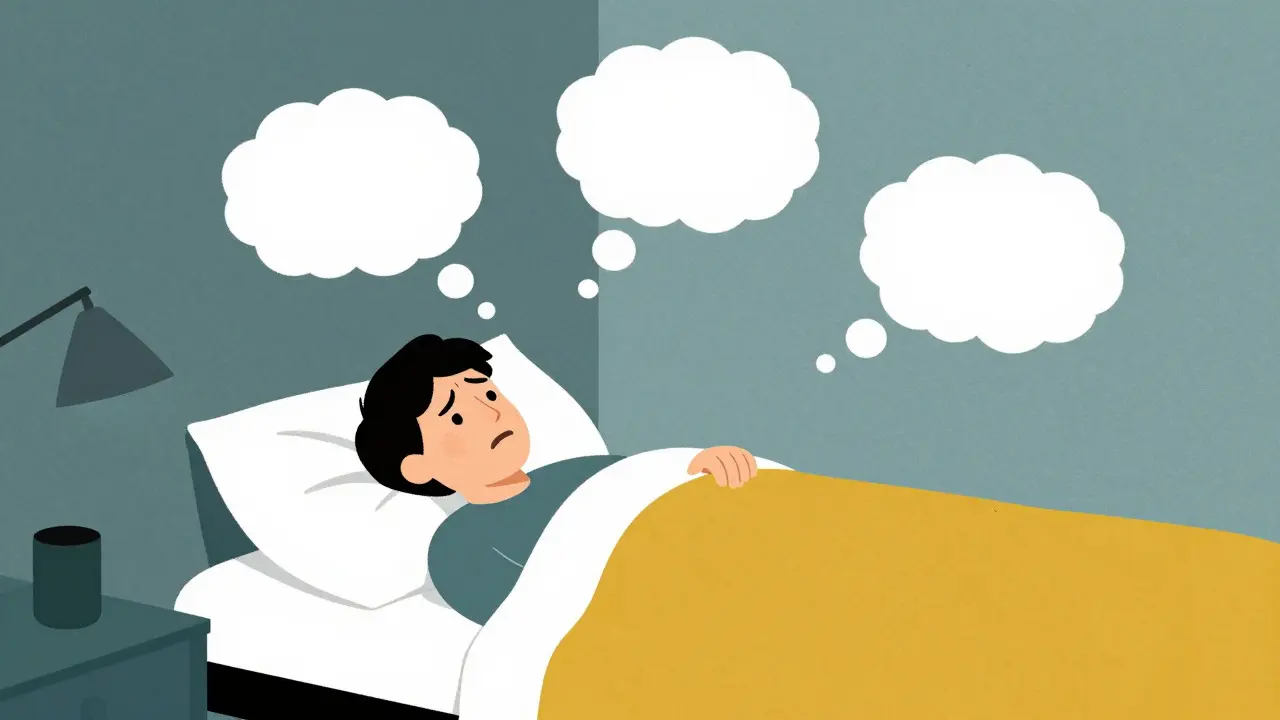
You’ve probably heard the advice before: "Just get some rest." It sounds simple enough, but if you are lying awake at 3 AM while your mind races with worry or heavy sadness, that advice feels like an insult. The truth is, insomnia isn’t just a side effect of depression or anxiety; it is often the engine keeping them running. For years, doctors treated sleep problems as secondary symptoms-something to fix after the mood disorder was under control. But recent research has flipped this script entirely. Treating insomnia first doesn’t just help you sleep; it can significantly reduce the risk of developing severe depression and prevent relapse in those who already suffer from it.
If you are struggling with both poor sleep and mental health issues, understanding this connection is your most powerful tool. You don’t have to accept bad sleep as part of your condition. By targeting your sleep directly, you can break the cycle that keeps anxiety and depression alive. Here is what you need to know about how treating insomnia changes the trajectory of your mental health, why Cognitive Behavioral Therapy for Insomnia (CBT-I) is the gold standard, and how you can actually access these treatments today.
The Vicious Cycle: How Insomnia Fuels Mental Illness
Think of insomnia and mental health disorders as two dancers locked in a tight, exhausting waltz. One leads, then the other follows, and they never let go. When you have anxiety, your brain stays in "fight or flight" mode, making it hard to fall asleep. When you have depression, your sleep architecture fragments, leading to early morning awakenings or non-restorative sleep. But here is the critical piece most people miss: insomnia actively worsens these conditions.
Research published in Frontiers in Psychiatry in 2025 highlights a staggering statistic: individuals with chronic insomnia are 40 times more likely to develop severe depressive disorders than those without sleep issues. This isn't just correlation; it’s causation. The lack of sleep disrupts the hypothalamic-pituitary-adrenal (HPA) axis, which controls your stress response. In patients with comorbid depression and insomnia, we see elevated levels of cortisol and other stress hormones. Your body is essentially stuck in overdrive, unable to reset during the night. Without that nightly reset, your emotional resilience crumbles during the day, making every minor stressor feel catastrophic.
| Physiological System | Effect of Chronic Insomnia | Mental Health Consequence |
|---|---|---|
| Hypothalamic-Pituitary-Adrenal (HPA) Axis | Dysregulation and elevated cortisol/ACTH | Increased anxiety, panic attacks, emotional volatility |
| Neurotransmitter Balance | Reduced serotonin and dopamine regulation | Deepened depressive episodes, lack of motivation |
| Prefrontal Cortex Function | Impaired executive function and emotional regulation | Poor decision-making, rumination, hopelessness |
This biological reality means that ignoring your sleep is like trying to put out a fire while leaving the gas tank open. You might manage the flames temporarily with medication or talk therapy, but the fuel source remains active. Recognizing insomnia as an independent risk factor, as established in the DSM-5, allows clinicians to target it directly. When you treat the sleep disorder, you remove the fuel, allowing the mental health treatment to work much more effectively.
Why CBT-I Is the Gold Standard Treatment
If you have ever tried sleeping pills, you know they offer a temporary escape hatch. Drugs like zolpidem (Ambien) can knock you out, but they do not teach your brain how to sleep. More importantly, they do not protect you against future depression. A study in Nature Scientific Reports (April 2025) confirmed that while medications improve immediate symptoms, they lack the preventive benefits of behavioral therapy. This is where Cognitive Behavioral Therapy for Insomnia (CBT-I) comes in. It is widely recognized by experts, including Dr. Rachel Manber from Stanford University, as the first-line treatment for chronic insomnia.
CBT-I is not just "talk therapy." It is a structured, evidence-based program typically delivered over 6 to 8 weekly sessions. It combines cognitive techniques to challenge negative beliefs about sleep with behavioral strategies to retrain your sleep drive. The results are profound. A massive meta-analysis in Depression and Anxiety (2018) reviewed thousands of studies and found that CBT-I produced moderate to large improvements in depression symptoms. Even more impressive, a systematic review in Sleep journal (2023) showed that remission of insomnia symptoms reduced the risk of new major depressive disorder onset by a significant margin. If you achieve full remission of insomnia through CBT-I, your hazard ratio for developing incident depression drops dramatically.
What makes CBT-I so effective for mental health? It targets the root causes. Anxiety often stems from a fear of not sleeping-the "what if I don’t sleep tonight?" panic. Depression often involves rumination that keeps the mind active at night. CBT-I dismantles these patterns. It teaches you that sleep is a natural process that happens when you are tired and safe, not something you have to force. By removing the performance anxiety around sleep, you lower your overall baseline anxiety. By reducing time spent awake in bed ruminating, you reduce the intensity of depressive thoughts.
The Core Components of CBT-I Explained
Understanding how CBT-I works helps demystify the process and prepares you for the initial discomfort that comes with retraining your brain. The therapy consists of four main pillars, each designed to address a specific barrier to healthy sleep.
- Stimulus Control: This technique aims to reassociate the bed with sleep, not wakefulness. You are instructed to only go to bed when sleepy and to leave the bed if you haven’t fallen asleep within 20 minutes. It sounds harsh, but it breaks the link between your bedroom and frustration. If you lie there tossing and turning, your brain learns that bed equals stress. Stimulus control reverses this.
- Sleep Restriction: This is often the hardest part. If you sleep 6 hours but stay in bed for 9, you are training your body to be inefficient. Sleep restriction limits your time in bed to match your actual sleep time. Initially, this creates mild sleep deprivation, which builds "sleep pressure." As your efficiency improves, the time in bed is gradually increased. This method rapidly consolidates sleep, reducing nighttime awakenings that fuel anxiety.
- Cognitive Therapy: Here, you identify and challenge irrational beliefs about sleep. Do you believe that one bad night will ruin your life? That you need 8 hours exactly to function? These beliefs create anxiety. Cognitive therapy replaces them with realistic, flexible expectations, reducing the psychological burden of sleep.
- Relaxation Techniques: Progressive muscle relaxation, diaphragmatic breathing, and mindfulness exercises help lower physiological arousal. This directly counters the hyperarousal state common in anxiety disorders, calming the nervous system before bedtime.
These components work together. Sleep restriction builds the physical need for sleep, stimulus control ensures the environment supports it, cognitive therapy removes mental barriers, and relaxation techniques calm the body. Together, they create a robust framework for lasting change.
Digital CBT-I: Accessible Care for Everyone
One of the biggest hurdles to getting better is finding a provider. Only about 1-2% of people with insomnia receive evidence-based CBT-I because trained clinicians are scarce. However, the rise of digital CBT-I (dCBT-I) platforms has changed the landscape. Programs like Sleepio and SHUTi deliver the same structured content online, guided by algorithms and sometimes brief clinician check-ins.
Are digital options as good as face-to-face therapy? Yes. Research shows that dCBT-I maintains therapeutic efficacy. One study demonstrated a 57% reduction in the odds of moderate-to-severe depression among users of digital CBT-I compared to education-only controls. With over 150,000 users on platforms like Sleepio, and 76% achieving clinically significant improvement in insomnia severity, these tools are proving their worth. They are particularly valuable for those with social anxiety or busy schedules, offering flexibility without sacrificing outcomes.
The convenience of digital delivery also addresses a critical gap in mental healthcare. During the pandemic, telehealth utilization for CBT-I skyrocketed by 300%. This shift proved that high-quality care doesn’t require a clinic visit. For someone dealing with depression, the energy required to leave the house can be prohibitive. Having a structured program available on your phone or computer lowers the barrier to entry, making it easier to start the healing process.
Combining Treatments: Medication and Therapy
Should you stop taking antidepressants or sleep aids if you start CBT-I? Not necessarily. The relationship between pharmacological and behavioral treatments is complementary, not mutually exclusive. A 2024 study in JAMA Psychiatry found that combining sertraline (an SSRI) with CBT-I resulted in 40% greater remission rates than sertraline alone for patients with comorbid depression and insomnia. This suggests that while medication manages the chemical imbalance, CBT-I addresses the behavioral and cognitive maintenance factors.
However, relying solely on medication has limitations. Benzodiazepines and Z-drugs (like zolpidem) can lead to tolerance, dependence, and next-day grogginess. They do not teach skills. CBT-I, on the other hand, provides lifelong tools. Many clinicians now recommend starting CBT-I alongside medication, with the goal of eventually tapering off the sleep aid once sleep habits are stabilized. This approach minimizes relapse risk. Remember, treating insomnia reduces depression relapse risk by up to 50% compared to treating depression alone. Adding CBT-I to your regimen is an investment in long-term stability.
Practical Steps to Start Your Journey
Knowing that CBT-I works is one thing; doing it is another. Here is how you can take action today.
- Track Your Sleep: Before starting any treatment, keep a sleep diary for two weeks. Record bedtime, wake time, estimated sleep duration, and number of awakenings. This data is crucial for calculating your average sleep efficiency, which guides the sleep restriction component.
- Consult Your Doctor: Discuss your sleep issues with your primary care physician or psychiatrist. Ask specifically about CBT-I referrals. If they suggest medication only, ask if CBT-I can be added as a first-line or adjunctive treatment.
- Explore Digital Options: If a local therapist isn’t available, look into FDA-cleared digital therapeutics like Sleepio, Somryst, or REWIND. Check with your insurance provider, as many plans now cover digital CBT-I prescriptions.
- Prepare for Initial Discomfort: Accept that the first week of CBT-I, especially with sleep restriction, may be tough. You will feel tired. This is normal and necessary. Stick to the protocol. Consistency is key to rebuilding your sleep drive.
- Be Patient: Changes in sleep patterns and mood take time. Most people see significant improvements within 4-6 weeks, but full benefits may take longer. Trust the process.
Start small. Commit to one change, like getting out of bed if you’re not asleep after 20 minutes. Small wins build momentum. Remember, you are not just fixing sleep; you are strengthening your mental health foundation.
Is CBT-I covered by insurance?
Coverage varies by insurer and plan. Many major insurers in the US and UK now cover CBT-I, especially when prescribed by a doctor. Digital CBT-I platforms often require a prescription and may be reimbursed similarly to traditional therapy. Always check with your provider beforehand and ask for pre-authorization if needed.
How long does it take for CBT-I to work for depression?
Most people experience improvements in sleep quality within the first 2-4 weeks. Improvements in depression and anxiety symptoms often follow shortly after, as better sleep restores emotional regulation. Full benefits typically manifest after completing the 6-8 week program, with sustained effects observed months later.
Can I do CBT-I on my own without a therapist?
Yes, self-help books and digital apps provide structured CBT-I protocols. While working with a therapist offers personalized support, digital platforms have been proven effective in clinical trials. Self-guided CBT-I is a viable option, especially if access to specialists is limited. Consistency and adherence to the protocol are more important than the delivery method.
Does treating insomnia cure depression?
It doesn’t "cure" depression in the sense of eliminating it forever, but it significantly reduces symptom severity and prevents relapse. For some, resolving insomnia leads to full remission of depressive symptoms. For others, it enhances the effectiveness of other treatments like medication or psychotherapy. It is a critical piece of the puzzle, not a magic bullet.
What if CBT-I doesn’t work for me?
About 30-40% of patients do not achieve full remission with standard CBT-I. If you don’t respond, consult your provider. There may be underlying medical issues (like sleep apnea) interfering with treatment, or you may benefit from a modified protocol or combination therapy. Don’t give up; alternative approaches exist.