
Triptan & SSRI Safety Checker
Understanding the Risk
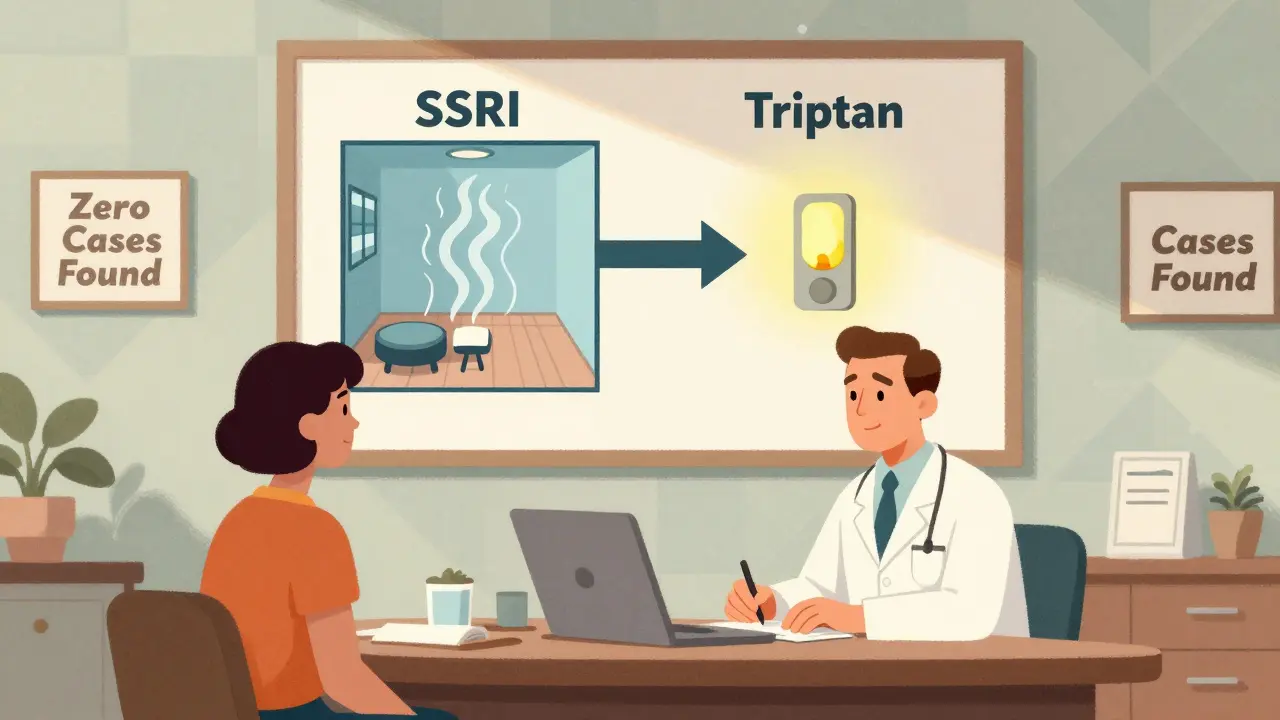
The common warning about combining triptans and SSRIs has been based on outdated theory. Current evidence from over 61,000 patients shows zero cases of serotonin syndrome from this combination.
Triptans activate only specific serotonin receptors (5-HT1B/1D) that don't trigger serotonin syndrome. SSRIs increase serotonin levels, but the combination is safe according to major medical organizations including the American Headache Society.
Risk Assessment Results
For years, patients with migraine who also take antidepressants have been told the same thing: don’t combine triptans and SSRIs. It’s dangerous. It could kill you. Serotonin syndrome, they were warned, is just one pill away. But here’s the truth - that warning was never based on real evidence. And today, the science says something completely different.
What Even Is Serotonin Syndrome?
Serotonin syndrome isn’t a buzzword. It’s a real, sometimes life-threatening condition caused by too much serotonin activity in the nervous system. Symptoms include muscle rigidity, high fever, rapid heartbeat, confusion, and in severe cases, seizures or death. It’s most often linked to MAOIs, overdose of SSRIs, or combining multiple serotonin-boosting drugs - like an SSRI with an MAOI or a large dose of tramadol. But here’s the catch: triptans? They don’t work the same way. Triptans - drugs like sumatriptan, rizatriptan, and eletriptan - were designed to treat migraine attacks. They activate specific serotonin receptors: 5-HT1B and 5-HT1D. These receptors are in the brain and blood vessels, and when activated, they calm overactive nerves and reduce inflammation that causes migraine pain. They barely touch the 5-HT1A or 5-HT2A receptors - the ones that trigger serotonin syndrome. In fact, a 2019 study in JAMA Neurology that looked at over 61,000 patients found zero cases of serotonin syndrome in people using triptans alongside SSRIs or SNRIs.The FDA Warning That Wasn’t Based on Data
In 2006, the FDA issued a safety alert. It said: “Use triptans with SSRIs with caution.” Not “avoid.” Not “proven dangerous.” Just “be careful.” Why? Because of theory - not real-world data. Pharmacologists looked at how both drugs affect serotonin and assumed: more serotonin + more serotonin = too much serotonin. Simple math, right? Except biology doesn’t work like math. Dr. P. Ken Gillman, a leading expert in migraine pharmacology, called the FDA’s move a “misunderstanding about serotonin syndrome.” He pointed out that triptans don’t increase serotonin levels - they just turn on specific receptors. SSRIs increase serotonin, sure. But even then, serotonin syndrome from SSRIs alone is rare: about 0.5 to 0.9 cases per 1,000 patient-months. And even in overdose, only 14% of cases met full diagnostic criteria. The FDA’s warning affected millions. In 2006, 37 million Americans were on SSRIs. Ten million had migraine. Suddenly, doctors were afraid to prescribe one of the most effective migraine treatments to people who needed it most - those with depression or anxiety, who make up 30% to 50% of migraine patients.Real Evidence: Zero Cases, Thousands of Patients
The 2019 JAMA Neurology study didn’t just look at theory. It scoured records from 1990 to 2018 - over 28 years - of 61,029 patients who used triptans with SSRIs or SNRIs. Every single one was monitored for serotonin syndrome. Not one met the diagnostic criteria. That’s not a fluke. Other studies backed it up:- A 2022 survey of 1,200 migraine patients found 42% had been denied triptans because of SSRI use - and none had ever experienced serotonin syndrome.
- The FDA’s own adverse event database from 2006 to 2022 recorded only 18 possible cases. None were confirmed as true serotonin syndrome after expert review.
- A prospective study of 10,000 patients on both drugs (NCT04567821) has now passed three years with zero confirmed cases.
Why Are Pharmacists Still Saying No?
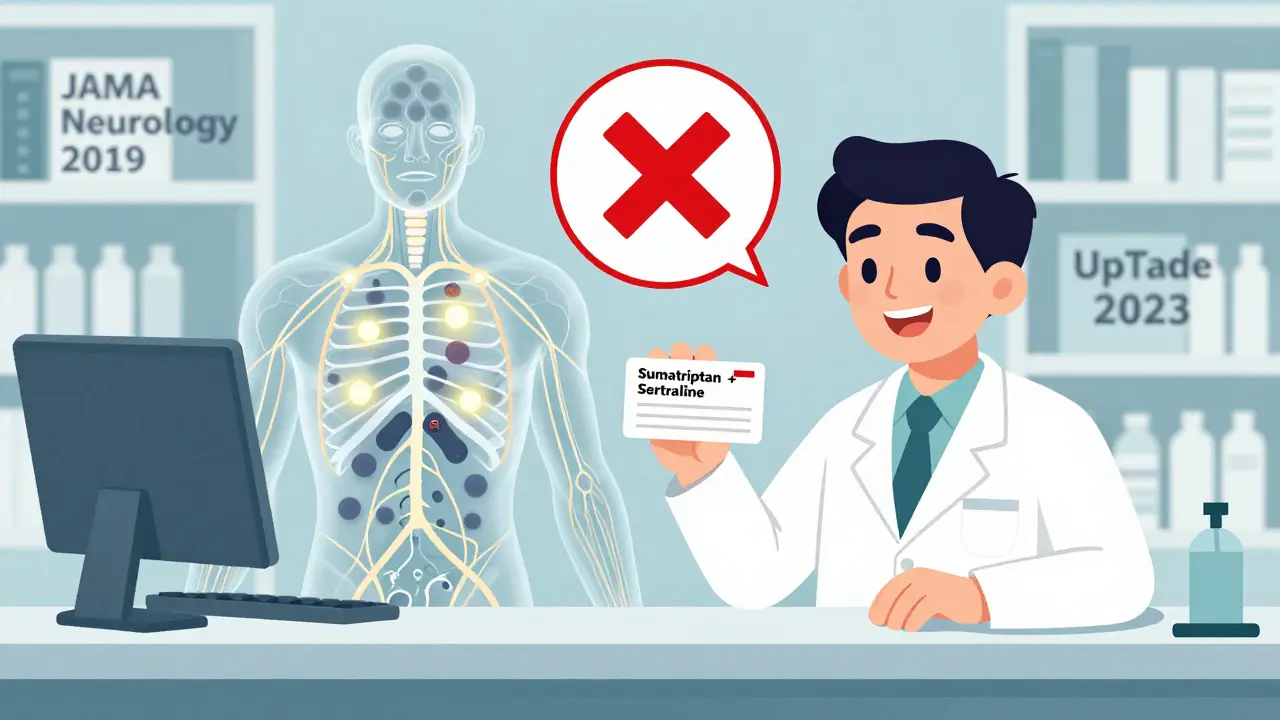
Because software still screams red flags. Many pharmacy systems are still programmed with the 2006 FDA warning. When a pharmacist sees “sumatriptan” and “sertraline” together, an alert pops up: “Risk of serotonin syndrome.” The pharmacist doesn’t know the science. They’re trained to avoid red alerts. So they call the doctor. They delay the prescription. Sometimes they refuse to fill it. Reddit threads are full of stories like this: > “My pharmacist refused my triptan because I take fluoxetine. I’ve been on both for five years. Never had an issue. He said, ‘It’s in the system.’” - r/migraine, March 2023 > “I had to see three doctors before one finally wrote a letter saying it was safe. My anxiety got worse because I couldn’t treat my migraines.” The Migraine Foundation of New Zealand runs public quizzes to fight this myth. One question: “Is serotonin toxicity likely when a SSRI is co-prescribed with a triptan?” The correct answer? False.What Doctors Are Actually Doing
A 2021 survey of 250 headache specialists found 89% routinely prescribe triptans with SSRIs or SNRIs - no extra monitoring, no warnings, no hesitation. Why? Because they’ve seen the data. They’ve treated patients. They’ve watched people thrive. Neurologists understand the pharmacology:- SSRIs/SNRIs: Increase serotonin levels in the synapse.
- Triptans: Bind to specific receptors to stop migraine signals - they don’t add serotonin.
The Hidden Cost of the Misinformation
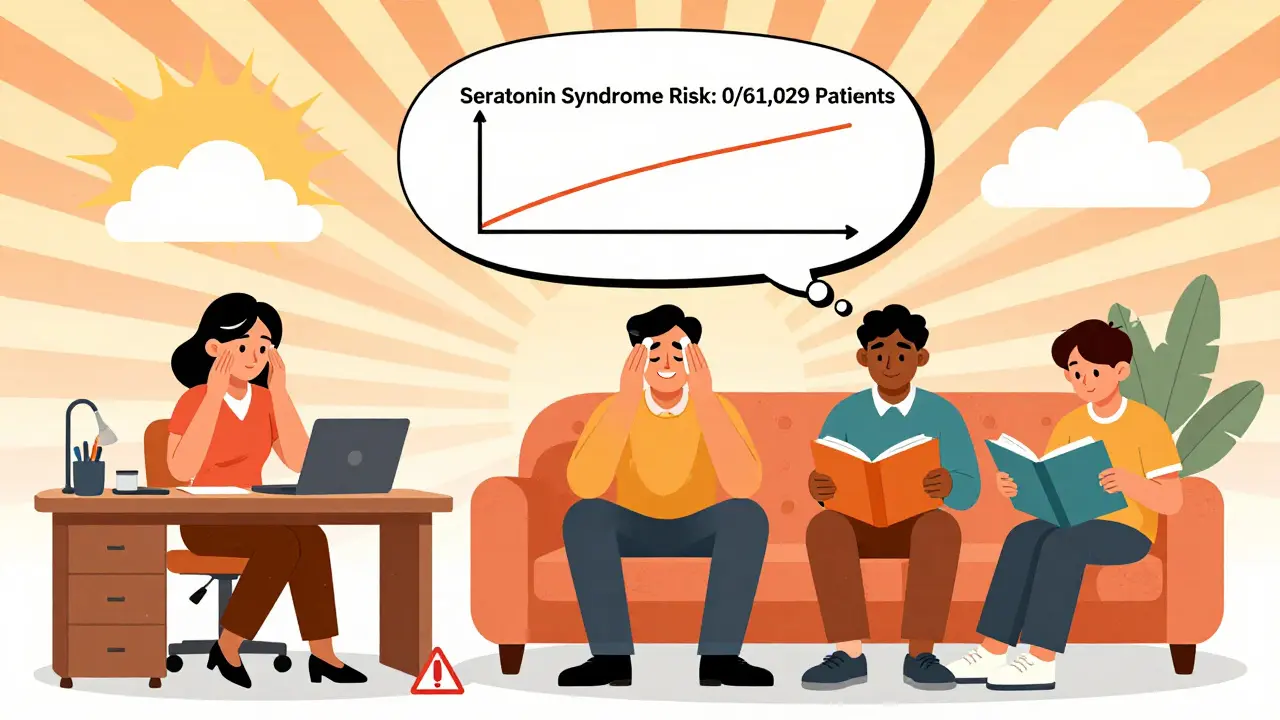
This isn’t just about safety. It’s about care. When patients can’t get triptans, they’re forced into less effective treatments: opioids, NSAIDs, or expensive new injectables like CGRP inhibitors. A 2020 analysis in Health Affairs estimated the U.S. healthcare system spent $450 million a year on unnecessary alternatives because of this myth. Patients suffer too. Migraines are debilitating. Missed work. Lost days. Emergency room visits. All because a warning based on theory kept people from the best treatment available.The Bottom Line
You can take triptans with SSRIs. Safely. Routinely. Without fear. The science is clear. The data is solid. The risk is not just low - it’s effectively nonexistent. If your doctor or pharmacist says otherwise, ask them this: “Have you seen a single confirmed case of serotonin syndrome from this combination?” Chances are, they haven’t. Because no one has. The FDA warning is outdated. The medical community has moved on. It’s time patients did too.What You Should Do
- If you take an SSRI or SNRI and have migraine: ask your doctor about triptans. They’re safe and effective.
- If your pharmacist refuses to fill your triptan prescription: ask them to check the latest guidelines from the American Headache Society or UpToDate.
- If you’ve been told you can’t take triptans - you’re not alone. But you’re also not at risk. You deserve better treatment.
Can you really take triptans with SSRIs without risk?
Yes. Over 61,000 patients studied over 28 years showed zero cases of serotonin syndrome from combining triptans and SSRIs/SNRIs. Triptans activate only specific serotonin receptors (5-HT1B/1D) that don’t trigger serotonin syndrome. The FDA’s 2006 warning was based on theory, not evidence. Today, major medical groups like the American Headache Society confirm the combination is safe.
What if I’ve been on both for years and never had symptoms?
That’s exactly what the data shows. If you’ve taken both drugs together for months or years without issues, you’re not an exception - you’re the norm. The fear of serotonin syndrome from this combination is a myth. There’s no need to stop or switch unless your doctor has a specific clinical reason - which is extremely rare.
Why do pharmacy systems still warn about this?
Many pharmacy software systems still use outdated FDA alerts from 2006. They’re not programmed to reflect current evidence. Pharmacists rely on these alerts because they’re trained to avoid red flags. But the alerts are wrong. You can ask your pharmacist to verify the latest guidelines from UpToDate or the American Headache Society - most will update their decision once they see the data.
Are there any cases where it might be unsafe?
The combination itself is not the risk. But if you’re taking other drugs that strongly increase serotonin - like MAOIs, tramadol, dextromethorphan, or certain illicit drugs - then yes, the risk rises. That’s true regardless of triptan use. The real danger is polypharmacy with multiple serotonin-boosting agents, not the triptan-SSRI combo. Always tell your doctor about everything you’re taking.
What should I do if my doctor refuses to prescribe triptans because of my SSRI?
Ask for a referral to a headache specialist. Neurologists who treat migraine regularly know the evidence. If your doctor is hesitant, share the 2019 JAMA Neurology study or the American Headache Society’s 2022 consensus statement. You have the right to effective treatment. Don’t accept outdated warnings as fact.
Korn Deno
March 24, 2026 AT 01:13Stop treating patients like lab rats and start treating them like humans.
Alex Arcilla
March 25, 2026 AT 01:32Also, who programmed these alerts? Someone who read a 2003 textbook and never opened a journal since?
Grace Kusta Nasralla
March 26, 2026 AT 15:11J. Murphy
March 27, 2026 AT 09:58Namrata Goyal
March 27, 2026 AT 16:39Brandon Shatley
March 29, 2026 AT 11:07Blessing Ogboso
March 31, 2026 AT 10:06Marissa Staples
April 2, 2026 AT 07:40