
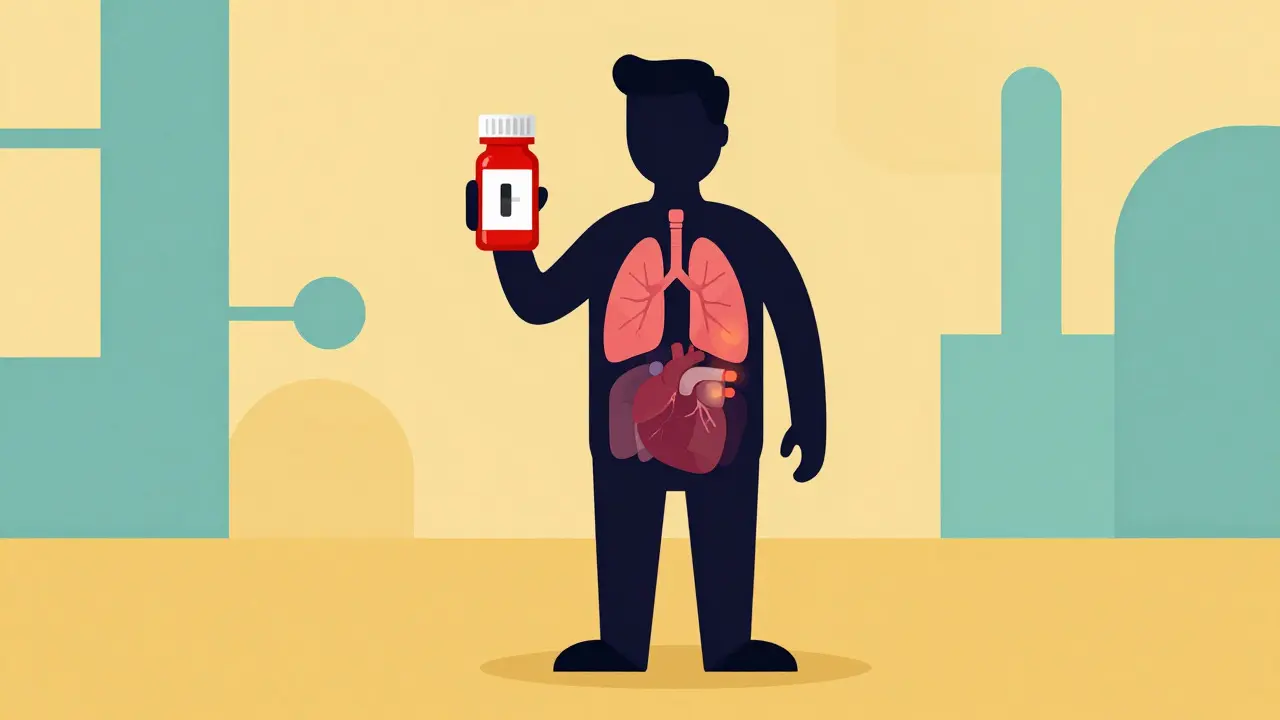
Imagine taking a medication for high blood pressure that quietly worsens your asthma, or using an anti-inflammatory for joint pain that pushes your heart failure into crisis. This isn't a rare medical mystery; it is a common reality known as drug-disease interaction, which occurs when a medication prescribed to treat one condition adversely affects another pre-existing health condition in the patient. Unlike drug-drug interactions, where two pills clash in your stomach, these interactions happen between a pill and your body’s underlying biology.
We often think of medications as simple fixes, but they are powerful chemical agents that change how our organs function. When you have multiple chronic conditions-a state doctors call polypharmacy (often involving multiple chronic diseases)-the risk skyrockets. According to data from the Agency for Healthcare Research and Quality, roughly 5-10% of hospital admissions result from medication-related problems, many of which stem from these overlooked clashes between drugs and disease states. Understanding this dynamic is not just about avoiding side effects; it is about ensuring the cure doesn't become part of the problem.
How Your Body Fights Back Against Medications
To understand why a safe drug can become dangerous, we need to look at the five main pathways where these interactions occur. It is rarely a simple case of "bad chemistry." Instead, it is usually a mismatch between what the drug does and what your diseased organ needs.
- Pharmacodynamic Interference: The drug works against the disease process. For example, beta-blockers like propranolol are excellent for heart rhythm, but they cause bronchoconstriction (tightening of airways). If you have asthma, this drug literally fights your lungs' ability to breathe.
- Pharmacokinetic Alterations: Disease changes how your body processes drugs. Liver disease slows down metabolism, causing drugs like warfarin to build up to toxic levels. Kidney disease prevents clearance, leading to accumulation of toxins.
- Masking Symptoms: The drug hides warning signs. Beta-blockers can mask the rapid heartbeat that signals low blood sugar (hypoglycemia) in diabetics, leaving patients unaware until they pass out.
- Exacerbating Complications: The drug worsens a downstream effect. Nonsteroidal anti-inflammatory drugs (NSAIDs) like ibuprofen cause sodium retention, which increases fluid volume and strains a failing heart.
- Direct Organ Toxicity: The drug damages an already vulnerable organ. Metformin, a standard diabetes drug, can cause lactic acidosis if kidney function is significantly impaired.
A systematic examination published in PMC (2015) found that 84% of serious drug-disease interactions in type 2 diabetes guidelines involved chronic kidney disease. This highlights a critical point: kidney and liver health are the gatekeepers of medication safety.
The High-Risk Combinations You Need to Know
Not all interactions are created equal. Some combinations are widely recognized, while others slip through the cracks because they involve different specialists who may not communicate. Here are the most clinically significant patterns identified by the American Society of Health-System Pharmacists and recent clinical reviews.
| Health Condition | Risky Medication Class | Potential Consequence |
|---|---|---|
| Asthma / COPD | Beta-Blockers (e.g., Propranolol) | Severe bronchospasm and breathing difficulty |
| Heart Failure | NSAIDs (e.g., Ibuprofen, Naproxen) | Sodium retention, worsening edema, acute decompensation |
| Chronic Kidney Disease | Metformin, Certain Antibiotics | Lactic acidosis, drug toxicity due to poor clearance |
| Diabetes | Corticosteroids (e.g., Prednisone) | Severe hyperglycemia (high blood sugar) |
| Gout | Thiazide Diuretics | Increased uric acid levels, triggering gout attacks |
| Depression | SSRIs + Anticoagulants | Significantly increased bleeding risk |
Notice the pattern? Many of these involve common over-the-counter drugs like NSAIDs or standard prescriptions for mental health. Dr. Shalini S. Lynch from UCSF School of Pharmacy notes that "some medications that are helpful in one disease are harmful in another disorder," emphasizing that context is everything. For instance, St. John's Wort, a popular supplement for mild depression, can trigger life-threatening serotonin syndrome when combined with SSRIs, a risk often underestimated by patients seeking natural remedies.
Why Doctors and Systems Often Miss These Clashes
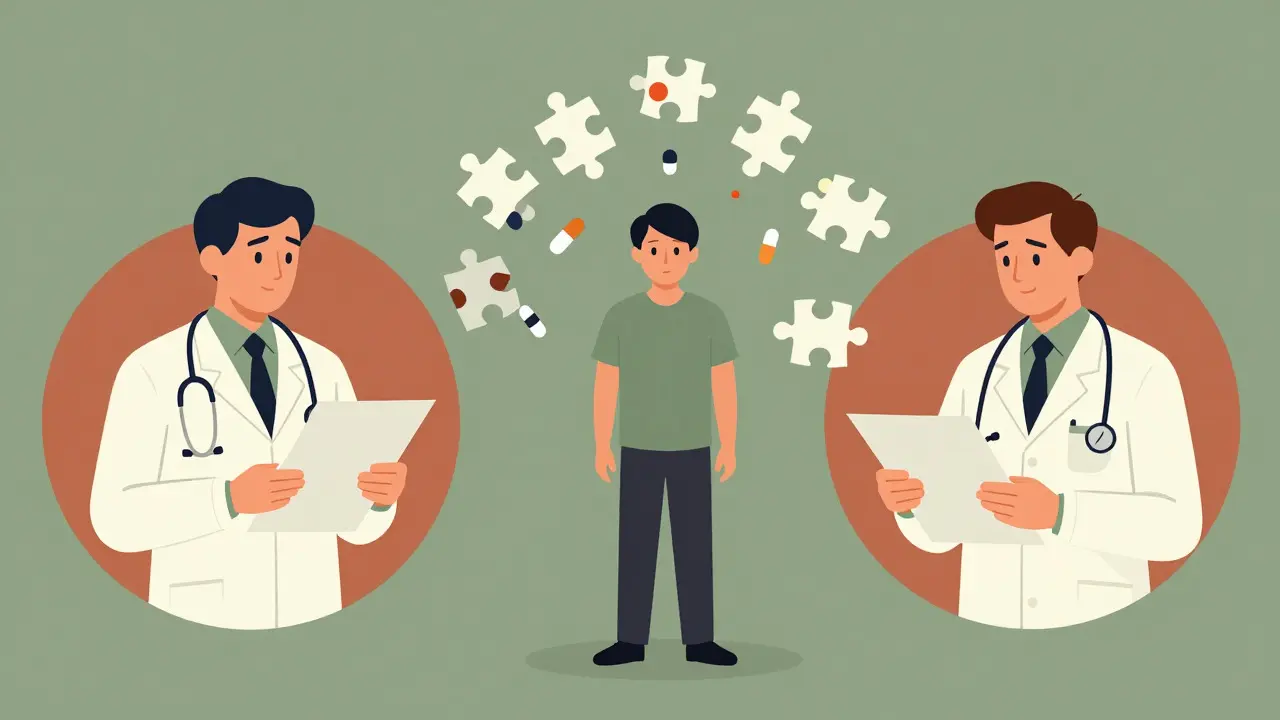
If these risks are so well-documented, why do they still happen? The answer lies in the complexity of modern healthcare. We are living in an era of fragmentation. You might see a cardiologist for your heart, a rheumatologist for your joints, and a primary care physician for general health. Each specialist treats their specific domain, sometimes without full visibility into the other treatments.
Electronic Health Records (EHRs) were supposed to solve this, but they have introduced new problems. Epic’s Drug-Condition Interaction module flags 87% of high-risk interactions, but it also generates 42% false positives. This leads to "alert fatigue," where clinicians become desensitized to warnings and simply click "override" without reading the details. A 2015 study revealed that only 16% of clinical guidelines for major conditions like diabetes and heart failure contained specific warnings about these cross-condition risks.
Furthermore, time is a scarce resource. Community pharmacists report spending nearly 13 minutes per patient on average to assess potential interactions during therapy management, yet 68% feel they lack sufficient time during routine dispensing. In a busy clinic, checking every drug against every comorbidity is a logistical nightmare.
Strategies to Protect Yourself
You do not need to be a pharmacist to manage this risk. You just need to be proactive. The goal is to shift from passive recipient to active participant in your medication safety. Here is how to build a defense system around your prescriptions.
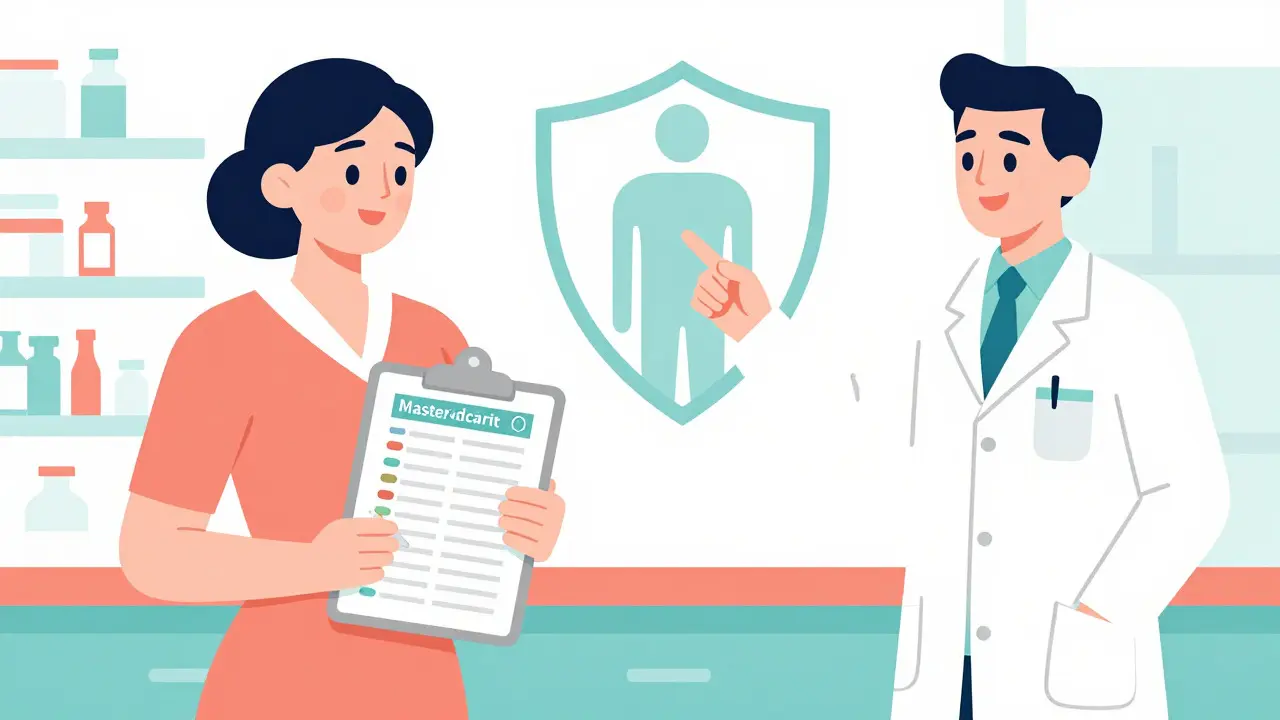
- Maintain a Master List: Keep a single, updated document of every prescription, over-the-counter drug, and supplement you take. Include dosages. Update it immediately after any doctor visit. Show this list to every new specialist you see.
- Ask the "Comorbidity Question": When prescribed a new medication, ask: "Does this drug affect my [other condition]?" For example, if you have kidney disease, ask specifically about renal clearance.
- Use Trusted Screening Tools: Resources like CredibleMeds.org and the Beers Criteria (for older adults) provide evidence-based lists of potentially inappropriate medications. Familiarize yourself with the warnings relevant to your conditions.
- Monitor Lab Results: Regular blood tests for kidney function (creatinine/eGFR) and liver enzymes (ALT/AST) are non-negotiable if you are on multiple medications. These numbers tell your doctor if your body is struggling to process your drugs.
- Review Supplements: Treat supplements with the same caution as drugs. St. John's Wort, garlic extracts, and green tea extract can all interact with prescription medications. Tell your doctor exactly what you are taking.
The Specialist Pharmacy Service recommends using frameworks like DUP-OP-ALT (Duplication, Opposition, Alteration) to mentally screen your own meds. Ask yourself: Is this drug duplicating an effect? Is it opposing another treatment? Is it altering how my body handles other substances?
The Future of Personalized Safety
The landscape of drug-disease interaction management is evolving rapidly. We are moving away from one-size-fits-all guidelines toward personalized medicine. The NIH's All of Us Research Program is currently building a database linking genomic data with electronic health records to predict individual interaction risks. Preliminary results show a 38% improvement in prediction accuracy compared to standard approaches.
Artificial Intelligence is also playing a larger role. Machine learning algorithms developed by researchers at the University of Toronto can now predict high-risk interactions with 89% accuracy by analyzing over 150 clinical variables. This technology aims to reduce the false positive rate that plagues current EHR systems, allowing doctors to focus on real threats rather than noise.
Regulatory bodies are catching up too. The European Medicines Agency now requires specific sections on drug-disease interactions in all new drug applications. The FDA’s 2024 draft guidance mandates that clinical trials include subgroup analyses for patients with common comorbidities. This means future medications will come with clearer instructions on who should avoid them based on their existing health profile.
Despite these advances, challenges remain. There are currently seven competing systems for classifying interaction severity, creating confusion among providers. Additionally, marginalized populations experience 23% higher rates of adverse events due to fragmented care access. Closing this gap requires not just better technology, but more equitable access to comprehensive medication reviews.
Frequently Asked Questions
What is the difference between a drug-drug interaction and a drug-disease interaction?
A drug-drug interaction occurs when two or more medications interfere with each other's effectiveness or increase side effects. A drug-disease interaction happens when a medication worsens an existing health condition or reduces its efficacy, regardless of other drugs being taken. For example, ibuprofen interacting with warfarin is a drug-drug issue, while ibuprofen worsening heart failure is a drug-disease issue.
Can over-the-counter medications cause drug-disease interactions?
Yes, absolutely. Over-the-counter drugs like NSAIDs (ibuprofen, naproxen), decongestants (pseudoephedrine), and antacids can significantly worsen conditions like hypertension, heart failure, asthma, and kidney disease. Because they are easily accessible, patients often take them without consulting their doctor, missing critical interaction checks.
How can I check if my medications are safe for my specific conditions?
You can use online resources like Drugs.com or WebMD interaction checkers, but always verify with a healthcare professional. More importantly, maintain a master list of all your medications and conditions, and ask your pharmacist or doctor to perform a comprehensive medication review annually, or whenever a new chronic condition is diagnosed.
Why are elderly patients at higher risk for these interactions?
Elderly patients often suffer from multiple chronic conditions (polypharmacy) and experience age-related declines in kidney and liver function. This reduces their body's ability to metabolize and clear drugs, leading to higher concentrations of medication in the blood and increased susceptibility to toxicity. The Beers Criteria specifically identifies medications that are potentially inappropriate for older adults due to these heightened risks.
Do supplements interact with diseases?
Yes. Supplements like St. John's Wort can interact with depression treatments and cause serotonin syndrome. Garlic and ginkgo biloba can increase bleeding risks in patients with clotting disorders or those on anticoagulants. Always disclose supplement use to your healthcare provider, as they undergo less rigorous testing than prescription drugs.
What should I do if I suspect a drug-disease interaction?
Do not stop taking your medication abruptly, as this can cause withdrawal or rebound effects. Contact your doctor or pharmacist immediately. Describe your symptoms and mention your existing health conditions. They may adjust the dosage, switch to an alternative medication, or order lab tests to check for toxicity.