
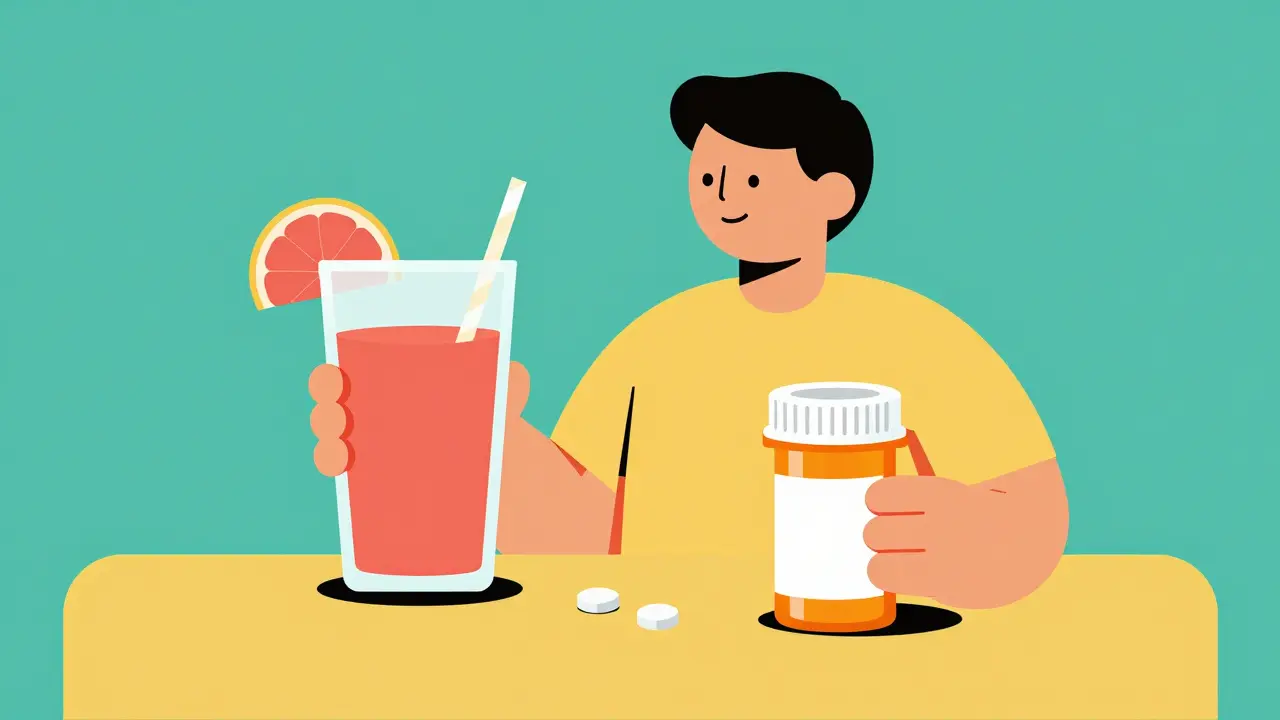
That fresh glass of grapefruit juice with your morning toast might be doing more than just boosting your vitamin C. For millions of people taking prescription medications, that citrus drink is a silent threat that can turn standard doses into toxic levels in the bloodstream. It’s not just about feeling sick; it’s about potentially life-threatening reactions that happen because your body processes drugs differently when certain compounds from grapefruit are present.
You don’t need to be a doctor to understand the risk. You just need to know which pills you take and how they interact with what you eat. This isn't medical folklore or an old wives' tale. It is a scientifically proven chemical reaction that has been documented since 1989. Today, we’ll break down exactly why this happens, which medications are dangerous to mix with grapefruit, and what you should actually do to stay safe without giving up your favorite breakfast entirely.
The Science Behind the Interaction
To understand why grapefruit juice affects your meds, we have to look at what happens inside your gut. When you swallow a pill, your body doesn’t absorb 100% of it immediately. A large portion is broken down by enzymes before it ever reaches your bloodstream. This process is called first-pass metabolism.
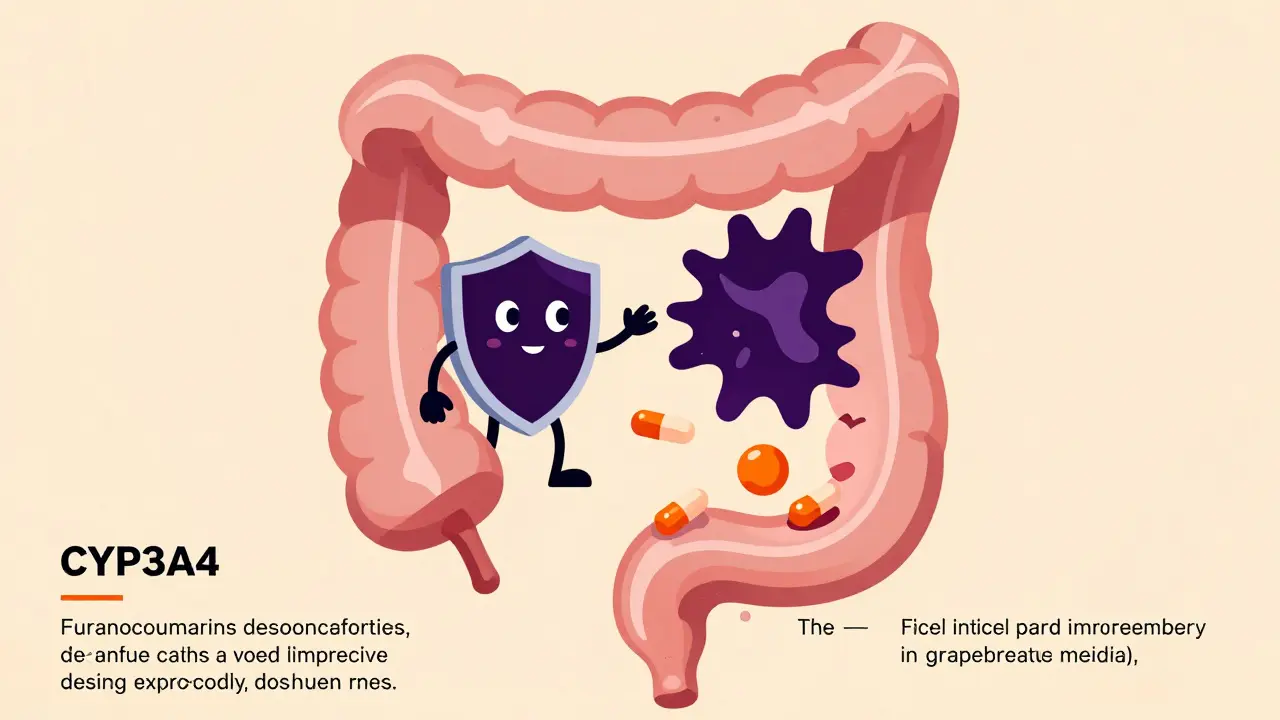
The main enzyme responsible for breaking down many common drugs is called Cytochrome P450 3A4, often shortened to CYP3A4. Think of CYP3A4 as a security guard at the gate of your bloodstream. Its job is to neutralize excess chemicals so your system doesn’t get overwhelmed. Grapefruit juice contains natural compounds called furanocoumarins (specifically bergamottin). These compounds act like kryptonite to the CYP3A4 enzyme. They bind to the enzyme irreversibly, effectively shutting it down.
When the "security guard" is knocked out, much more of the drug enters your blood than intended. In some cases, a single glass of juice can increase the amount of drug in your system by up to 8 times. This isn't a slight bump; it’s a massive spike that mimics taking eight times your prescribed dose. The scary part? Your body needs about 72 hours to regenerate these enzymes. So, drinking grapefruit juice once can keep your drug levels dangerously high for three days straight.
Which Medications Are High Risk?
Not every pill reacts to grapefruit. However, the list of affected drugs is long and includes some of the most commonly prescribed medications in the United States. As of recent FDA reviews, over 85 medications carry warnings about this interaction. Here are the major categories you need to watch out for:
- Statins (Cholesterol Meds): Drugs like Simvastatin (Zocor), Lovastatin (Mevacor), and Atorvastatin (Lipitor) are heavily metabolized by CYP3A4. Mixing them with grapefruit can lead to severe muscle damage, including rhabdomyolysis, which can cause kidney failure. Interestingly, statins like Pravastatin (Pravachol) and Rosuvastatin (Crestor) are generally safe because they use different metabolic pathways.
- Blood Pressure Medications: Calcium channel blockers such as Felodipine (Plendil) and Nifedipine (Procardia) can see their absorption skyrocket. This can cause your blood pressure to drop too low, leading to dizziness, fainting, or even shock. Amlodipine (Norvasc) has a weaker interaction but still requires caution.
- Anti-Anxiety and Sleep Aids: Benzodiazepines like Midazolam and Triazolam become significantly more potent. This can lead to excessive sedation, confusion, and respiratory depression.
- Immunosuppressants: Drugs like Cyclosporine (Neoral) and Tacrolimus (Prograf) are critical for organ transplant patients. An overdose due to grapefruit can damage the kidneys or liver.
- Antihistamines: Older antihistamines like Terfenadine (though largely removed from the market) were notorious for causing fatal heart rhythms when mixed with grapefruit. Newer ones like Fexofenadine (Allegra) work via a different transporter (OATP) and also show reduced effectiveness when taken with grapefruit juice.
| Medication Class | High Risk Drugs | Safer Alternatives (Generally) | Primary Risk |
|---|---|---|---|
| Statins | Simvastatin, Lovastatin, Atorvastatin | Pravastatin, Rosuvastatin | Muscle damage, Kidney failure |
| Blood Pressure | Felodipine, Nifedipine | Amlodipine (use caution) | Hypotension, Fainting |
| Anxiety/Sleep | Midazolam, Triazolam | Lorazepam, Temazepam | Excessive Sedation |
| Transplant Meds | Cyclosporine, Tacrolimus | Sirrolimus (monitor closely) | Organ Toxicity |
Why Timing Doesn't Always Save You
A common myth is that if you just wait a few hours between taking your pill and drinking your juice, you’re safe. For most serious interactions, this is false. Because furanocoumarins cause irreversible inhibition of the CYP3A4 enzyme, the damage lasts until your body builds new enzymes. This regeneration process takes approximately 72 hours.
This means that drinking grapefruit juice on Monday could affect the dosage of your medication taken on Wednesday. The only way to be truly safe with high-risk drugs is to avoid grapefruit products entirely while on the medication. Some experts suggest avoiding it for three days before starting a new course of high-risk medication as well.
However, there is a nuance. For drugs affected by OATP transporters (like Fexofenadine), the mechanism is different. Grapefruit blocks the transporter that helps the drug enter the bloodstream, meaning less drug gets absorbed. In these specific cases, separating the intake by 4 hours might mitigate the effect, but consistency is key. Always check the specific mechanism for your drug.
It’s Not Just Grapefruit
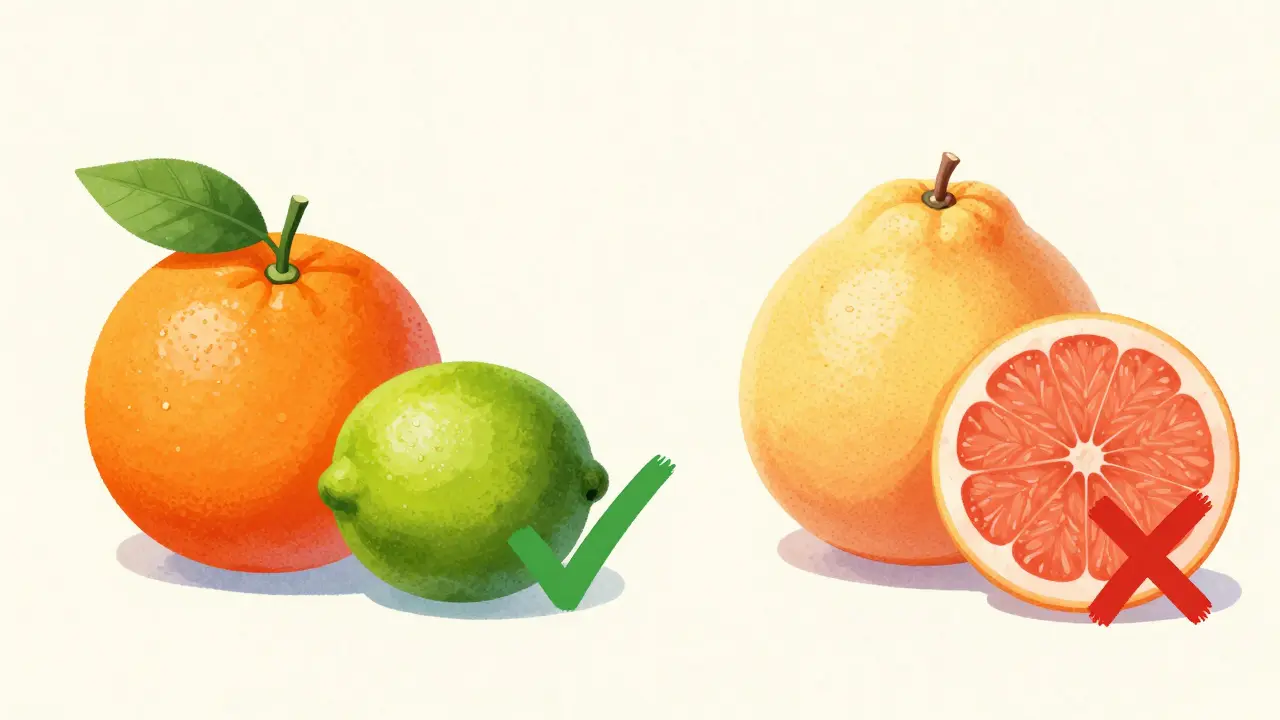
If you love citrus, you might think switching to oranges solves the problem. Regular sweet oranges (Valencia, Navel) and tangerines are generally safe. They lack the high concentrations of furanocoumarins found in grapefruit. But be careful with other members of the citrus family:
- Pomelos: These contain similar levels of furanocoumarins and pose the same risks.
- Seville Oranges: Often used in marmalades and preserves, these bitter oranges are chemically similar to grapefruit and should be avoided.
- Limes: Generally safe, though rare varieties may have trace amounts. Stick to standard Persian limes for safety.
Also, remember that the form doesn't matter. Freshly squeezed juice, frozen concentrate, canned juice, and even whole fruit all contain the active compounds. There is no "safe" version of grapefruit if you are on sensitive medications.
What Should You Do Now?
Don’t panic and throw away your medicine cabinet. The goal is awareness, not fear. Here is a practical checklist to manage your health safely:
- Read the Label: Look for the "Patient Counseling Information" section on your prescription insert. The FDA requires warnings for high-risk drugs. If it mentions grapefruit, take it seriously.
- Talk to Your Pharmacist: Pharmacists are the best resource for drug-food interactions. Ask them specifically: "Does my medication interact with grapefruit or Seville oranges?"
- Use Reliable Apps: Many pharmacy apps and health platforms now include food-drug interaction databases. Check before you buy a new supplement or medication.
- Consider Alternatives: If you are on Simvastatin and love grapefruit, ask your doctor if you can switch to Rosuvastatin or Pravastatin. Many doctors prefer prescribing non-interacting statins precisely to avoid this hassle.
- Monitor Symptoms: If you accidentally consume grapefruit, watch for signs of overdose. For statins, this might mean unusual muscle pain or weakness. For blood pressure meds, watch for extreme dizziness or fainting. Seek medical attention if symptoms appear.
The American Geriatrics Society highlights that older adults are particularly vulnerable because they often take multiple medications (polypharmacy). If you or an aging parent are managing several prescriptions, the cumulative risk increases. Simplifying the regimen or strictly avoiding trigger foods becomes a critical part of care.
Frequently Asked Questions
How much grapefruit juice causes an interaction?
Even small amounts can trigger a reaction. Studies show that as little as 200 mL (about 6.8 ounces) of grapefruit juice is sufficient to inhibit CYP3A4 enzymes significantly. One whole grapefruit can also precipitate adverse effects. There is no established "safe threshold," so complete avoidance is recommended for high-risk medications.
Can I take my medication with water and drink grapefruit juice later?
For most high-risk drugs, timing does not help. Because the enzyme inhibition is irreversible, the effect lasts for up to 72 hours. Drinking juice hours after taking your pill will still result in elevated drug levels when you take your next dose. You must avoid grapefruit entirely during treatment.
Are pink and white grapefruits different in terms of risk?
Yes, but both are risky. White grapefruits typically contain 20-50% higher concentrations of furanocoumarins than pink or red varieties. However, the concentration in pink grapefruit is still high enough to cause clinically significant interactions. Neither variety is considered safe for patients on interacting medications.
Does grapefruit juice affect over-the-counter medications?
Most common OTC drugs like acetaminophen (Tylenol) or ibuprofen (Advil) are not significantly affected by grapefruit juice. However, some older antihistamines and certain migraine medications (triptans) may have interactions. Always check the label or consult a pharmacist for OTC products, especially if you take them regularly.
What are the symptoms of a grapefruit-medication interaction?
Symptoms depend on the drug class. For statins, look for unexplained muscle pain, tenderness, or weakness (signs of rhabdomyolysis). For blood pressure meds, watch for dizziness, lightheadedness, or fainting. For anxiety meds, excessive drowsiness or confusion may occur. If you experience these after consuming grapefruit, seek medical help immediately.
Understanding this interaction empowers you to make safer choices. It’s not about eliminating joy from your diet, but about respecting the chemistry of your body. By staying informed and communicating with your healthcare providers, you can enjoy your health without unexpected side effects.
Dawn Renee
July 5, 2026 AT 13:24It is quite obvious that the pharmaceutical industry has been manipulating the public discourse regarding these interactions for decades. They want you to believe it is a simple chemical reaction, but there are deeper forces at play here that most people refuse to acknowledge. The fact that they only started warning about this in the late 80s suggests a cover-up of earlier data that was inconvenient for their profit margins. I have seen documents that hint at suppressed studies from the 70s that were never published because they threatened the bottom line of major conglomerates. You must look beyond the surface level explanations provided by mainstream medical sources. They rely on your trust to keep you compliant and dependent on their products without question. It is a systematic erosion of personal autonomy through controlled information dissemination.
Divya Prakash
July 7, 2026 AT 09:58One cannot help but observe the profound lack of intellectual rigor displayed by those who casually consume grapefruit while ignoring the intricate biochemical pathways that govern pharmacokinetics. It is truly disheartening to witness such negligence among individuals who presumably value their own health and well-being above mere culinary convenience. The enzyme CYP3A4 is not merely a passive participant in metabolism; it is a sophisticated biological mechanism that requires respect and understanding, yet it is treated with such disdain by the general populace. Those who fail to comprehend the severity of irreversible inhibition are essentially gambling with their physiological integrity, a risk that is both unnecessary and indicative of a broader societal decline in critical thinking skills. We must elevate our standards of self-care and reject the mediocrity of uninformed dietary choices that jeopardize our therapeutic outcomes.
Mohit Patil
July 8, 2026 AT 02:05they dont tell you this because big pharma wants you sick so you keep buying pills every month its a scam the whole system is rigged against us they hide the truth about natural cures and push toxic chemicals instead wake up sheeple before its too late
Chandan Sharma
July 8, 2026 AT 21:21The elucidation of furanocoumarins as the primary antagonists to hepatic enzymatic activity is a rather elegant demonstration of nature’s capacity for subtle sabotage. One might argue that the citrus fruit, in its verdant glory, harbors a venomous underbelly that belies its refreshing exterior, much like a gilded cage concealing rusted bars. It is fascinating to consider how a beverage so often associated with vitality and morning rejuvenation can simultaneously act as a silent saboteur of one’s prescribed regimen. This duality serves as a poignant reminder that not all things presented as wholesome are inherently benign, especially when viewed through the lens of modern pharmacology. We must approach our dietary habits with the same scrutiny we apply to our medicinal routines, lest we fall victim to the deceptive simplicity of a glass of juice.
Katie Dixon
July 8, 2026 AT 21:35I just think it's hilarious that everyone is panicking over a little juice when we should be focusing on real issues like national sovereignty and border security. But hey, if you're too busy worrying about your statins to care about who's crossing into our country, that's your problem. Honestly, this whole thing feels like another distraction created by the elites to keep us divided and weak. We need strong leaders who prioritize our health and safety, not bureaucrats hiding behind scientific jargon. Anyway, hope you all enjoy your fancy orange juice while the world falls apart around you. Stay safe out there, folks!
Anna Bartle
July 10, 2026 AT 03:11This is such an incredibly important topic!! So many people don't realize how serious this interaction can be! Please always check with your pharmacist before mixing foods with meds! Your health is worth it!!! Let's spread awareness and help each other stay safe!!!
Chris Munton
July 10, 2026 AT 12:23It is morally reprehensible that healthcare providers do not emphasize this interaction more strongly during consultations, leaving patients vulnerable to preventable harm. The sheer scale of potential damage caused by something as innocuous as breakfast juice highlights a systemic failure in patient education and responsibility. We have a duty to protect ourselves and others from such avoidable risks, yet society continues to prioritize convenience over caution. This negligence reflects a broader ethical decay in how we approach personal health management. Until we hold institutions accountable for this oversight, individuals remain exposed to unnecessary danger.
Amrithaa Thayaparan
July 11, 2026 AT 04:58honestly this is why i stopped trusting doctors completely they try to control everything you eat and drink its all about power not health u guys are so naive for believing them just eat organic and forget the pills