
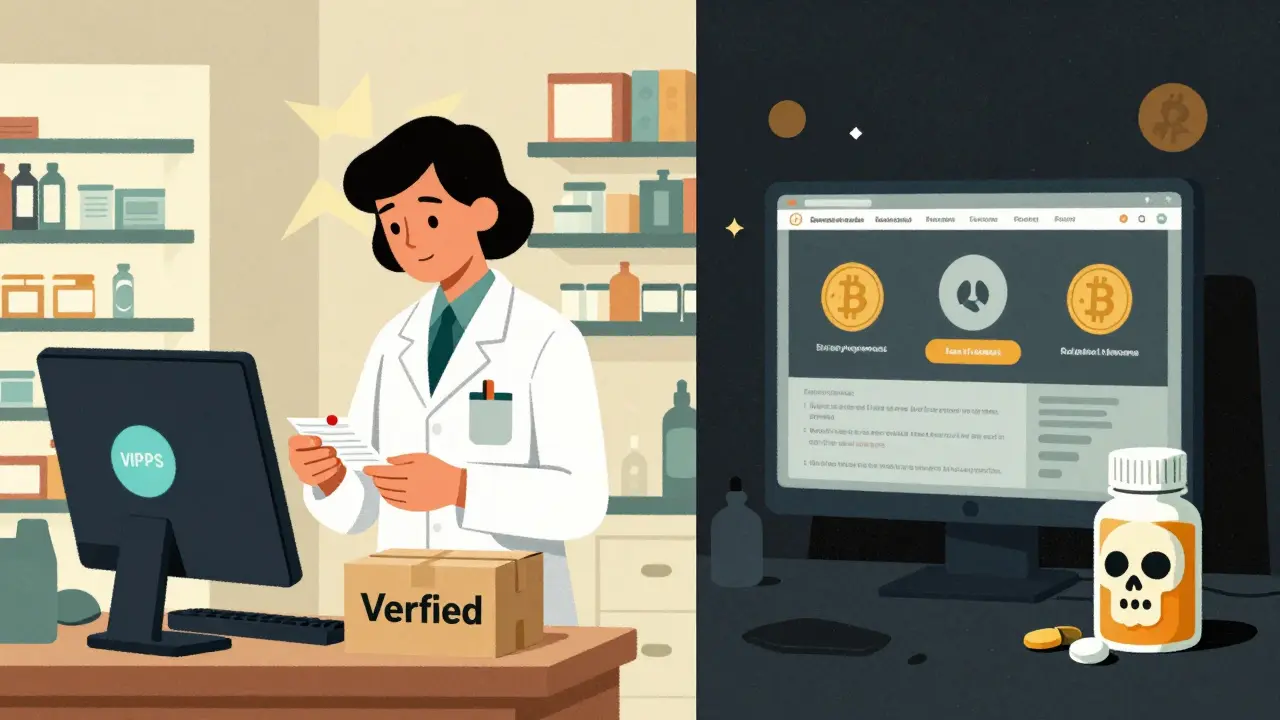
Buying medicine online sounds simple - click, pay, deliver. But what if the website you're using is selling you something dangerous? Every year, thousands of people order pills from online pharmacies without checking if they're real. And the consequences aren't just wasted money - they can be life-threatening. Fake pharmacies sell pills with no active ingredients, wrong dosages, or even rat poison. Legitimate ones? They follow the law, protect your health, and have licensed pharmacists on staff. The difference isn't always obvious. Here’s how to tell them apart before you hit "Buy Now."
What Makes an Online Pharmacy Legit?
A real online pharmacy doesn’t just look professional - it follows strict rules. In the U.S., it must be accredited by the VIPPS Verified Internet Pharmacy Practice Sites program run by the National Association of Boards of Pharmacy (NABP). That means the pharmacy has a physical address in the U.S., employs licensed pharmacists, and requires a valid prescription for any prescription drug. You won’t find a VIPPS-accredited pharmacy selling opioids, Adderall, or Viagra without a doctor’s note. They also have a working phone number and a physical location you can verify through your state’s board of pharmacy website.
In the UK, the General Pharmaceutical Council (GPhC) is the official regulator that licenses online pharmacies. You can search their public register by pharmacy name or postcode. If it’s not listed there, it’s not legal. In the EU, every legal pharmacy must display the EU common logo a blue cross on a white background that links directly to the pharmacy’s official authorization status. Click it. If it doesn’t take you to a government verification page, it’s fake.
Red Flags That Mean You’re Dealing With a Rogue Pharmacy
Here’s what you’ll see on a rogue pharmacy site - and why each one is a warning sign.
- No prescription required - If you can buy Adderall, Cialis, or insulin without a doctor’s order, walk away. Legit pharmacies never do this. A 2023 study found 98.2% of rogue sites sold prescription drugs without verification.
- Too-good-to-be-true prices - A 30-day supply of Viagra for $10? That’s not a deal. It’s a trap. Legit pharmacies pay for real medication, licensed staff, and compliance. Rogue ones buy bulk counterfeit pills from overseas labs for pennies.
- No physical address or phone number - If the contact page says "Email us" with no street address, no area code, and no way to call a real person, it’s not real. A 2021 analysis found 89% of rogue sites hid their location.
- International shipping only - Over 84% of rogue pharmacies ship worldwide. Legit ones in the U.S. or EU only serve customers in their licensed regions. Why? Because they can’t legally sell outside their jurisdiction.
- Spam emails or pop-up ads - If you got an unsolicited email saying "Your prescription is ready!" or saw a Facebook ad for "discounted Xanax," that’s a red flag. Legit pharmacies don’t cold-call or spam. They’re regulated - they can’t.
- Fake seals and logos - Rogue sites love to copy VIPPS, LegitScript, or NABP logos. But if you click them, they either don’t work or link to a random page. A 2023 study found 41.8% of rogue pharmacies used fake verification badges.
- Payment only in cryptocurrency - No legitimate pharmacy asks for Bitcoin or Monero. Why? Because it’s untraceable. Criminals use it to disappear after you get sick.
How Rogue Pharmacies Trick You
These aren’t amateur operations. Many rogue pharmacies look like real medical sites. They use professional design, stock photos of doctors, fake testimonials, and even fake "pharmacist chat" buttons. Some have been around for years. One site, shut down in 2021, was reopened under a new domain just six months later.
They also exploit fear. During the 2022 infant formula shortage, dozens of rogue sites popped up selling "emergency" formula and antibiotics. People in panic bought them. Many received powder laced with heavy metals.
Search engines make it worse. Google and Bing sometimes rank rogue pharmacies higher than legitimate ones. A 2022 report showed that searching for "buy hydrocodone online" returned mostly illegal sites on the first page. Legit pharmacies don’t pay for ads - they rely on trust. Rogue ones do.
How to Verify Before You Buy
Before you click "Checkout," do this:
- Check for the VIPPS logo (U.S.) or GPhC registration (UK). Click it. If it doesn’t link to a government verification page, it’s fake.
- Look for a U.S. or EU physical address. Type it into Google Maps. If it’s a warehouse, PO box, or empty lot - walk away.
- Call the phone number. If it goes to an automated system or a foreign call center, it’s not legit.
- Search the pharmacy name + "scam" or "complaint." Real ones rarely have negative reviews. Rogue ones have dozens.
- Ask yourself: "Would my doctor or local pharmacy recommend this?" If the answer is no, it’s not safe.
The FDA and NABP recommend only using pharmacies that require a prescription, have a licensed pharmacist on staff, and are based in the U.S. or EU. If you’re unsure, don’t buy. Order from your local pharmacy instead. They’ll ship to you legally.
Why This Matters
It’s not just about getting sick. In 2021, the FDA found counterfeit pills containing fentanyl in over 60% of cases linked to rogue online pharmacies. People died from what they thought was oxycodone. Others got antibiotics with no active ingredients - and their infections got worse.
And it’s not just about drugs. Rogue pharmacies steal your credit card info, sell your medical data, and even install malware on your device. One site in 2023 was linked to a ransomware attack that locked 12,000 users’ files.
There are 35,000 rogue pharmacy websites operating globally. Only 68 U.S. pharmacies have VIPPS accreditation. That’s not a coincidence. The system is overwhelmed. You have to protect yourself.
What to Do If You’ve Been Scammed
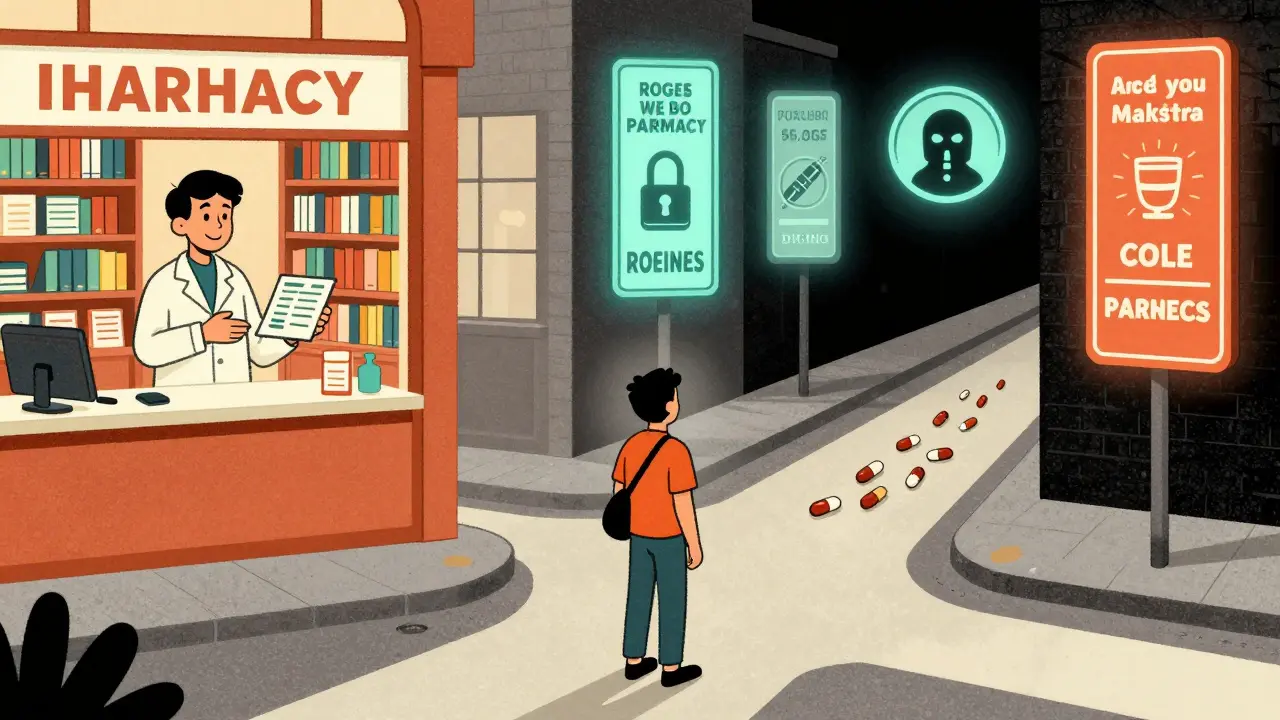
If you ordered from a rogue site:
- Stop using the pills. Don’t throw them away - take them to a local pharmacy for safe disposal.
- Report it to the FDA’s MedWatch program. They track counterfeit drugs and shut down sites.
- Contact your bank to dispute the charge. Most rogue sites use stolen credit card numbers - you’re not liable.
- Check your devices for malware. Use antivirus software and change passwords on any accounts linked to the purchase.
Don’t feel ashamed. These sites are designed to fool even careful people. The goal isn’t to scare you - it’s to arm you with facts.
Final Tip: When in Doubt, Skip It
You don’t need to buy medication online. Your local pharmacy can mail you prescriptions. Many insurance plans cover home delivery. If you’re struggling with cost, ask about patient assistance programs. No online pharmacy is worth risking your health.
If a site feels off - it is. Trust your gut. The safest pharmacy is the one you can walk into, talk to, and trust.
How can I tell if an online pharmacy is accredited in the U.S.?
Look for the VIPPS seal from the National Association of Boards of Pharmacy (NABP). Click the logo - it should take you to a verification page on the NABP website listing the pharmacy’s name, address, and license status. As of 2021, only 68 U.S. pharmacies had this accreditation. If the seal doesn’t link anywhere or looks blurry, it’s fake.
Can I trust online pharmacies that offer free consultations?
Not necessarily. Some rogue pharmacies use "online consultations" to bypass real doctor oversight. A legitimate pharmacy requires a prescription from a licensed doctor you’ve seen in person or via a verified telehealth service. If the consultation happens instantly with no medical history review and results in a prescription for controlled substances, it’s likely a scam.
Are Canadian online pharmacies safe?
Some are - but most aren’t. Canada has strict pharmacy laws, but many websites claiming to be Canadian are actually based in the U.S. or Eastern Europe. Only pharmacies that are licensed by Canadian regulatory bodies and display a valid Canadian pharmacy license number are trustworthy. Even then, importing prescription drugs from Canada into the U.S. is technically illegal unless done under specific FDA exceptions.
Why do rogue pharmacies use SSL encryption if they’re illegal?
SSL (the padlock icon) only means your data is encrypted - not that the pharmacy is legal. Rogue sites use SSL to trick you into thinking they’re secure. It’s like a fake police badge. The encryption protects your credit card, but not your health. Always check for licensing, not just the padlock.
What should I do if I received pills that look different from my usual prescription?
Stop taking them immediately. Take the pills to your local pharmacy - pharmacists can identify counterfeit medication by color, shape, imprint, and packaging. Report the incident to the FDA’s MedWatch program. They’ll investigate and may shut down the website. Never flush or throw away suspected counterfeit drugs - they can be used as evidence.
Allison Priole
March 21, 2026 AT 22:33I’ve ordered from a few online pharmacies before, mostly for my anxiety meds when my local one was out of stock. One time I got a bottle that looked totally different - smaller pills, weird color, no imprint. I thought I was just getting a generic swap, but then I checked the NABP site and realized the site had no VIPPS seal. Scared the hell outta me. Now I only use ones with the verified logo, even if it takes an extra day. Better safe than sorry, right? Also, side note: if a site has a "24/7 pharmacist chat" but the chatbot answers in broken English and says "your order is processed" 3 times, run. 🤷♀️
Casey Tenney
March 23, 2026 AT 08:13If you’re buying pills off a website without a prescription, you deserve what you get.
Sandy Wells
March 25, 2026 AT 03:01Legit pharmacies require prescriptions. Rogue ones don't. That's it. No need for all this fluff. The rest is just marketing. Also why are we even talking about Canada? Just get your meds from your doctor like normal people
Bryan Woody
March 26, 2026 AT 15:42Let me guess - you clicked on a Facebook ad that said "Viagra for $5!" and now you’re wondering why your heart is racing and your bank account is crying. Congrats. You’re the reason these scams exist. Every time someone buys from a site that doesn’t require a script, it funds another batch of fentanyl-laced "Adderall" that kills someone’s kid. These aren’t "gray area" pharmacies. They’re criminal enterprises with websites. And yes, I’m mad. I’ve seen too many obituaries from people who thought "free shipping" meant "safe."
Also, the FDA doesn’t shut these down because they’re lazy. They’re shut down because the same people who buy from them keep going back. You don’t get to be a victim and a participant. Pick one.
And for the love of god, if you’re using crypto to pay for your hypertension meds, you’re not saving money - you’re funding a ransomware gang. Stop it.
Chris Dwyer
March 27, 2026 AT 20:29Hey, I get it - buying meds online feels like a shortcut. But trust me, the real shortcut is just calling your local pharmacy. Most of them offer mail-order for free with insurance. I used to order from some sketchy site because I thought I was saving $50. Then I got sick for a week because the pills had no active ingredient. My pharmacist at CVS found out, called me, and set me up with a free 30-day supply through my insurance. No drama. No risk. Just good old-fashioned human help.
And if cost is the issue? Ask for patient assistance programs. I didn’t know they existed until my grandma told me. She’s 72 and still knows more about healthcare than half the internet. Don’t let a flashy website trick you. Talk to a real person. They’re way more reliable than a chatbot with a fake license badge.
Timothy Olcott
March 29, 2026 AT 11:35USA ONLY. NO EXCEPTIONS. 🇺🇸
Why are we even talking about Canada or EU? If you’re not using a VIPPS pharmacy, you’re supporting foreign criminals. I don’t care if it’s "cheaper" - I don’t want my meds made in a basement in Moldova. I want American-made, American-regulated, American-pharmacist-checked. If you can’t afford it? Get help. Don’t risk your life for a $10 deal. This isn’t Amazon. This is your heart, your brain, your life. Stay patriotic. Stay safe.
Also, if you’re using a VPN to access "international" pharmacies? You’re not clever. You’re a target.
Jackie Tucker
March 30, 2026 AT 08:17How quaint. You treat the internet like a 19th-century apothecary. But the real tragedy isn’t rogue pharmacies - it’s that we’ve outsourced healthcare to algorithms and ads. The fact that Google ranks illegal sites higher than licensed ones says more about our broken system than about individual consumers. We don’t need another checklist. We need systemic reform. Until then, yes, avoid the scams. But don’t pretend this is about personal responsibility. It’s about corporate negligence masquerading as consumer education.
Also, "trust your gut"? That’s not advice. That’s a coping mechanism for a society that can’t afford to keep its citizens alive.
Thomas Jensen
March 30, 2026 AT 14:43What if the whole VIPPS thing is a scam too? I read this one forum post that said the NABP is secretly owned by Big Pharma and they only approve pharmacies that sell overpriced generics. What if the "fake" sites are actually the real ones? I mean, think about it - why would the government want you to have cheap meds? They profit off your illness. The padlock icon? That’s just to make you feel safe while they track your data. I’ve been on 3 different meds in the last 5 years and 2 of them gave me seizures. Coincidence? I think not.
Also, my cousin works at a "legit" pharmacy and she says they just refill the same bottle 3 times and call it a new batch. I’m not buying anything anymore. I’m going to try essential oils.