
Abaloparatide: What It Is, How It Works, and What You Need to Know
When you're dealing with abaloparatide, a synthetic peptide that mimics the action of parathyroid hormone to stimulate new bone formation. Also known as Tymlos, it's not just another osteoporosis drug—it's a targeted therapy designed for people at high risk of breaking bones, especially after menopause or long-term steroid use. Unlike older drugs that simply slow bone loss, abaloparatide actively tells your body to build stronger bone tissue, making it one of the few treatments that can actually reverse some of the damage caused by osteoporosis.
This treatment works by binding to a specific receptor in bone cells, triggering a short burst of bone-building activity. It’s given as a daily injection under the skin, usually for up to two years. After that, most patients switch to a different medication—like a bisphosphonate—to lock in the gains. Studies show it reduces spine fractures by nearly 86% and non-spine fractures by about 43% compared to placebo. That’s not a small improvement; it’s life-changing for someone who’s afraid to stumble or lift a grocery bag.
Abaloparatide is closely related to parathyroid hormone analog, a class of drugs that activate the same pathway as the body’s natural hormone to regulate calcium and bone turnover. But it’s more selective than its predecessor, teriparatide. That means fewer side effects like dizziness or nausea, and a lower chance of overstimulating bone resorption. It’s also used differently than osteoporosis treatment, a broad category including pills, infusions, and hormones that either prevent bone breakdown or promote new growth. While most osteoporosis drugs are taken daily or monthly by mouth, abaloparatide requires daily injections and is reserved for higher-risk patients. It’s not a first-line option—it’s a next-step option.
You won’t see results overnight. Bone density changes take months to show up on scans. But many people notice they feel more stable, less afraid of falling, or even just more confident walking without a cane. That’s the real win. And because it’s a short-term therapy, it’s often paired with long-term maintenance drugs to keep bones strong for years after the injection stops.
There are no magic bullets in bone health, but abaloparatide comes close. It’s not for everyone—your doctor will check your calcium levels, kidney function, and fracture history before prescribing it. But if you’ve tried other treatments and still have low bone density, or if you’ve already broken a bone, this might be the tool you’ve been waiting for. Below, you’ll find real-world insights from patients and doctors on how it fits into daily life, what side effects to watch for, and how it stacks up against other options. No fluff. Just what matters.
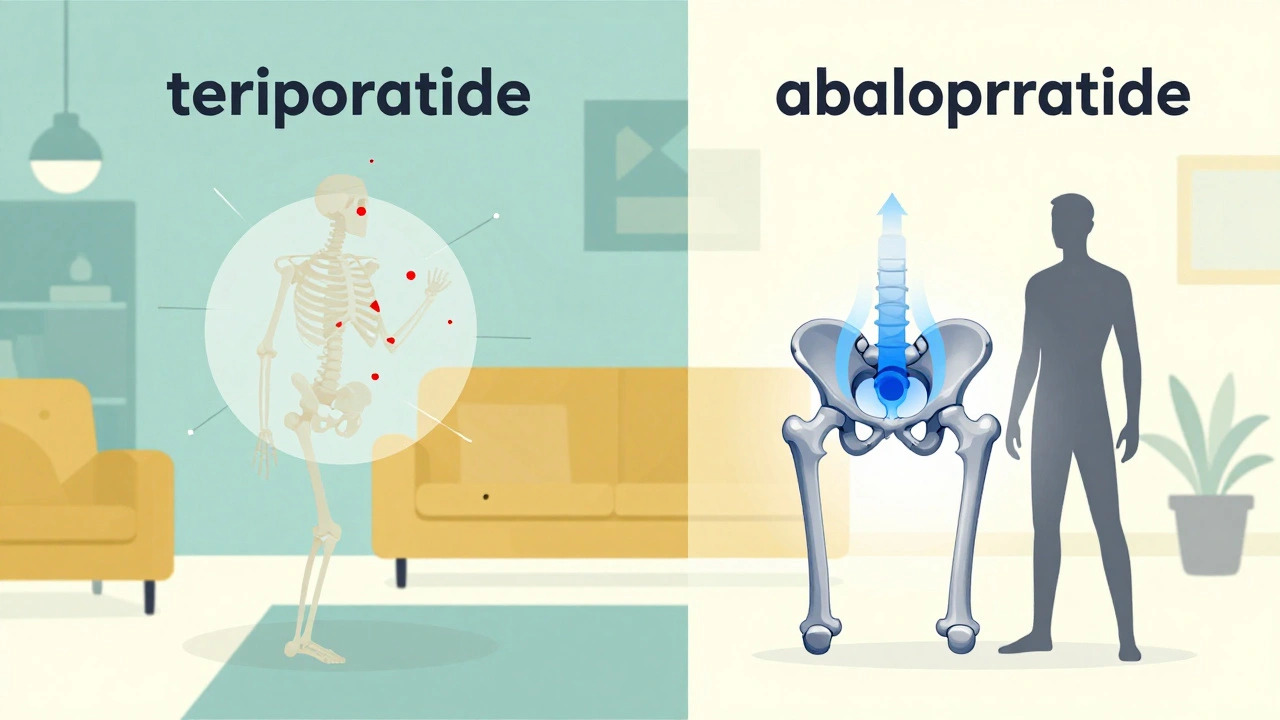
Teriparatide vs Abaloparatide for Osteoporosis: What You Need to Know
Teriparatide and abaloparatide are bone-building drugs for severe osteoporosis. Learn how they differ in effectiveness, safety, cost, and real-world use to make the best choice for your needs.