
Anabolic Agents: What They Are, How They Work, and What You Need to Know
When people talk about anabolic agents, synthetic substances that mimic testosterone to promote muscle growth and tissue repair. Also known as anabolic-androgenic steroids, they’re used by athletes, bodybuilders, and sometimes patients recovering from severe muscle loss. But they’re not harmless supplements—they’re powerful drugs with real, lasting consequences. These aren’t magic pills. They change how your body builds muscle, but they also mess with your hormones, liver, heart, and even your mood.
Many users think anabolic agents are just about getting bigger. But the real story is more complex. steroid use, the act of taking synthetic hormones to enhance physical performance or appearance. Also known as anabolic steroid cycling, it often involves stacking different compounds, timing doses around workouts, and using post-cycle therapy to try to restore natural hormone levels. This isn’t science fiction—it’s a routine practice in some fitness circles. But the side effects aren’t optional. Liver damage, heart rhythm problems, infertility, and depression aren’t rare outliers. They’re documented risks that show up in emergency rooms and long-term studies.
Then there’s the legal side. In the U.S., anabolic agents are Schedule III controlled substances. That means you need a prescription for medical use—like treating delayed puberty or muscle loss from cancer or HIV. But most people using them don’t have a prescription. They buy them online, from gyms, or through underground labs. And those products? They’re often fake, contaminated, or mislabeled. One study found nearly 75% of online steroid products didn’t contain what the label claimed. That’s not just risky—it’s dangerous.
What you won’t find in most fitness forums is the truth about recovery. After stopping anabolic agents, your body doesn’t just bounce back. Natural testosterone production can stay suppressed for months or even years. Some men never fully recover. Women face irreversible voice deepening, facial hair growth, and menstrual issues. And kids? Using these before full growth plate closure can permanently stunt height.
There’s also the psychological toll. Aggression, paranoia, and mood swings aren’t just rumors—they’re called "roid rage" for a reason. People have been hospitalized after violent outbursts linked to steroid use. Others develop body dysmorphia, chasing an impossible physique while ignoring the damage they’re doing.
But here’s the thing: not everyone using anabolic agents is a bodybuilder or athlete. Some are older adults trying to fight age-related muscle loss. Others are recovering from illness. And yes, in controlled medical settings, they can help. But that’s not the same as popping pills for a quicker six-pack.
The posts below don’t sugarcoat it. They show you what actually happens when these drugs enter your system—how they interact with your hormones, what labs doctors watch for, why some people get away with it for years while others crash hard, and how to spot fake products before they hurt you. You’ll read about real cases, real risks, and real alternatives that work without the side effects. No hype. No promises. Just facts.
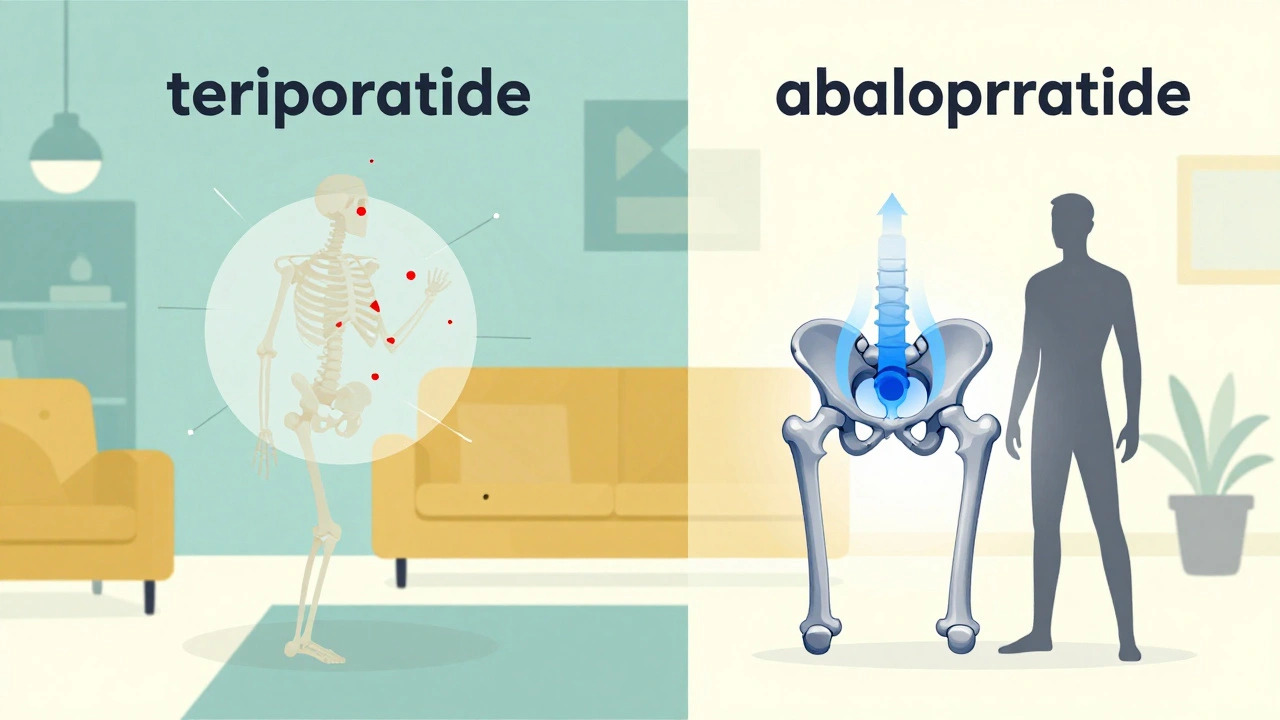
Teriparatide vs Abaloparatide for Osteoporosis: What You Need to Know
Teriparatide and abaloparatide are bone-building drugs for severe osteoporosis. Learn how they differ in effectiveness, safety, cost, and real-world use to make the best choice for your needs.