
B12 Deficiency After Gastric Bypass: Causes, Symptoms, and Solutions
When you have B12 deficiency after gastric bypass, a drop in vitamin B12 levels following weight-loss surgery that can lead to nerve damage, fatigue, and brain fog. Also known as post-bariatric B12 deficiency, it’s not rare—it’s expected. Up to 70% of people who’ve had gastric bypass develop low B12 within five years, often without knowing why they feel so tired or off. This isn’t just about feeling sluggish. Vitamin B12 is critical for making red blood cells, keeping nerves healthy, and helping your brain function. Without enough, you risk permanent nerve damage, memory loss, or even depression that doesn’t respond to therapy.
Why does this happen? Gastric bypass changes how your body absorbs nutrients. The part of your stomach that makes intrinsic factor—a protein your body needs to grab B12 from food—is bypassed. Even if you eat B12-rich foods like meat, eggs, or dairy, your body can’t use them. Supplements in pill form often don’t work either, because they still need that same absorption pathway. That’s why many patients need B12 injections, direct delivery of vitamin B12 into muscle or under the skin to bypass the gut entirely. Also known as cyanocobalamin shots, they’re the most reliable fix for this problem. Some people do well with high-dose nasal sprays or sublingual tablets, but those aren’t foolproof. Blood tests are the only way to know if you’re truly getting enough. Many doctors check B12 only once a year—but if you’ve had surgery, you need it every 6 months, especially if you’re still losing weight or feeling weird.
Don’t wait for numb hands, tingling feet, or trouble walking to get tested. Early signs are subtle: constant exhaustion, brain fog, mood swings, or even a sore tongue. If you’ve had gastric bypass and you’re not on a B12 regimen, you’re at risk. And if you are on it but still feel off, your dose might be too low—or you might need injections instead of pills. This isn’t about being careful—it’s about staying alive and functional. The posts below cover real stories, lab results, and proven strategies from people who’ve been there. You’ll find what works, what doesn’t, and how to talk to your doctor without sounding paranoid. This isn’t theoretical. It’s your body. And you deserve to feel like yourself again.
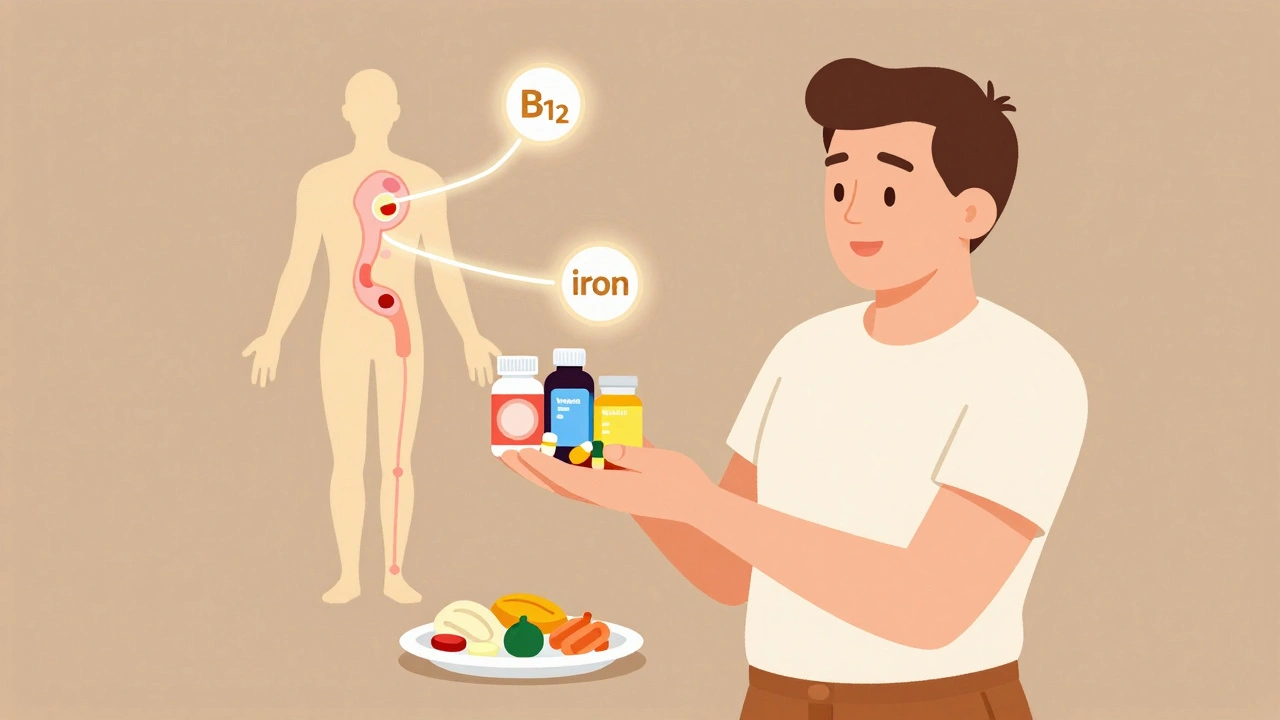
Bariatric Vitamins: Essential Supplements to Prevent Deficiencies After Weight-Loss Surgery
After bariatric surgery, your body can't absorb nutrients like before. Bariatric vitamins prevent life-threatening deficiencies in B12, iron, vitamin D, and calcium. Without them, you risk nerve damage, bone loss, and anemia.