
Bariatric Nutrition: What You Need to Know About Eating After Weight Loss Surgery
When you undergo bariatric nutrition, the specialized dietary approach required after weight loss surgery to maintain health and prevent deficiencies. Also known as post-surgical nutrition, it’s not a temporary diet—it’s a lifelong shift in how your body absorbs food and what it needs to survive. Unlike regular dieting, bariatric nutrition starts the moment your stomach is reduced or rerouted. Your new anatomy changes everything: less space to eat, slower digestion, and reduced absorption of vitamins and minerals. This isn’t about willpower—it’s about biology.
That’s why nutritional supplements after surgery, essential vitamins and minerals prescribed to prevent life-threatening deficiencies following bariatric procedures. Also known as post-op micronutrients, it’s not optional—it’s medical necessity. Iron, calcium, vitamin B12, and vitamin D aren’t just helpful—they’re critical. Without them, you risk anemia, bone loss, nerve damage, and even neurological problems. Many patients think they’re fine because they’re losing weight, but deficiencies creep in silently. A simple blood test can catch them before you feel sick.
And then there’s malabsorption after bariatric surgery, the reduced ability of the digestive tract to absorb nutrients due to surgical changes in the gut. Also known as post-surgical nutrient loss, it’s why you can eat a chicken breast and still be starving for nutrients. In gastric bypass, food skips parts of the small intestine where most vitamins are absorbed. In sleeve gastrectomy, your stomach shrinks, so you can’t eat enough food to meet basic needs. That’s why protein intake matters more than calories—you need 60 to 80 grams a day just to keep muscle and organs working. Most people don’t realize how hard it is to hit that target without shakes or supplements.
What you eat after surgery isn’t just about portion size—it’s about density. You can’t fill up on bread, pasta, or sugary snacks. Every bite must count. Lean meats, eggs, tofu, low-fat dairy, and protein-rich vegetables become your new staples. Liquids with meals? Avoid them. They push food through too fast and reduce nutrient uptake. Snacking between meals? Don’t. Your stomach can’t handle it, and it defeats the purpose of the surgery.
And yes, you’ll need to track your intake. Not because you’re obsessed with calories, but because your body can’t tell you when it’s missing something. A food journal or app isn’t a punishment—it’s your insurance policy. Many patients who skip tracking end up back in the doctor’s office with fatigue, hair loss, or fractures. You don’t want to be one of them.
The posts below cover everything from how to choose the right multivitamin after gastric bypass to why some people still get anemic even when they take supplements. You’ll find real-world tips on managing nausea, dealing with dumping syndrome, and making meals that actually taste good when your tolerance for fat and sugar is gone. These aren’t theory pages—they’re guides written by people who’ve lived it, and doctors who’ve seen the consequences of getting it wrong.
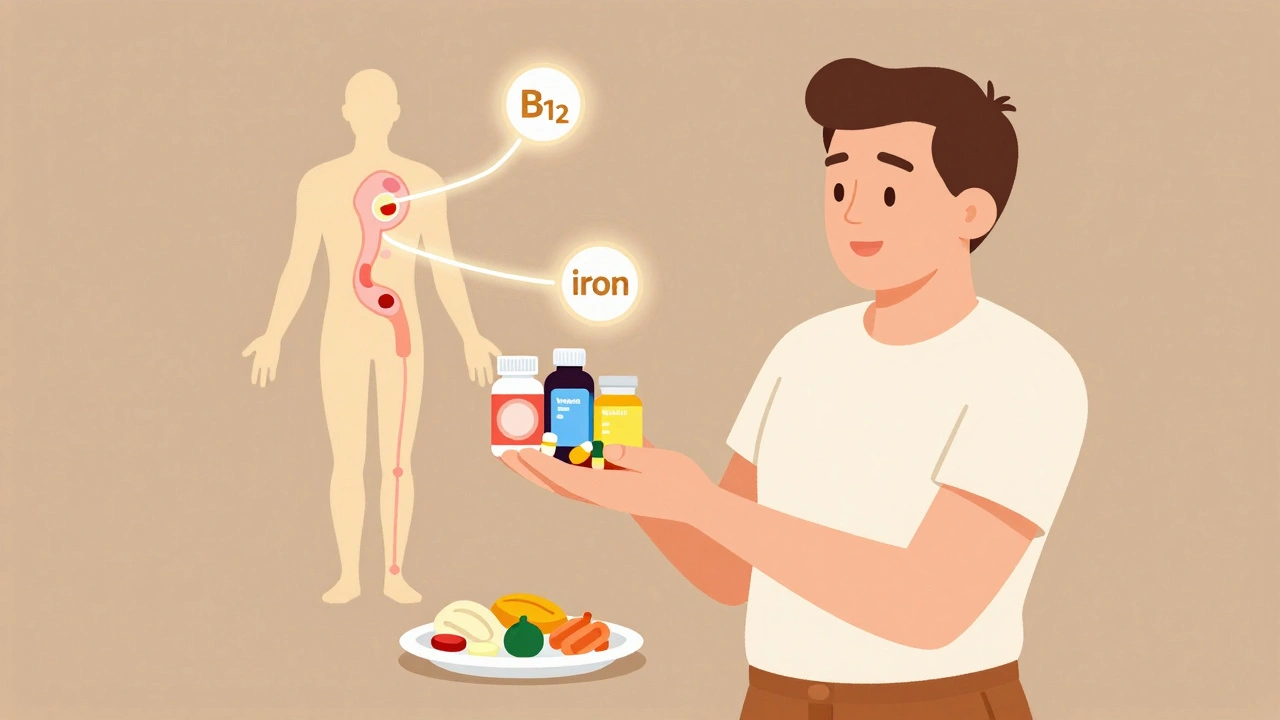
Bariatric Vitamins: Essential Supplements to Prevent Deficiencies After Weight-Loss Surgery
After bariatric surgery, your body can't absorb nutrients like before. Bariatric vitamins prevent life-threatening deficiencies in B12, iron, vitamin D, and calcium. Without them, you risk nerve damage, bone loss, and anemia.