
Biosimilar Cost Savings: How These Drugs Cut Healthcare Expenses Without Compromising Care
When you hear biosimilar cost savings, the financial benefit of using biosimilar drugs that are highly similar to brand-name biologics but priced significantly lower. Also known as biologic generics, they’re not copies—they’re scientifically proven alternatives that work the same way but cost far less. These drugs are changing the game for people with chronic conditions like rheumatoid arthritis, Crohn’s disease, and cancer. For years, biologic drugs cost tens of thousands of dollars a year, putting treatment out of reach for many. Biosimilars are breaking that barrier.
How do they save money? biosimilars, medications developed to match the structure and function of complex biologic drugs after the original patent expires skip the expensive early-stage research and clinical trials needed for the original. Instead, manufacturers prove they behave almost identically in the body. The FDA requires rigorous testing, but not the full $1 billion-plus price tag of developing a new biologic. That’s why a biosimilar can cost 15% to 80% less than its brand-name counterpart. For example, a biosimilar for Humira might save a patient $10,000 a year. That’s not a small difference—it’s life-changing for families, insurers, and public health systems.
And it’s not just about price. generic drugs, simpler chemical versions of brand-name pills that have been used for decades to cut costs paved the way for this shift. But biologics are far more complex—they’re made from living cells, not synthesized chemicals. That’s why biosimilars are their own category. They’re not generics, but they follow the same logic: same outcome, lower cost. And like generics, they’ve been proven safe and effective in millions of patients worldwide. Countries like Germany and Canada have used biosimilars for years to control spending, and the U.S. is catching up fast.
Some people still worry: Are they really the same? The answer is yes—if the FDA approves it, it’s as safe and effective as the original. Doctors who once hesitated are now prescribing biosimilars confidently. Pharmacists are switching patients without skipping a beat. And patients? They’re getting the same relief, the same control over their disease, but with a smaller bill. The real barrier now isn’t science—it’s awareness. Too many people don’t even know biosimilars exist, or they think they’re "second-rate." They’re not. They’re smarter.
What you’ll find below are real stories and facts about how biosimilar cost savings are reshaping treatment, from hospital formularies to patient wallets. You’ll see how these drugs compare to brand biologics, why some insurers push them hard, and how patients can ask for them without sounding like they’re settling for less. This isn’t theory. It’s happening right now, in clinics and pharmacies across the country—and it’s making healthcare more affordable for everyone.
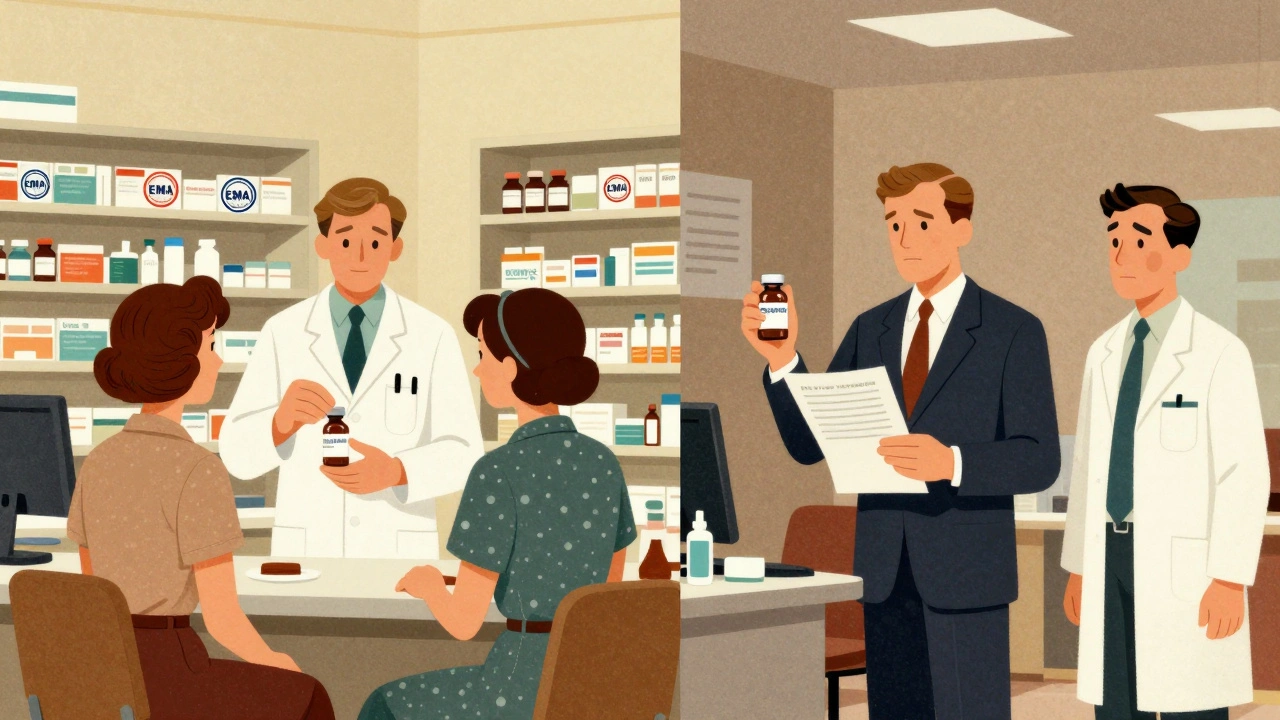
Global Biosimilar Markets: Europe vs United States - Adoption, Regulation, and Growth
Europe led the world in biosimilar adoption with a mature regulatory system, while the US lagged due to patent battles and strict rules. Now, FDA changes and new laws are accelerating US growth, setting up a global race for cost-effective biologic treatments.