
Biosimilar Regulation: What It Means for Your Medication Safety and Costs
When you hear biosimilar regulation, the set of rules that governs how complex, biologically-derived drugs are approved and monitored to ensure they match their reference products in safety and effectiveness. Also known as biologic similarity standards, it's the system that keeps these high-cost treatments from being sold as untested knockoffs. Unlike regular generic pills, biosimilars aren’t simple chemical copies—they’re made from living cells, which means tiny differences in production can change how they work in your body. That’s why biosimilars, medications designed to be highly similar to an already-approved biologic drug, with no clinically meaningful differences in safety or potency need far stricter oversight than your typical generic aspirin.
FDA approval, the rigorous process the U.S. Food and Drug Administration uses to evaluate whether a new drug is safe and effective for public use for biosimilars isn’t just about matching active ingredients. It requires head-to-head clinical trials, detailed lab analysis of protein structure, and real-world data on how patients respond. This isn’t bureaucracy—it’s protection. A faulty batch of insulin or a misfolded antibody in a rheumatoid arthritis drug could mean serious harm. That’s why the FDA doesn’t just rely on lab tests; they track how patients do over time, just like they do with the original biologic. And it’s not just the U.S. The European Medicines Agency, Health Canada, and other global regulators have similar standards, which is why biosimilars approved in Europe often get approved in the U.S. too—with the same level of scrutiny.
What does this mean for you? If your doctor suggests switching from a brand-name biologic like Humira or Enbrel to a biosimilar, you’re not getting a cheaper, lower-quality version. You’re getting a drug that’s been proven to work the same way, with the same risks and benefits. And because of drug safety, the ongoing monitoring and evaluation of medications to ensure they don’t cause unexpected harm after they reach the market systems in place, any rare side effects or manufacturing issues are caught fast. These rules are why biosimilars have been used safely by millions worldwide for over a decade.
You’ll find posts here that dig into how biosimilars fit into the bigger picture—how they compare to authorized generics, why doctors trust them, how supply chains affect availability, and what patients should track in their medication journals. Some stories show how patients saved thousands switching to biosimilars. Others explain why some still hesitate, even when the science says it’s safe. There’s no hype here—just facts, real experiences, and the regulatory backbone that makes these cost-saving options reliable.
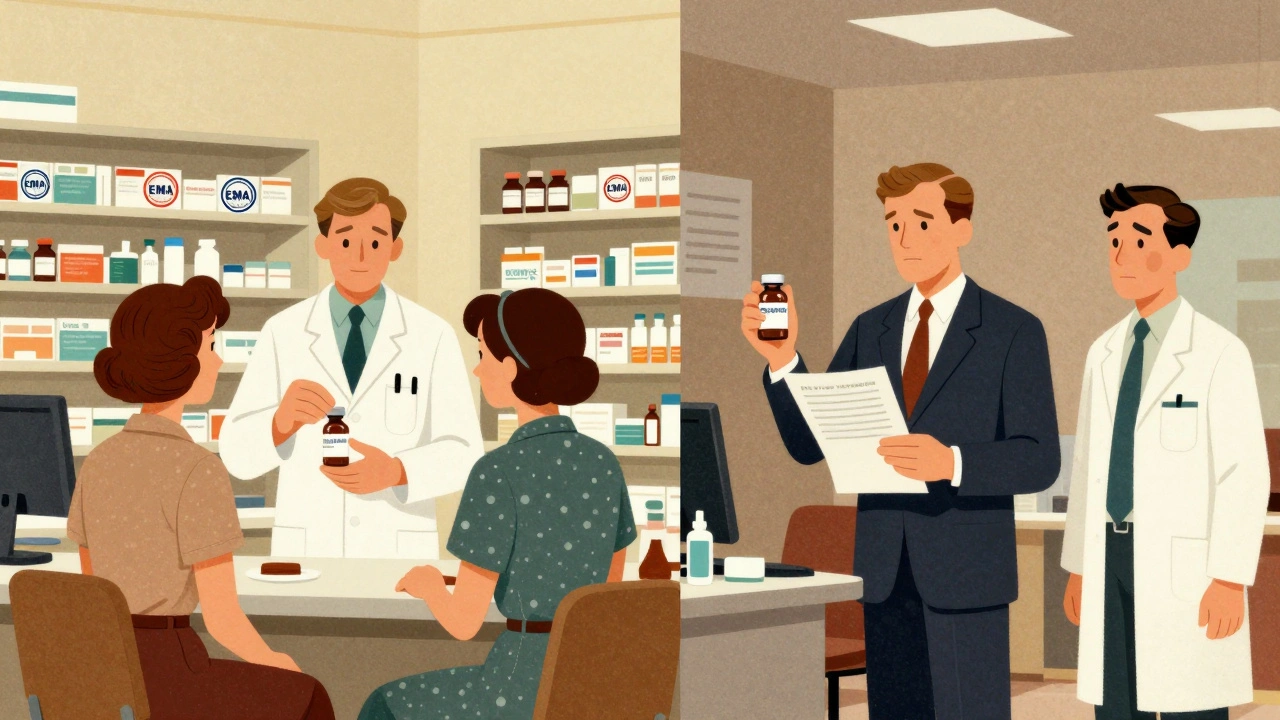
Global Biosimilar Markets: Europe vs United States - Adoption, Regulation, and Growth
Europe led the world in biosimilar adoption with a mature regulatory system, while the US lagged due to patent battles and strict rules. Now, FDA changes and new laws are accelerating US growth, setting up a global race for cost-effective biologic treatments.