
Biosimilars: What They Are, How They Compare to Biologics, and Why They Matter
When you hear biosimilars, highly similar versions of complex biologic drugs produced after the original patent expires. Also known as biologic generics, they’re not exact copies like traditional generics—they’re made from living cells, not chemicals, so they can’t be perfectly replicated. But they’re rigorously tested to match the original biologic in safety, purity, and potency. This is why doctors and insurers increasingly recommend them as a smart, affordable alternative.
Biosimilars work alongside biologic therapies, medications made from proteins or living organisms to treat conditions like rheumatoid arthritis, Crohn’s disease, and certain cancers. These drugs are powerful but expensive—often costing tens of thousands per year. Biosimilars cut that cost by 15% to 35%, without reducing effectiveness. They’re not a second choice; they’re a scientifically validated option. And unlike traditional generic drugs, simple chemical copies of small-molecule medications, biosimilars require complex manufacturing and extensive clinical testing to prove they behave the same way in the body.
Patients using biologics for chronic conditions often face sticker shock, but biosimilars are changing that. Many people worry switching will mean worse side effects or less control over their disease. But real-world data from the U.S., Europe, and Canada shows no meaningful difference in outcomes. In fact, patients on biosimilars report the same levels of symptom relief and safety as those on the original biologic. What’s more, biosimilars are helping make treatments like biologic injection, self-administered therapies delivered under the skin or into a vein more accessible to people who previously couldn’t afford them.
There’s still confusion. Some think biosimilars are just cheaper versions with hidden risks. Others don’t know they exist at all. The truth is, biosimilars are held to the same strict standards as the original biologics by the FDA and European regulators. They’re not shortcuts—they’re science-backed alternatives built on years of research. If you’re on a biologic and your doctor suggests a biosimilar, it’s not a downgrade. It’s a smarter, more sustainable way to stay on treatment.
What you’ll find below are real, practical guides from patients and providers who’ve walked this path. From how to talk to your doctor about switching, to what to watch for after the change, to how biosimilars fit into the bigger picture of drug costs and access—you’ll get clear answers without the jargon. No fluff. Just what works, what to expect, and how to protect your health while saving money.
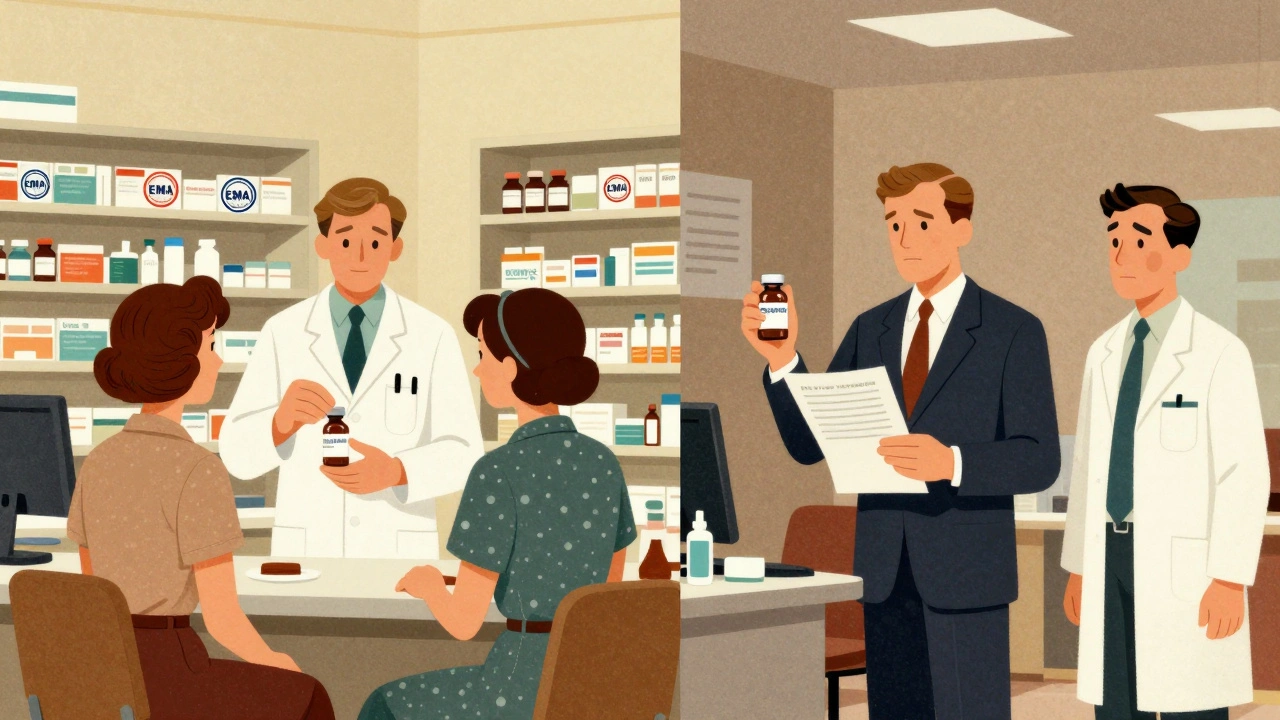
Global Biosimilar Markets: Europe vs United States - Adoption, Regulation, and Growth
Europe led the world in biosimilar adoption with a mature regulatory system, while the US lagged due to patent battles and strict rules. Now, FDA changes and new laws are accelerating US growth, setting up a global race for cost-effective biologic treatments.