
Body Composition: Understand Muscle, Fat, and How Medications Affect Your Shape
When we talk about body composition, the proportion of muscle, fat, bone, and water in your body. It's not about your weight—it's about what that weight is made of. Two people can weigh the same but look and feel completely different because one has more muscle and less fat. That’s the real story behind health, mobility, and even how your meds work.
Your muscle mass, the amount of lean tissue that lets you move, stand, and breathe. Also known as lean body mass, it’s not just for athletes—it’s your metabolic engine. As you age, you naturally lose it. That’s called sarcopenia, the progressive loss of muscle strength and size after age 40. Studies show up to half of adults over 80 have it. And some meds—like long-term statins or diuretics—can make it worse by affecting your energy, hydration, or muscle repair.
Then there’s fat percentage, how much of your total weight is stored fat. Not all fat is bad. Some protects your organs. But too much, especially around your belly, raises your risk for diabetes, heart trouble, and even drug side effects. Diuretics, for example, can make you lose water weight fast—but if you’re not careful, you might also lose muscle because your body starts breaking it down for energy. And if you’re on meds that change your appetite or metabolism, your fat stores can shift without you noticing.
Body composition isn’t something you measure with a scale. It’s tracked with tools like bioimpedance, DEXA scans, or even just consistent measurements and how your clothes fit. But here’s the thing: your doctor rarely asks about it. Most focus on blood pressure, cholesterol, or liver enzymes. But if you’re on statins, diuretics, or even antidepressants, your body’s shape might be telling you something your labs can’t.
Some people lose muscle because they’re too tired to move after starting a new med. Others gain fat because their metabolism slowed down after a long course of steroids. And if you’re older, on multiple pills, and trying to stay active, body composition becomes your hidden health report card. It shows if your treatment is helping—or quietly hurting you.
Below, you’ll find real guides from people who’ve tracked their own changes—how one man reversed muscle loss after statins with simple strength moves, how another learned his water pills were making him weak, and why a woman’s weight gain wasn’t about food but about how her thyroid med changed her body’s fuel use. These aren’t theories. They’re lived experiences. And they’ll help you ask the right questions next time you talk to your doctor about your meds—and your body.
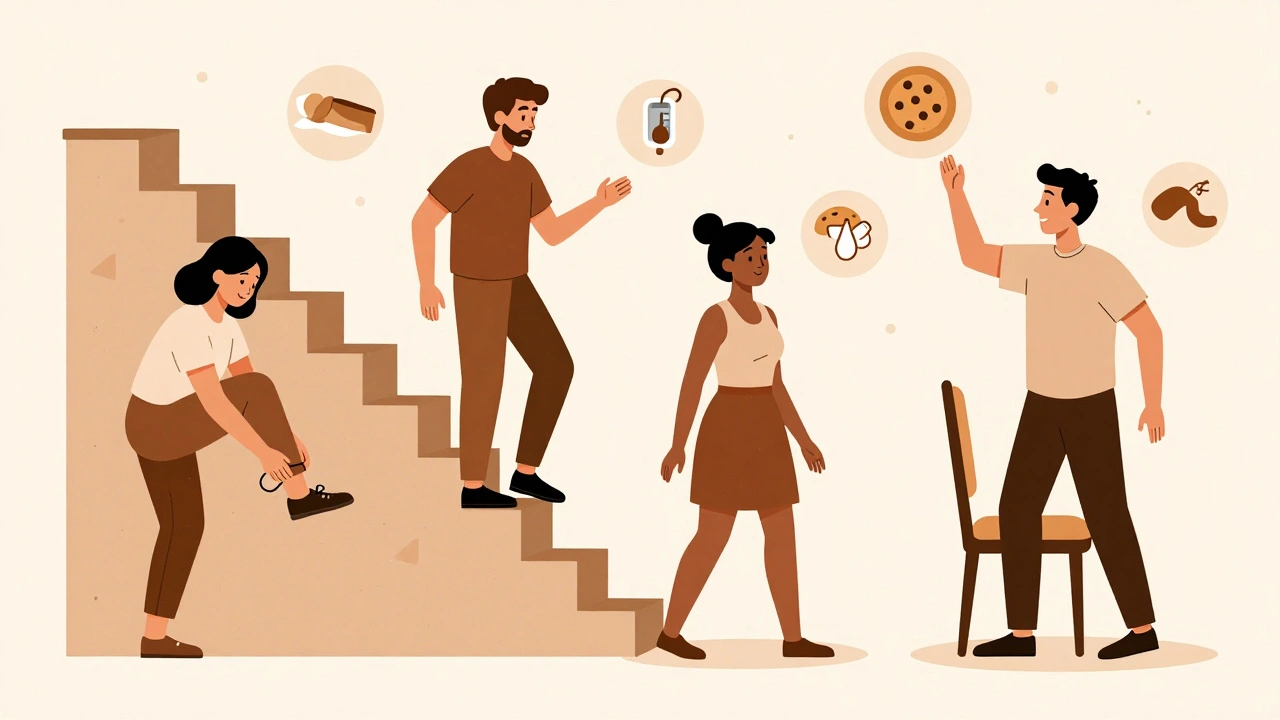
Non-Scale Victories: How to Track Real Progress Without Weighing Yourself
Discover how non-scale victories-like better sleep, more energy, and improved lab results-are the true signs of health progress, even when the scale doesn't move. Stop chasing weight and start celebrating real change.