
Bone Density: What It Is, Why It Matters, and How to Protect It
When we talk about bone density, the measure of mineral content in your bones that determines their strength and resistance to fracture. Also known as bone mineral density, it’s not just something doctors check after you break a hip—it’s a silent marker of your long-term health. Your bones aren’t just scaffolding; they’re living tissue that constantly rebuilds itself. But as you get older, or if you’ve had certain surgeries, taken specific meds, or don’t get enough nutrients, that rebuild slows down. That’s when bone density drops—and you don’t feel it until you fall.
Two key players control bone density: calcium, the main mineral that gives bones their hardness, and vitamin D, the hormone-like nutrient that helps your body absorb calcium. If you’re low on either, your bones start to thin. That’s why people after bariatric surgery often need extra calcium and vitamin D—their bodies can’t absorb them like before. Even if you eat dairy, you might still be deficient if you don’t get sunlight or take supplements. And it’s not just about diet. Medications like statins, diuretics, or long-term steroids can also chip away at your bone mass over time.
What you can do about it isn’t complicated, but it’s often ignored. Weight-bearing exercise—walking, lifting weights, even climbing stairs—tells your bones to get stronger. Strength training isn’t just for muscle; it’s one of the most effective ways to boost bone density, even in your 70s. And if you’ve been told you have low bone density, don’t panic. It’s not a death sentence. It’s a signal. You can still turn it around with the right mix of movement, nutrition, and sometimes medication. The goal isn’t to be perfect—it’s to be proactive.
What you’ll find below are real, practical posts that connect directly to bone health: how weight-loss surgery affects calcium levels, why vitamin D matters more than you think, how certain drugs can weaken bones, and what strength training looks like when you’re older. These aren’t theory pieces—they’re what people actually use to protect themselves. No fluff. Just what works.
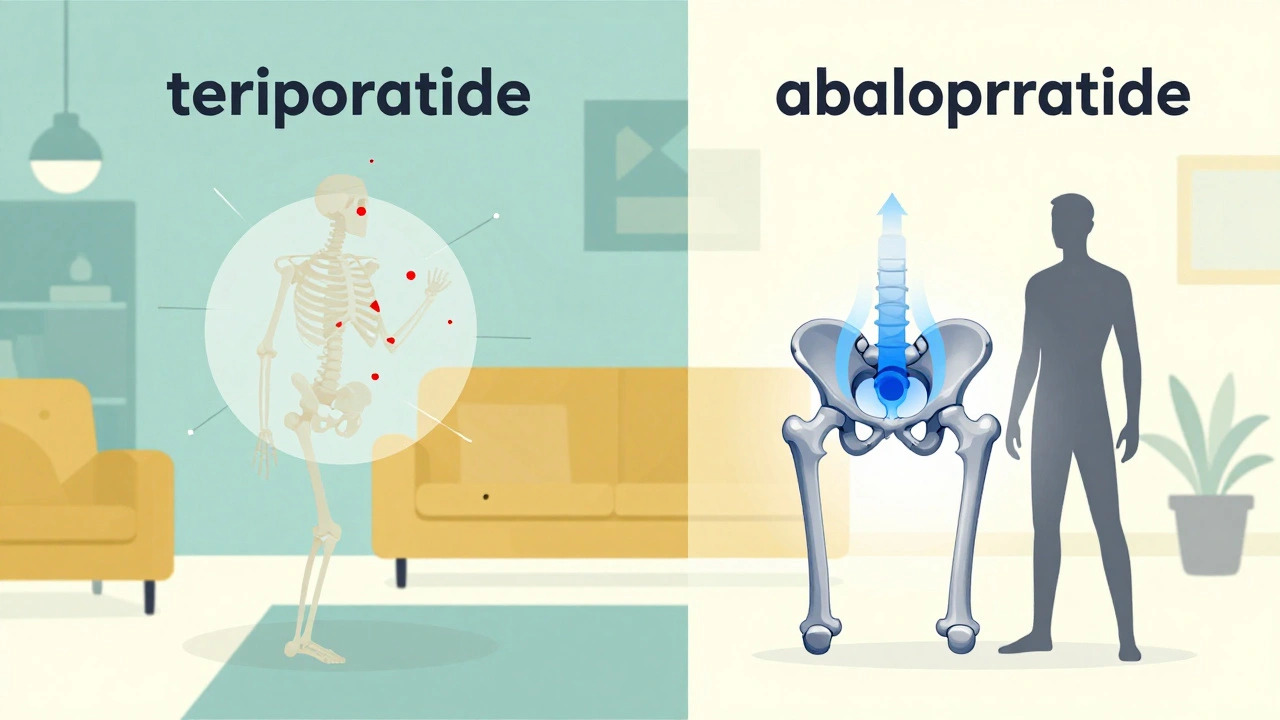
Teriparatide vs Abaloparatide for Osteoporosis: What You Need to Know
Teriparatide and abaloparatide are bone-building drugs for severe osteoporosis. Learn how they differ in effectiveness, safety, cost, and real-world use to make the best choice for your needs.