
Drug Storage: How to Keep Medications Safe, Effective, and Out of Harm's Way
When you buy medicine, you’re not just paying for the active ingredient—you’re paying for drug storage, the conditions under which a medication stays stable, potent, and safe to use. Also known as medicine storage, it’s the invisible step between the pharmacy shelf and your body that determines whether a pill works—or becomes useless, dangerous, or even toxic. Heat, moisture, light, and time can break down even the best drugs. A bottle of insulin left in a hot car, antibiotics stored in a steamy bathroom, or painkillers tucked in a drawer with old receipts—these aren’t just careless habits. They’re risks to your health.
That’s why child-resistant packaging, a design standard required by law to prevent accidental poisonings in kids isn’t just a box with a tricky cap. It’s part of a larger system that includes temperature control, light protection, and secure placement. Counterfeit drugs, fake or tampered medications that mimic real ones but lack proper ingredients or safety checks are another silent threat. They often come from unregulated sources, but even real drugs stored wrong can look and feel like counterfeits—faded, crumbly, or smelling odd. The FDA warns that improper storage is one of the top reasons people think their meds don’t work, when the real problem is the environment they’ve been kept in.
Think about your medicine cabinet. Is it above the sink? That’s a steam trap. Is it in a drawer next to your vitamins and supplements? That’s a recipe for mix-ups. Is it unlocked? That’s an open door for teens or curious kids. The drug storage rules are simple: cool, dry, dark, and locked. Most pills last best at room temperature—between 68°F and 77°F. Avoid the bathroom. Avoid the car. Avoid the kitchen near the stove. The fridge? Only if the label says so. Some biologics, like insulin or certain injectables, need refrigeration—but never freeze them. And never store pills in their original blister packs if you’ve taken them out and tossed the box. Write the start date on the bottle. Check expiration dates. Throw out anything that’s changed color, texture, or smell.
It’s not just about keeping meds working—it’s about keeping people safe. Every year, thousands of children end up in emergency rooms after swallowing pills they found. Teens grab painkillers or ADHD meds from unsecured cabinets. Older adults mix up bottles because labels faded in the humidity. These aren’t rare accidents. They’re predictable outcomes of poor storage habits. And it’s not just families. Pharmacies and clinics lose millions every year to expired or degraded drugs because they weren’t stored right.
Below, you’ll find real, practical guides that show you exactly how to handle your medications—from keeping fentanyl patches safe in the heat, to spotting fake pills, to storing biologics at home without risking infection. You’ll learn why generics look different (and why that doesn’t mean they’re less safe), how heat can turn a pain patch into an overdose risk, and how to protect your supply from theft, accidents, and decay. This isn’t theory. It’s what works in real homes, with real families, facing real risks. You don’t need a pharmacy degree to do this right. You just need to know the basics—and then act on them.
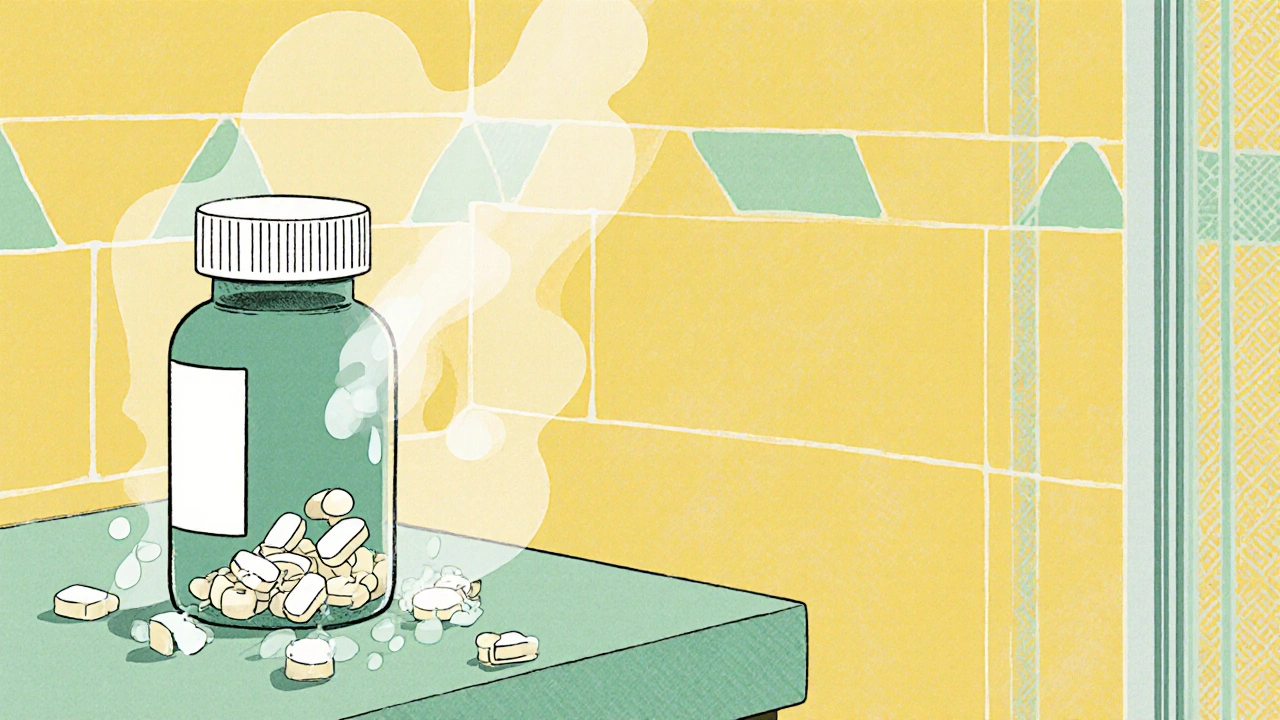
How Humidity and Heat Speed Up Medication Expiration
Heat and humidity can make your medications lose potency long before their expiration date. Learn which drugs are most at risk, where not to store them, and how to protect your health from hidden drug damage.