
Europe Biosimilar Market
When you hear biosimilars, medications designed to be highly similar to brand-name biologic drugs, with no clinically meaningful differences in safety or effectiveness. Also known as generic biologics, they are changing how Europe pays for complex treatments like those for cancer, arthritis, and autoimmune diseases. Unlike regular generics that copy small-molecule pills, biosimilars are made from living cells—making them far more complex to produce, but still up to 30% cheaper than the original.
The Europe biosimilar market, the largest and most mature in the world, with over 70 approved biosimilars as of 2023 is driven by strict regulations from the European Medicines Agency (EMA). Doctors here trust biosimilars because they must pass the same rigorous testing as the original biologic—no shortcuts. Countries like Germany, France, and the Netherlands have pushed hard to switch patients over, not just to save money, but to free up funds for new treatments. The result? Biosimilars now make up nearly half of all biologic prescriptions in some European countries.
It’s not just about price. Patients on biologic therapies, injectable drugs used to treat chronic conditions by targeting specific parts of the immune system often worry about switching from a brand-name drug they’ve used for years. But studies show no drop in effectiveness or increase in side effects when switching to a biosimilar. In fact, many patients report better access to treatment because their insurance now covers it. Pharmacies and clinics across Europe are training staff to explain the difference clearly—color, shape, and packaging might change, but the medicine inside works the same.
What’s driving this shift? A mix of policy, pressure from health systems, and real-world data. The drug cost savings, over €10 billion saved in Europe since 2015 thanks to biosimilars have allowed more people to get treated. And as more patents expire, the pipeline keeps growing. You’ll find posts here that explain how biosimilars are made, how doctors decide when to switch, why some patients hesitate, and how storage and handling differ from regular drugs. There’s also real talk about how supply chains work, what happens when a biosimilar gets approved, and how patients track their response after switching. This isn’t theory—it’s happening in clinics, pharmacies, and homes across Europe right now.
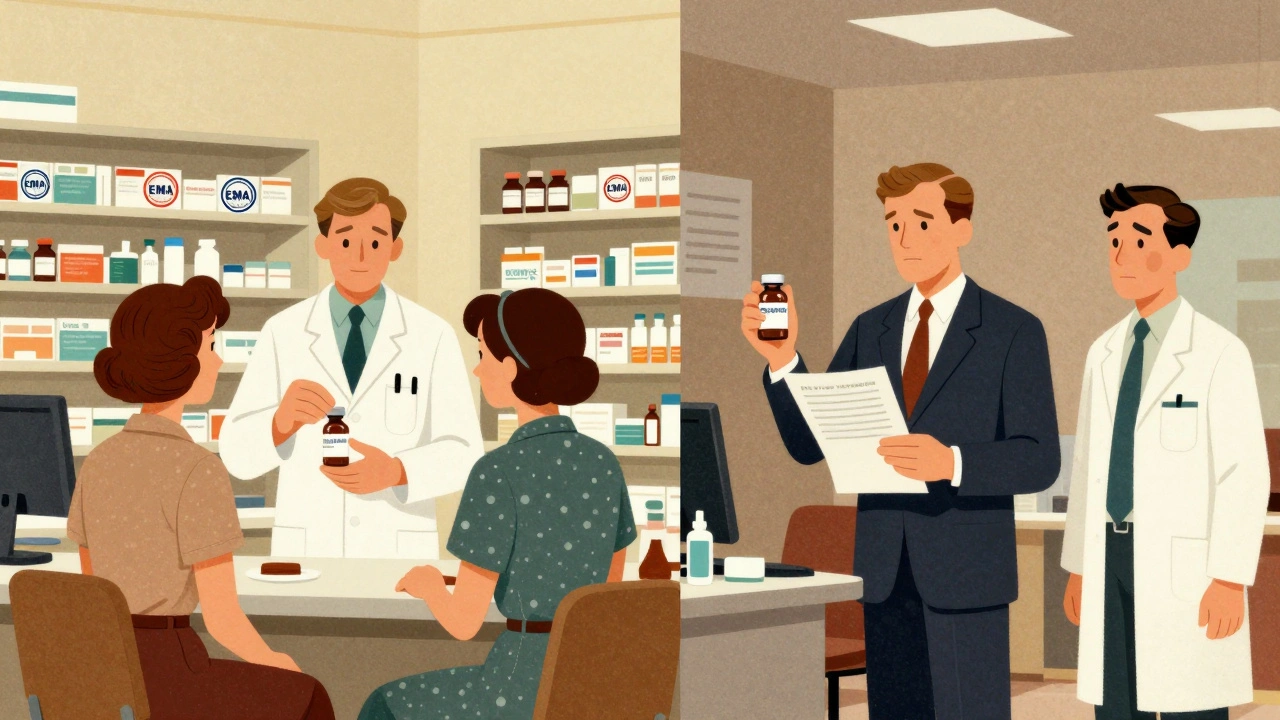
Global Biosimilar Markets: Europe vs United States - Adoption, Regulation, and Growth
Europe led the world in biosimilar adoption with a mature regulatory system, while the US lagged due to patent battles and strict rules. Now, FDA changes and new laws are accelerating US growth, setting up a global race for cost-effective biologic treatments.