
Expired Medicines: What Happens When Your Pills Go Bad
When you find an old bottle of pills in the back of your medicine cabinet, you might wonder: expired medicines, drugs that have passed their manufacturer-set expiration date. Also known as out-of-date medication, these aren’t necessarily poison—but they’re not always safe or effective either. The FDA requires expiration dates to guarantee full potency and safety up to that point, not to mark a sudden deadline for danger. But that doesn’t mean you should take them blindly.
Most expired medicines, drugs that have passed their manufacturer-set expiration date. Also known as out-of-date medication, these aren’t necessarily poison—but they’re not always safe or effective either. The FDA requires expiration dates to guarantee full potency and safety up to that point, not to mark a sudden deadline for danger. But that doesn’t mean you should take them blindly.
Most medication safety, the practice of using drugs correctly to avoid harm. Also known as drug safety, it includes checking dates, storing properly, and knowing when to throw things away. isn’t just about avoiding bad reactions—it’s about making sure your pills still work. A study by the FDA found that many antibiotics and heart meds lose potency over time, especially if stored in humid bathrooms or hot cars. Insulin, nitroglycerin, and liquid antibiotics? Those can become useless or even risky after their date. But for things like painkillers or antihistamines, the drop in strength is often slow and minor—unless they’re discolored, cracked, or smell weird.
drug expiration dates, the date printed on packaging that indicates when the manufacturer guarantees full effectiveness. Also known as use-by date, these are based on stability testing under ideal conditions. That’s the key: ideal conditions. Real life? Your medicine might sit in a drawer above the stove, or get soaked by steam from your shower. Heat, moisture, and light break down chemicals faster than any lab. That’s why medicine storage, how you keep drugs at home to preserve their strength and safety. Also known as home medication safety, it’s just as important as the date on the bottle. Keep pills in a cool, dry place—not the bathroom, not the car, not the kitchen counter. A bedroom drawer or a locked cabinet away from sunlight works best.
And what about the ones you don’t need anymore? Don’t flush them. Don’t toss them in the trash where kids or pets might find them. The safest way to dispose of expired medicines, drugs that have passed their manufacturer-set expiration date. Also known as out-of-date medication, these aren’t necessarily poison—but they’re not always safe or effective either. is through a drug take-back program. Many pharmacies, hospitals, or police stations offer free drop-off bins. If that’s not an option, mix them with coffee grounds or cat litter in a sealed bag before tossing them. It’s not perfect, but it’s better than leaving them lying around.
There’s a myth that expired drugs turn toxic. That’s mostly false—except for a few rare cases like tetracycline antibiotics, which can harm kidneys if taken years past their date. But the bigger risk isn’t poison—it’s failure. Taking a weak antibiotic could let an infection grow. A degraded EpiPen might not save your life in an allergic reaction. A stale seizure med could trigger a breakdown. These aren’t hypotheticals. They happen every day.
Below, you’ll find real guides on how to store meds safely, spot counterfeit pills, avoid accidental poisonings, and understand why generics look different from brand names. You’ll learn how heat affects fentanyl patches, how to protect your family from misuse, and what really happens when pills sit too long. This isn’t about fear. It’s about control. Your health doesn’t wait for a new prescription. Make sure your old ones aren’t working against you.
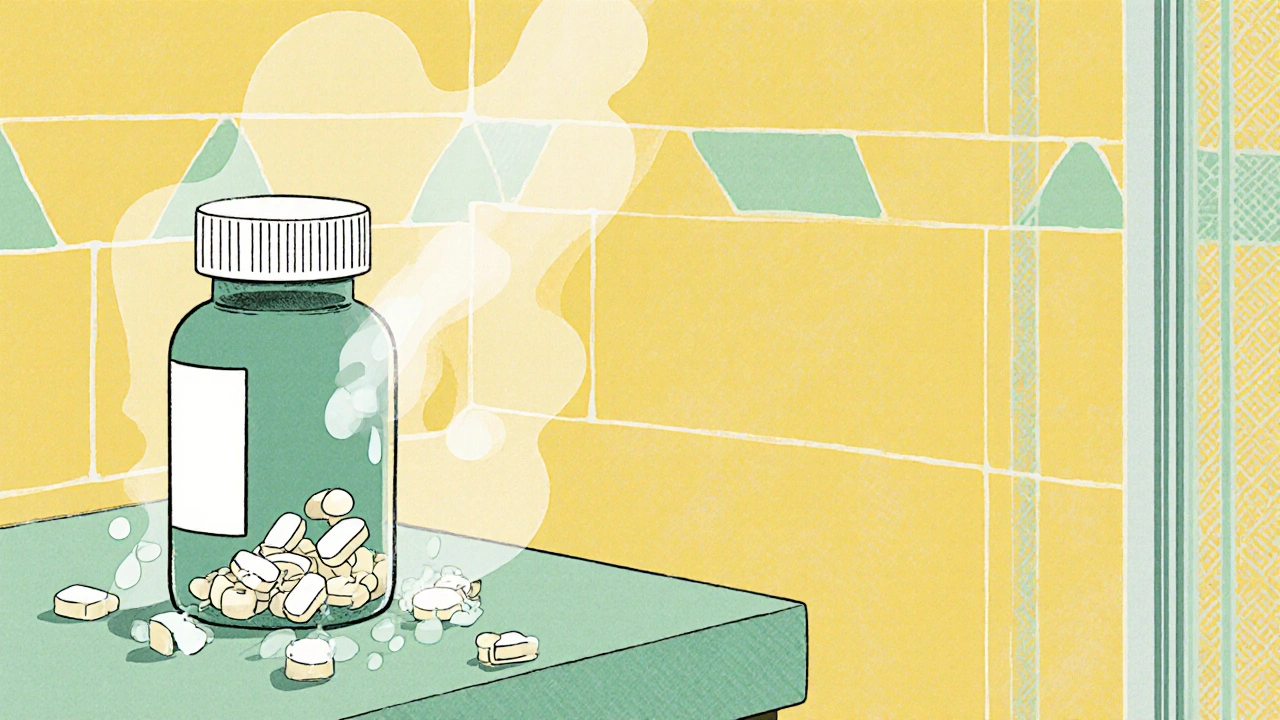
How Humidity and Heat Speed Up Medication Expiration
Heat and humidity can make your medications lose potency long before their expiration date. Learn which drugs are most at risk, where not to store them, and how to protect your health from hidden drug damage.