
Fungal Nail Infection: Causes, Treatments, and What Really Works
When your toenail turns yellow, thickens, or crumbles, it’s not just ugly—it’s likely a fungal nail infection, a common condition caused by fungi that thrive in warm, moist environments like shoes and showers. Also known as onychomycosis, it’s not a sign of poor hygiene but a battle your body often loses because the fungus hides under the nail, where most creams can’t reach. This isn’t a quick fix. Over-the-counter sprays and home remedies rarely work because they don’t penetrate deep enough. Only prescription antifungals, taken orally or applied directly over weeks or months, have real success.
Fungal nail infections often show up after antibiotic use, which kills off good bacteria that normally keep fungi in check. That’s why people who’ve taken antibiotics for a sinus infection, strep throat, or even acne are more likely to get nail fungus later. It’s the same reason you might get a yeast infection, a related fungal overgrowth that thrives when your natural microbiome is disrupted. Both are side effects of modern medicine—something you don’t hear much about until it happens to you.
Doctors usually start with oral antifungals like terbinafine or itraconazole, but they’re not risk-free. Liver checks are needed, and some people can’t take them at all. Topical treatments work better when combined with nail trimming and laser therapy—but only if you stick with them. Most people give up after a few weeks because nothing changes fast. But here’s the truth: if you don’t treat it, the fungus spreads to other nails, your skin, or even your family’s towels and shoes. It doesn’t go away on its own. And if you’ve ever tried a cheap remedy from a drugstore shelf and seen no results, you’re not alone. The real solutions are slow, boring, and require patience.
What you’ll find in these posts isn’t hype. It’s the kind of real talk you won’t get from a commercial. You’ll learn how humidity and heat make fungal infections worse, why some medications fail even when they’re prescribed correctly, and how keeping a medication journal can help you spot patterns between antibiotics, your immune response, and recurring fungal issues. You’ll see why generic antifungals are just as effective as brand names, and how to avoid counterfeit drugs that promise miracles but deliver nothing. This isn’t about quick fixes. It’s about understanding the system—how your body reacts, how drugs work, and how to outlast a stubborn infection that won’t quit.
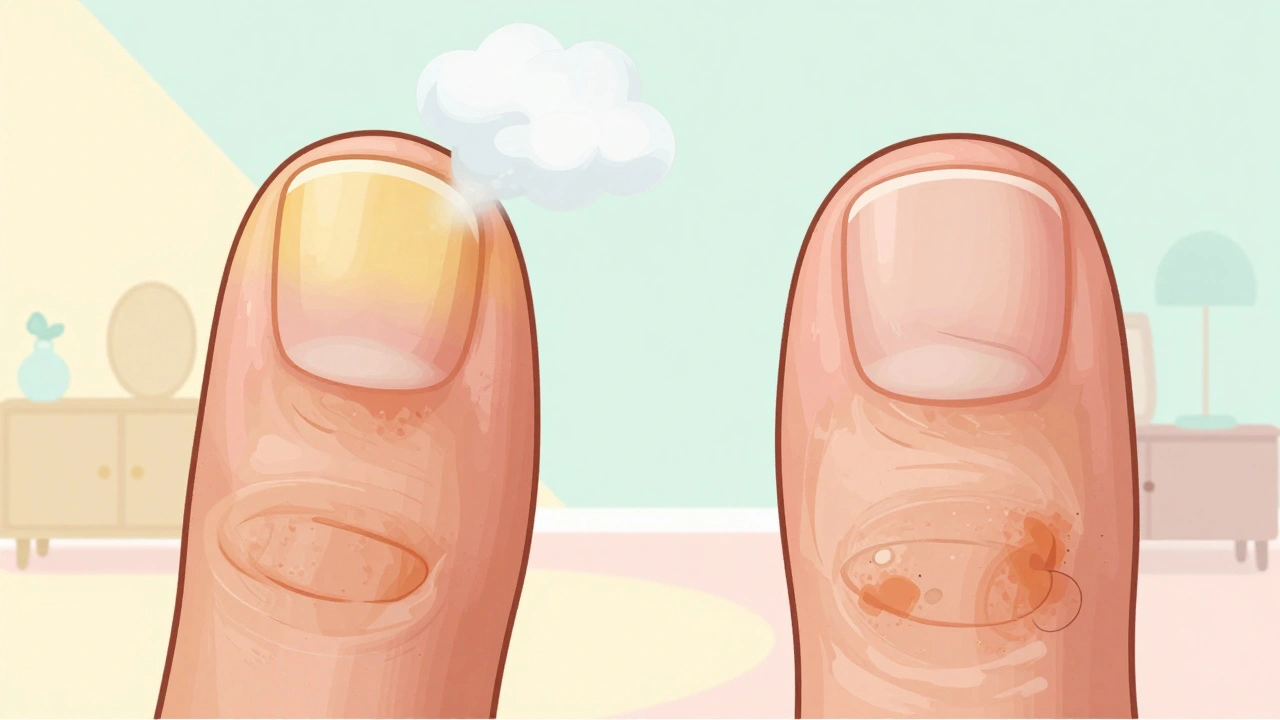
Nail Disorders: How to Tell Fungal Infections Apart from Psoriatic Changes
Learn how to tell the difference between fungal nail infections and nail psoriasis-two conditions that look alike but need completely different treatments. Discover key signs, accurate tests, and what actually works.