
Heat and Meds: How Temperature Affects Your Medications
When you think about heat and meds, how rising temperatures can change how your medicines work or even make them dangerous. It’s not just about leaving pills in a hot car—heat can turn life-saving treatments into hidden risks. Many people don’t realize that some medications, especially patches like fentanyl patches, transdermal opioid delivery systems used for chronic pain, absorb heat like a sponge. A hot shower, a fever, or even a heating pad can cause the drug to release too fast, leading to overdose. This isn’t a theory—it’s a documented danger, and it’s happened to real people.
Heat doesn’t just affect patches. It can break down pills, creams, and even liquid medicines stored in bathrooms or garages. medication storage, how and where you keep your drugs at home matters more than you think. Sunlight, humidity, and high temps can reduce potency or create harmful byproducts. If your insulin, thyroid meds, or antibiotics look cloudy, smell odd, or feel sticky, they might already be damaged. The FDA says most meds should be kept below 77°F, and some—like nitroglycerin or certain biologics—need refrigeration. But many households treat medicine cabinets like junk drawers, ignoring the fine print on the label.
And it’s not just about storage. drug interactions, how external factors like heat change how medicines behave in your body can be just as sneaky. If you’re on a diuretic, heat can push you into dehydration faster. If you’re taking meds for blood pressure or heart conditions, your body’s response to heat changes, and your dosage might need adjusting. Even something as simple as sweating more in summer can affect how your body absorbs or clears a drug. People on chronic pain meds, antidepressants, or thyroid treatments often don’t connect their worsening symptoms to the weather.
You don’t need to live in a climate-controlled bubble to stay safe. Just know which of your meds are heat-sensitive, store them properly, and talk to your pharmacist before summer hits. If you use fentanyl patches, never put a heating pad over them. If you’re traveling, don’t leave your meds in the glove compartment. And if you’re unsure? Ask. A quick call to your pharmacy can prevent a hospital visit. Below, you’ll find real guides on exactly how heat impacts specific drugs, how to store them right, and what to do when things go wrong—because when it comes to your meds, temperature isn’t just a number. It’s a safety line.
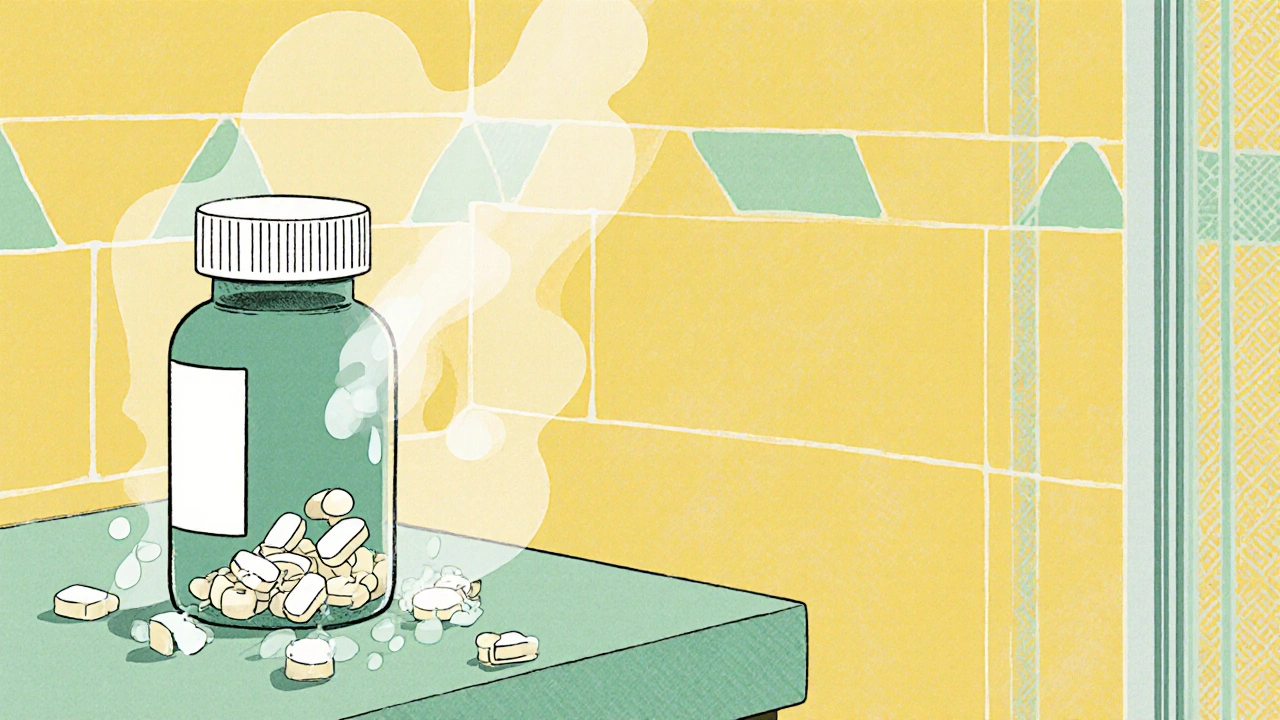
How Humidity and Heat Speed Up Medication Expiration
Heat and humidity can make your medications lose potency long before their expiration date. Learn which drugs are most at risk, where not to store them, and how to protect your health from hidden drug damage.