
Hypertensive Crisis: What It Is, How to Recognize It, and What to Do
When your blood pressure spikes to dangerous levels—above 180/120 mm Hg—you’re facing a hypertensive crisis, a sudden, severe increase in blood pressure that can damage organs and requires immediate medical attention. Also known as a hypertensive emergency, it’s not just a high reading—it’s a medical event that can lead to stroke, heart attack, or kidney failure within hours. This isn’t the same as having high blood pressure for years. A hypertensive crisis happens fast, often without warning, and it doesn’t care if you’ve been taking your meds or not.
There are two types: hypertensive urgency, where blood pressure is extremely high but no organs are damaged yet, and hypertensive emergency, where organs like the brain, heart, or kidneys are already being harmed. The difference? One lets you go to an urgent care center. The other? You need the ER—now. Symptoms like severe headache, blurred vision, chest pain, shortness of breath, or confusion aren’t just "feeling off." They’re your body screaming for help. If you’re on blood pressure meds and suddenly feel worse, don’t wait. Don’t check your phone. Don’t text your friend. Call 911 or get to a hospital.
Many people think their meds will always keep them safe. But heat, stress, skipping doses, or mixing drugs with alcohol or OTC painkillers can trigger a crisis—even if you’ve been fine for years. Some medications, like decongestants or certain antidepressants, can spike pressure fast. And if you’ve ever had a kidney problem, diabetes, or heart disease, your risk is higher. That’s why knowing your numbers isn’t enough. You need to know what your body feels like when things go wrong.
Below, you’ll find real, practical guides on how to track your blood pressure safely, what to do when your meds don’t work, how to avoid dangerous interactions, and how to recognize the hidden signs that something’s about to break. These aren’t theory pieces. They’re written by people who’ve seen what happens when a crisis hits—and how to stop it before it’s too late.
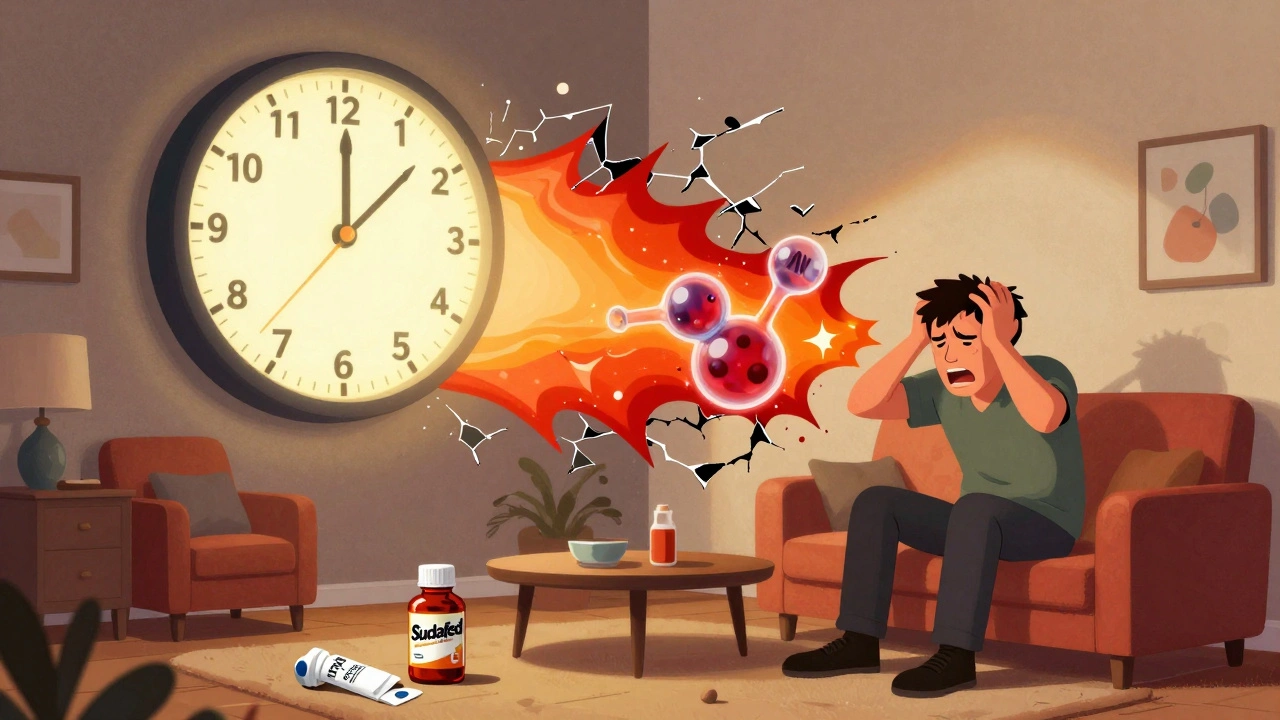
Ephedrine and MAO Inhibitors: The Deadly Interaction That Can Raise Blood Pressure in Minutes
Combining ephedrine with MAO inhibitors can cause a sudden, deadly spike in blood pressure. This interaction has led to strokes, brain bleeds, and death-even from a single OTC cold pill. Learn why this risk is still active today and how to avoid it.