
Language Barrier in Healthcare: How Communication Gaps Affect Medication Safety
When patients can’t clearly understand their doctor or pharmacist, the language barrier in healthcare, a situation where patients and providers struggle to communicate due to differing languages or literacy levels. Also known as communication gap in medical settings, it doesn’t just cause confusion—it puts lives at risk. Think about it: if you don’t know whether your pill is for blood pressure or diabetes, or if you’re told to take it "once a day" but don’t know if that means morning or night, you’re not just confused—you’re in danger. This isn’t rare. In the U.S., over 25 million people speak limited English, and many rely on family members or poorly trained interpreters to understand complex drug instructions. That’s how someone ends up taking two doses of a blood thinner because they thought "every 12 hours" meant "twice a day, no matter what."
The generic drugs, lower-cost versions of brand-name medications that are chemically identical but often look different. Also known as generic medication, it adds another layer of risk. Patients who don’t speak English well might panic when their pill changes color or shape after a refill, thinking it’s a fake or a mistake. They might skip doses or stop taking it altogether—even though generics are just as safe and effective. That’s why Spanish-language resources, free, trusted tools and materials designed to explain medications in clear, simple Spanish for non-English speakers. Also known as medication education in Spanish, it matter so much. These aren’t just translations—they’re tailored guides that show pictures of pills, explain why generics look different, and tell you exactly what to ask your pharmacist. And it’s not just Spanish. Similar tools exist for Mandarin, Arabic, Vietnamese, and more—but they’re still too hard to find.
It’s not just about words. It’s about trust. If you’ve been burned by a bad experience—maybe you got the wrong medicine, or your doctor rushed through the visit—you’re less likely to speak up next time. That silence is deadly. A patient with high blood pressure might not say they’re dizzy because they don’t know the word for "dizziness." A parent might not mention their child threw up after taking a new antibiotic because they think it’s "normal." And without that info, doctors can’t adjust treatment. That’s why patient communication, the clear, two-way exchange of health information between providers and patients, regardless of language or literacy level. Also known as health communication, it isn’t a nice-to-have—it’s the foundation of safe care. When clinics use visual aids, teach-back methods, or trained medical interpreters, medication errors drop by up to 50%. You don’t need a degree in medicine to help. Sometimes, it’s as simple as asking: "Can you show me how you take this?"
What you’ll find in the posts below aren’t just articles—they’re real solutions. From how to track side effects with a simple journal, to why generic pills look different, to how heat and humidity ruin meds, every post here ties back to one truth: if you don’t understand your medicine, you can’t use it safely. And that’s why fixing the language barrier isn’t just about translation—it’s about saving lives.
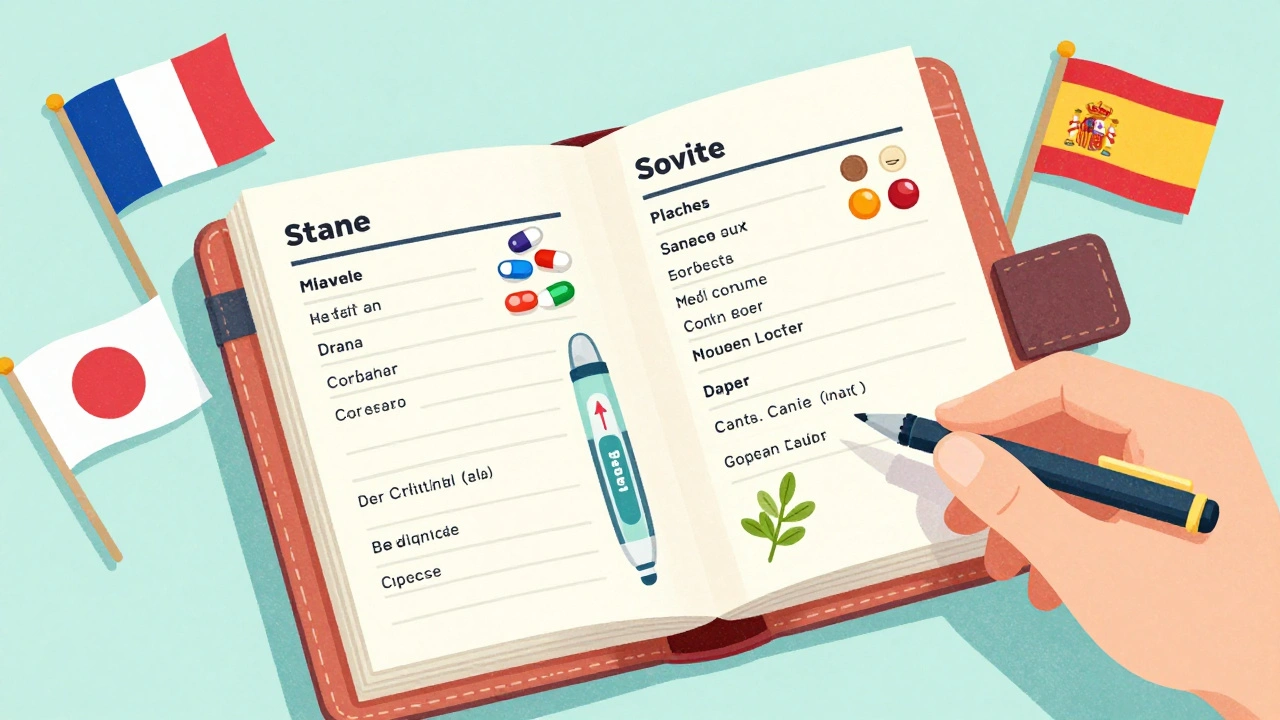
How to Keep a Medication List in Multiple Languages for Emergencies
Keep a multilingual medication list in multiple languages to avoid dangerous errors during medical emergencies abroad. Learn which official lists to use, what to include, and how to use them in real emergencies.