
Medication Translation: Accurate Drug Info Across Languages
When you see a pill bottle with writing you don’t understand, medication translation, the process of converting drug information from one language to another while preserving medical accuracy. Also known as pharmaceutical translation, it’s not just about swapping words—it’s about preventing mistakes that can land people in the ER. A misread label, a mistranslated dosage, or a confused instruction can turn a life-saving drug into a danger. This isn’t theoretical. Studies show that non-English speakers are twice as likely to have medication errors because of poor translation—often because pharmacies rely on machine tools or untrained staff instead of certified medical translators.
Generic medications, low-cost versions of brand-name drugs approved by the FDA are especially tricky. They look different, have different names, and often come with labels printed overseas. That’s why Spanish-language resources, officially vetted tools that explain drug use, side effects, and storage in clear, plain Spanish matter so much. You can’t just translate "take once daily" as "tomar una vez al día"—you need to explain what "daily" means in context: before breakfast? With food? What if you miss a dose? The best translations include visuals, examples, and culturally relevant warnings.
It’s not just Spanish. Millions of people in the U.S. speak Mandarin, Arabic, Vietnamese, or Russian—and most drug labels don’t reflect that. Pharmacies often skip proper translation because it’s expensive or they assume patients will find someone to help. But that’s risky. A grandmother taking blood pressure pills might not know her new generic looks different from last month’s. A parent giving antibiotics to a child might misread "twice a day" as "two pills at once." Patient safety, the practice of preventing harm from medication errors through clear communication and standardized labeling depends on language that’s accurate, not just available.
That’s why the posts here focus on real-world problems: how to read generic labels when they change color or shape, why heat and humidity ruin meds stored in bathrooms, how to track side effects in a journal, and where to find trusted Spanish-language guides. These aren’t abstract ideas—they’re daily struggles for families, caregivers, and patients who don’t speak English fluently. You’ll find practical tips on spotting counterfeit drugs, understanding pill appearance changes, and talking to your pharmacist when the label doesn’t make sense. No fluff. No jargon. Just what you need to keep yourself and your loved ones safe when language gets in the way of healing.
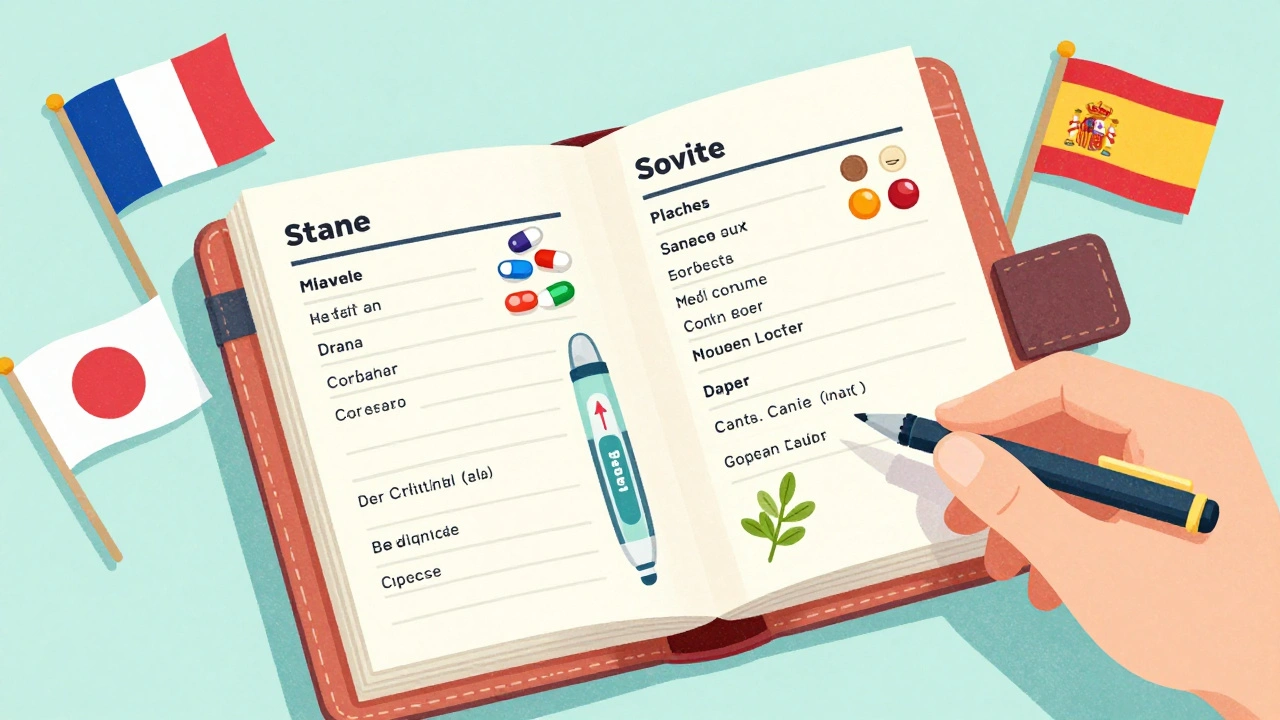
How to Keep a Medication List in Multiple Languages for Emergencies
Keep a multilingual medication list in multiple languages to avoid dangerous errors during medical emergencies abroad. Learn which official lists to use, what to include, and how to use them in real emergencies.