
Multilingual Medication List: Stay Safe When Taking Drugs in Different Languages
When you’re taking medications and don’t speak the local language, a multilingual medication list, a clear, translated record of your drugs, dosages, and instructions. Also known as drug passport, it’s not just helpful—it can be life-saving. Imagine getting a new prescription in a country where you can’t read the label. Or calling an emergency line during a reaction, but the pharmacist doesn’t understand your symptoms. This isn’t rare. Millions of travelers, immigrants, and refugees face this every year.
That’s where a multilingual medication list steps in. It’s not just a translation—it’s a tool that connects you to care. It includes your drug names (both brand and generic), dosage, frequency, reason for use, and any allergies. Some people even add a photo of the pill. This matters because generic drugs, lower-cost versions of brand-name medications. Also known as generic medication, it often have different names in different countries. Your American metronidazole might be called Tinidazole in Mexico or Metronidazol in Germany. Without a clear list, you risk double-dosing, missing doses, or getting the wrong drug entirely.
And it’s not just about names. drug interactions, dangerous combinations between medications, food, or supplements. Also known as medication clashes, it can be deadly if not understood. Grapefruit might wreck your statin. St. John’s wort could cancel out your birth control. If you’re seeing multiple doctors across languages, a printed list keeps everyone on the same page. Even pharmacies in the U.S. often rely on these lists when patients come from abroad with unfamiliar prescriptions.
Healthcare workers in multilingual areas know this. Emergency rooms, clinics, and pharmacists in cities like Miami, Toronto, or Berlin regularly use these lists to avoid mistakes. You don’t need to be fluent to use one. Just write it down, translate it with a trusted app or clinic, and carry it with you. Keep it simple: drug name, dose, time, purpose. Add your doctor’s contact info. Print two copies—one for your wallet, one for your phone.
This isn’t about fancy tech or expensive apps. It’s about control. When you’re in a foreign hospital, in pain, and scared, having a list in your language—or even just in English—gives you power. It stops guesswork. It cuts through confusion. And it stops people from assuming you know what’s in that pill bottle.
The posts below show how this connects to real-world problems: tracking side effects in generics, storing meds safely, avoiding deadly interactions, and understanding why pills look different across borders. You’ll find guides on how to build your own list, what to include, and how to use it when you’re far from home. Whether you’re traveling, moving, or just helping a family member who speaks another language, this isn’t optional. It’s basic safety. And it’s easier than you think.
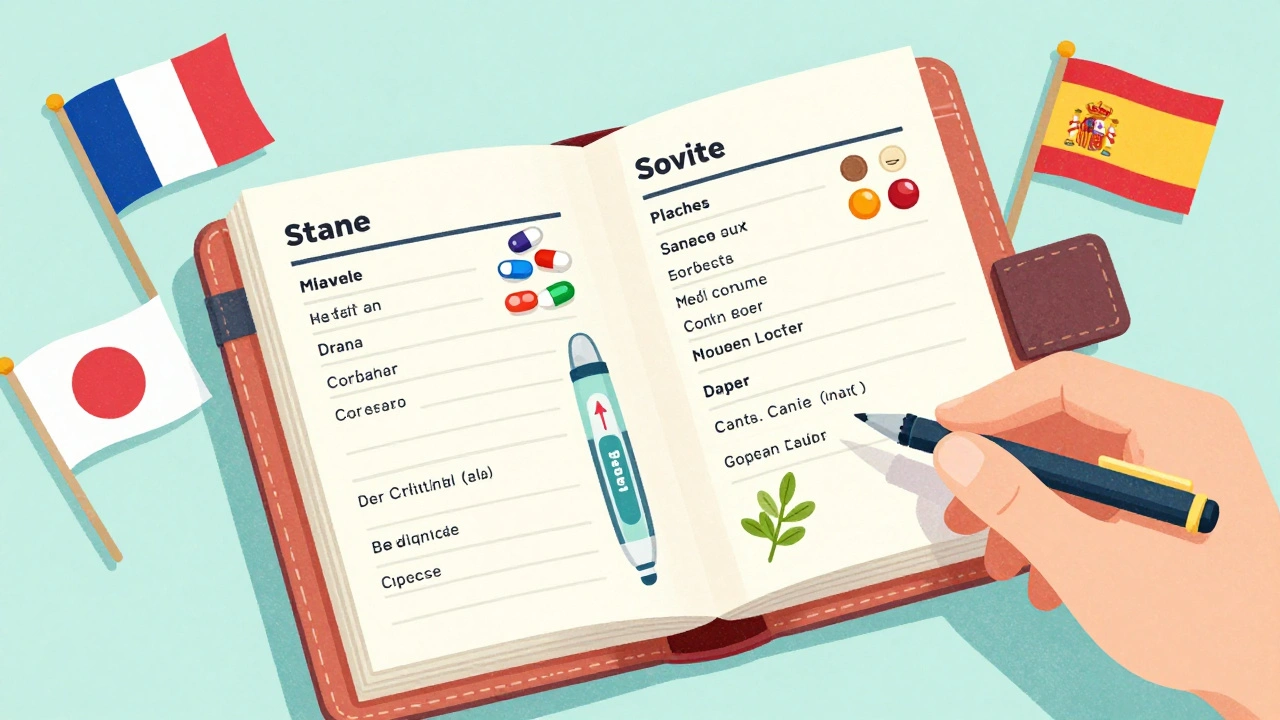
How to Keep a Medication List in Multiple Languages for Emergencies
Keep a multilingual medication list in multiple languages to avoid dangerous errors during medical emergencies abroad. Learn which official lists to use, what to include, and how to use them in real emergencies.