
Nail Discoloration: Causes, Treatments, and What Your Nails Reveal About Your Health
When your nails change color, it’s not just a cosmetic issue—it’s often a signal your body is trying to tell you something. Nail discoloration, a visible change in the color or appearance of the nail plate, often linked to infection, injury, or systemic illness. Also known as onychochromia, it can range from harmless stains to signs of deeper problems like liver disease, heart conditions, or fungal infections. A yellow nail isn’t always dirt. A dark streak isn’t always a bruise. And a white spot? It might not even be from bumping your finger.
Nail discoloration usually falls into a few clear patterns. Fungal nail infection, a common cause of yellow, thickened, or crumbly nails, especially in toes is the most frequent culprit, often mistaken for aging. Then there’s nail trauma, the result of injury, pressure, or repeated minor hits, which can cause dark spots or lines under the nail. These usually grow out with time. But sometimes, discoloration comes from medications—like chemotherapy drugs or antimalarials—that affect pigment production. Even certain antibiotics can change nail color over months of use. And if you see a dark line running vertically down your nail, especially if it’s new or widening, that’s not normal. It could be melanoma, a rare but dangerous form of skin cancer that shows up in the nail bed.
People often ignore nail changes because they seem small. But your nails are like a window into your overall health. Liver disease can turn them white or yellow. Kidney problems may cause half-white, half-pink nails. Heart conditions can lead to clubbing and discoloration. Diabetes increases your risk of fungal infections. And if you’re on long-term statins or antibiotics, your nails might be reacting in ways you didn’t expect. That’s why keeping a medication journal—tracking what you take and how your body responds—isn’t just helpful, it’s essential. You might notice a color change after starting a new drug, and that detail could help your doctor connect the dots.
What you’ll find in these posts isn’t just a list of causes. It’s a practical guide to understanding what’s really going on under your nails. From how humidity affects medication effectiveness to how drug interactions can show up in unexpected places, these articles tie nail changes to the bigger picture of your health. You’ll learn how to spot the difference between a harmless stain and something that needs a doctor’s eye, what tests actually matter, and how to talk to your provider without sounding alarmist. This isn’t about guessing. It’s about knowing what to look for—and when to act.
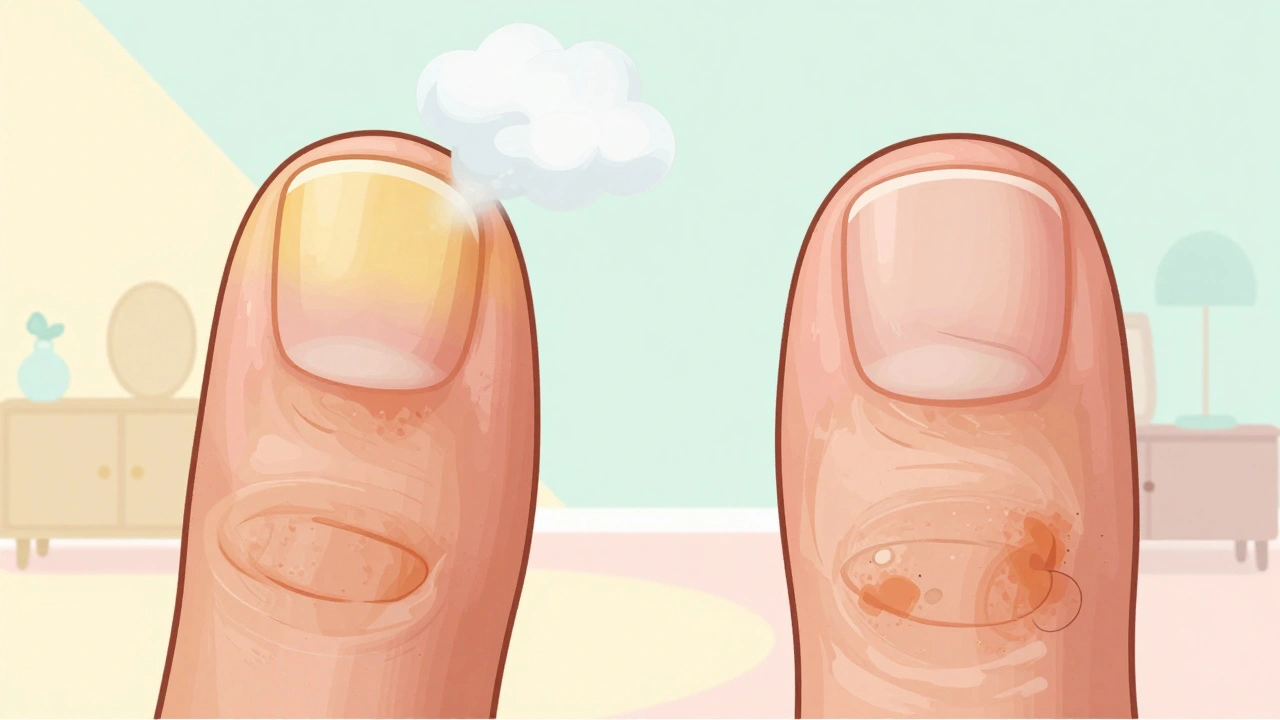
Nail Disorders: How to Tell Fungal Infections Apart from Psoriatic Changes
Learn how to tell the difference between fungal nail infections and nail psoriasis-two conditions that look alike but need completely different treatments. Discover key signs, accurate tests, and what actually works.