
Nail Psoriasis: Signs, Triggers, and What Really Helps
When your nails start pitting, thicken, or turn yellow, it’s not just a bad manicure—it could be nail psoriasis, a visible sign of psoriasis affecting the nail matrix and bed, often linked to immune system overactivity. Also known as psoriatic nail dystrophy, it’s not rare: up to half of people with psoriasis develop these changes, and many don’t even realize their nail issues are part of the same condition. Unlike fungal infections, nail psoriasis doesn’t come from dirt or poor hygiene. It’s your body’s immune system attacking healthy tissue around the nail, causing the nail to grow abnormally or detach from the bed.
This isn’t just about looks. Nail psoriasis often goes hand-in-hand with psoriatic arthritis, a type of inflammatory joint disease that affects people with psoriasis, causing stiffness, swelling, and pain in fingers and toes. If your nails are changing and your joints feel stiff in the morning, that’s not just aging—it’s a signal your immune system is active. And while many assume it’s just a skin issue, nail changes can be the first sign of psoriasis, even before rashes appear. The good news? Treatments exist that target the root cause, not just the surface. Topical steroids, light therapy, and even injectable biologics can help, but only if you know what you’re dealing with.
What makes nail psoriasis tricky is how easily it’s mistaken for a fungal infection. Doctors often test for fungus first, but antifungals won’t fix psoriasis. And unlike fungal nails, which usually start at the tip, psoriasis often begins at the cuticle or causes oil spots—tiny red or brown dots under the nail. You might also notice the nail lifting off the bed, crumbling, or developing ridges that run vertically. These aren’t just cosmetic annoyances; they can make typing, gripping, or even walking painful.
What you’ll find in the posts below isn’t a list of miracle cures. It’s real-world insight from people who’ve lived with this, and the science behind what actually works. You’ll learn how treatments like biologics—once reserved for severe cases—are now being used to protect nails and joints before damage sets in. You’ll see how storage and medication adherence (yes, even how you keep your pills) can affect outcomes. And you’ll find out why some people respond to topical treatments while others need systemic therapy. This isn’t guesswork. It’s based on what patients and doctors are seeing now, not what old textbooks say.
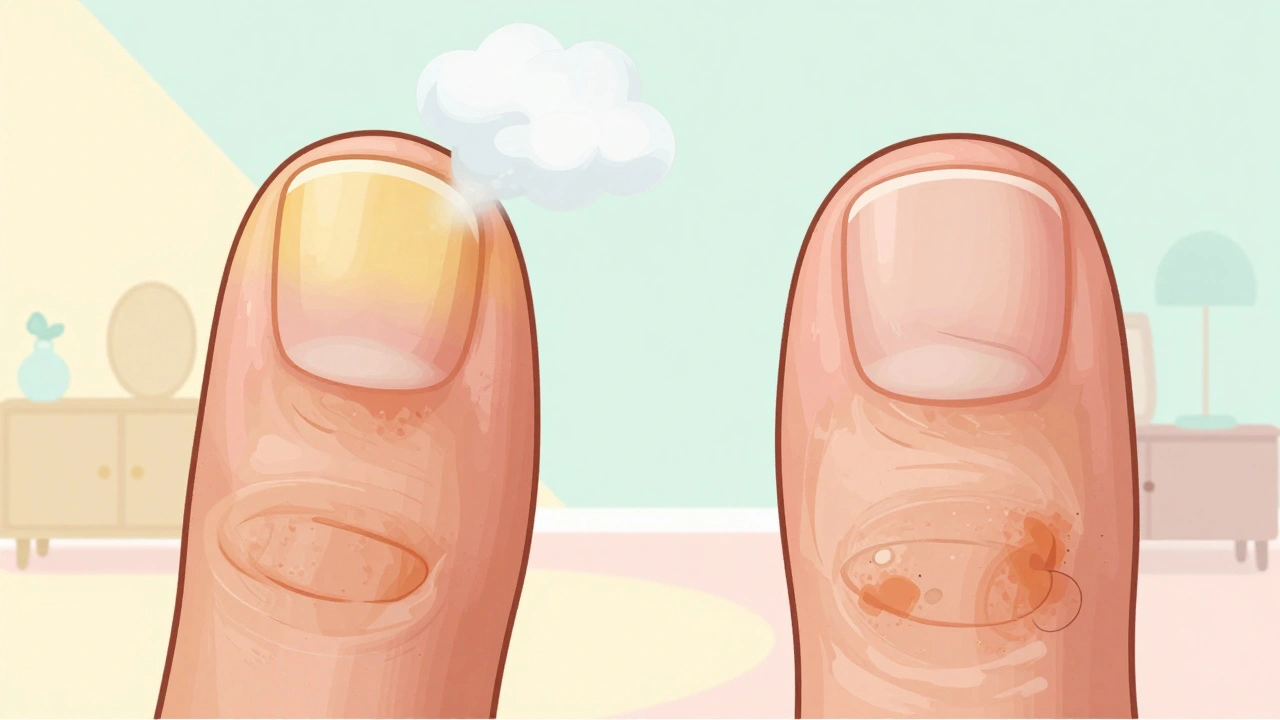
Nail Disorders: How to Tell Fungal Infections Apart from Psoriatic Changes
Learn how to tell the difference between fungal nail infections and nail psoriasis-two conditions that look alike but need completely different treatments. Discover key signs, accurate tests, and what actually works.