
Onychomycosis: What It Is, How It Spreads, and What Actually Works
When your toenail turns yellow, thickens, or crumbles, it’s not just cosmetic—it’s onychomycosis, a fungal infection of the nail that affects up to 10% of adults worldwide. Also known as fungal nail infection, it’s not a quick fix and won’t go away on its own. Left untreated, it can spread to other nails or even the skin around your feet, making walking painful and shoes uncomfortable.
Onychomycosis thrives in warm, moist places—think sweaty socks, public showers, or shared gym equipment. It’s more common in older adults, people with diabetes, or anyone with a weakened immune system. But even healthy people get it. The fungus doesn’t care if you’re fit or clean—it just wants a place to hide and multiply under your nail. And once it’s there, over-the-counter creams often fail because they can’t reach the infection deep inside the nail bed.
That’s where real treatment begins. antifungal treatment, including oral medications like terbinafine or itraconazole, are the most effective way to clear the infection. These work from the inside out, targeting the fungus as new nail grows. Topical solutions help too, but only when used consistently for months. And yes, it takes time—sometimes up to a year—for a completely new, healthy nail to grow in. There’s no magic pill, but there are proven paths. Many people try home remedies like vinegar soaks or tea tree oil, and while some report relief, science shows they rarely cure the infection alone. What works best is a mix of the right medication, good foot hygiene, and avoiding reinfection.
And here’s the thing: onychomycosis isn’t rare. It’s one of the most common nail problems doctors see. Yet most people delay treatment because they think it’s just ugly, not dangerous. But it can lead to serious complications—especially if you have diabetes. A small crack from a brittle nail can turn into an open sore, and that’s when things get risky. That’s why tracking your symptoms matters. Keeping a journal of changes in your nails, like color shifts or pain levels, helps you and your doctor decide when to act.
What you’ll find below are real stories and practical guides from people who’ve been there. From how to spot early signs before it spreads, to why some antifungal pills work better than others, to how to prevent reinfection after treatment. You’ll see what works for different body types, lifestyles, and budgets—not just theory, but what actually happens when people follow through. No fluff. No marketing. Just what you need to take control of your nails and your health.
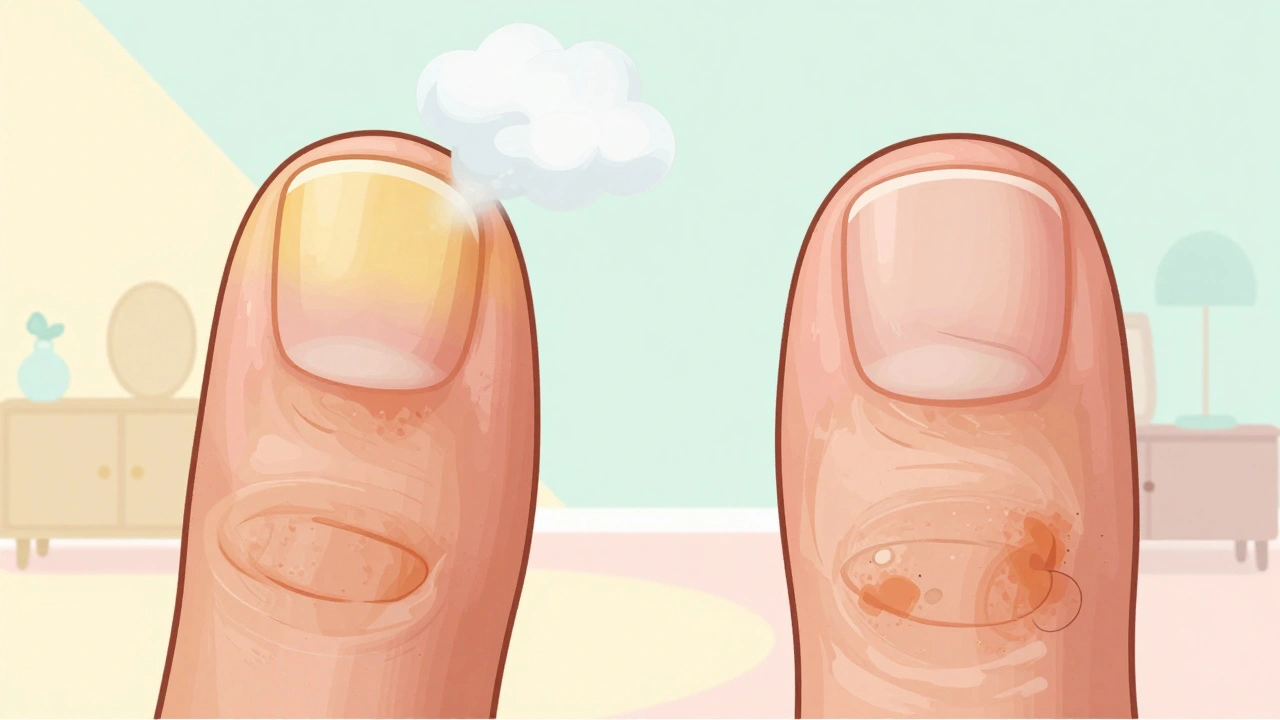
Nail Disorders: How to Tell Fungal Infections Apart from Psoriatic Changes
Learn how to tell the difference between fungal nail infections and nail psoriasis-two conditions that look alike but need completely different treatments. Discover key signs, accurate tests, and what actually works.