
Osteoporosis Treatment: What Works, What Doesn’t, and How to Stay Strong
When you hear osteoporosis treatment, a medical approach to strengthen fragile bones and prevent fractures. Also known as bone loss management, it’s not just about taking a pill—it’s about stopping fractures before they happen. Osteoporosis isn’t just an old person’s problem. One in three women and one in five men over 50 will break a bone because their bones became too weak. And most of them didn’t know their bones were at risk until it was too late.
The real work of osteoporosis treatment, a medical approach to strengthen fragile bones and prevent fractures. Also known as bone loss management, it’s not just about taking a pill—it’s about stopping fractures before they happen. starts with two things: calcium supplements, mineral intake critical for maintaining bone structure and vitamin D, the hormone-like nutrient that helps your body absorb calcium. You can’t build strong bones without them. But here’s the catch: taking extra calcium without enough vitamin D is like buying bricks without mortar. And if you’re not getting sunlight or eating fortified foods, your body can’t make enough vitamin D on its own. That’s why doctors often test your levels before starting any treatment.
Then there are the meds. bisphosphonates, a class of drugs that slow bone breakdown and reduce fracture risk are the most common—pills like alendronate or risedronate. They work. Studies show they cut spine fracture risk by up to 50%. But they’re not for everyone. Some people can’t swallow them, or they get stomach upset. Others need shots or IV infusions instead. And while these drugs help, they’re not magic. They don’t replace movement. You still need to load your bones with weight-bearing activity—walking, lifting, even standing more. Sitting all day? That’s the opposite of treatment.
What you won’t find in most treatment plans? Miracle powders, unproven supplements, or ads promising to reverse osteoporosis overnight. Real progress comes from consistency: getting your numbers checked, taking meds as directed, moving daily, and making sure your diet isn’t falling short. The posts below show what actually works in real life—from how to track your bone health after starting a new drug, to why some people need different supplements after surgery, to how to avoid interactions that could weaken your bones even more. You’ll see what doctors really recommend, what patients report works, and what’s just noise. No fluff. Just what helps you stay standing.
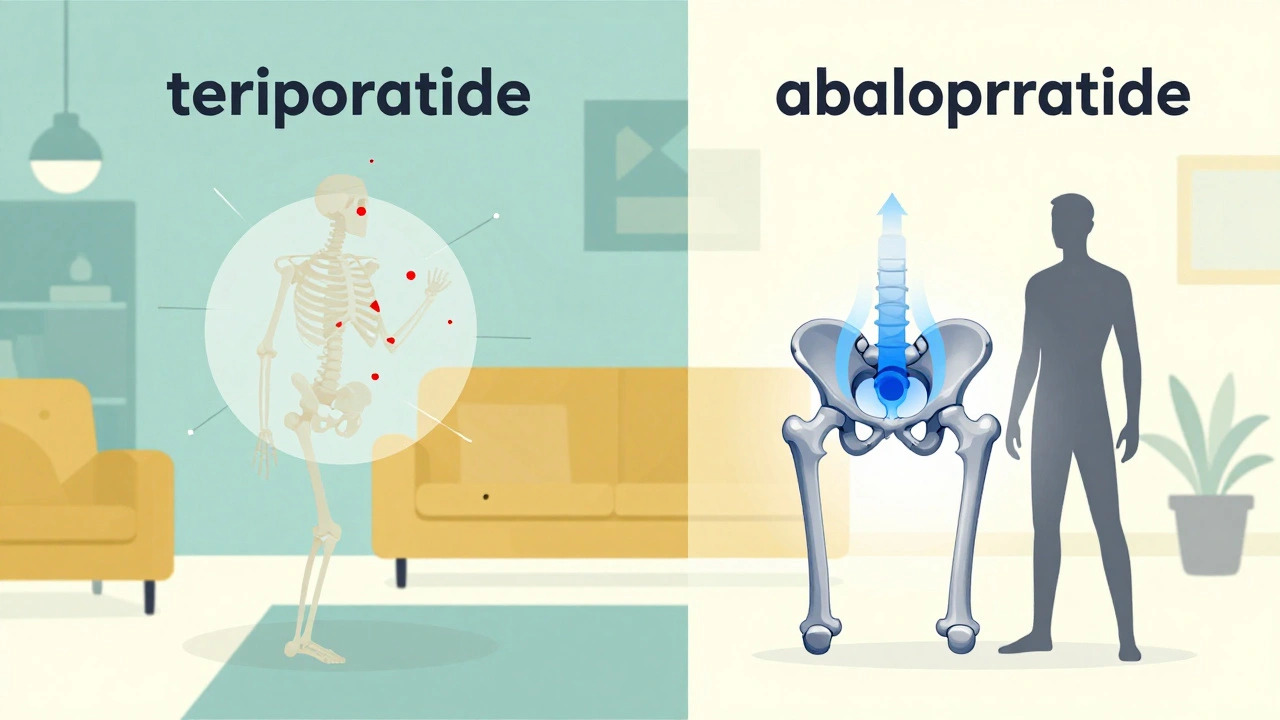
Teriparatide vs Abaloparatide for Osteoporosis: What You Need to Know
Teriparatide and abaloparatide are bone-building drugs for severe osteoporosis. Learn how they differ in effectiveness, safety, cost, and real-world use to make the best choice for your needs.