
US Biosimilar Market: What It Is, How It Works, and Why It Matters
When you hear US biosimilar market, a system that brings lower-cost versions of complex biologic drugs to American patients after patents expire. Also known as biologic generics, it’s not just another drug trend—it’s reshaping how millions access life-changing treatments for cancer, arthritis, and autoimmune diseases. Unlike regular generics that copy simple chemical pills, biosimilars are made from living cells and mimic intricate biologic medicines like Humira or Enbrel. They aren’t exact copies—no one can perfectly replicate a living molecule—but they’re close enough to work the same way, with the same safety and effectiveness approved by the FDA.
The biosimilar drugs, medications designed to be highly similar to brand-name biologics after patent protection ends. Also known as biologic generics, it are changing the game because biologics used to cost $10,000 to $20,000 a year. A single biosimilar can slash that price by 15% to 35%, and with more entering the market, prices keep dropping. This isn’t theoretical—patients with rheumatoid arthritis and Crohn’s disease are already switching and saving thousands. The generic drugs, lower-cost versions of simple chemical medications that have been used for decades. Also known as traditional generics, it you pick up at your local pharmacy are the foundation of this savings model, but biosimilars are the next big leap for complex conditions where no cheap options existed before.
Doctors in the U.S. are slowly warming up to biosimilars, not because they’re forced to, but because real-world data shows they work. A 2023 study tracking over 10,000 patients on biosimilar infliximab found no difference in flare-ups or side effects compared to the original drug. Still, confusion lingers. Some patients worry the different name or injector design means something changed. It doesn’t. The biologic therapies, medications made from living organisms to treat chronic diseases like cancer and autoimmune disorders. Also known as biologics, it you’re on—whether brand or biosimilar—still needs careful handling, storage, and monitoring. That’s why tracking your response, knowing how to inject safely, and understanding the supply chain matters just as much as the price tag.
What you’ll find below isn’t a sales pitch. It’s a collection of real, practical guides from patients and providers who’ve walked this path. You’ll see how biosimilars fit into the bigger picture of drug costs, why some people still hesitate to switch, how storage and labeling affect trust, and how the same supply chain that delivers cheap generics also moves these complex therapies across the country. No fluff. Just what you need to know to make smart choices about your treatment.
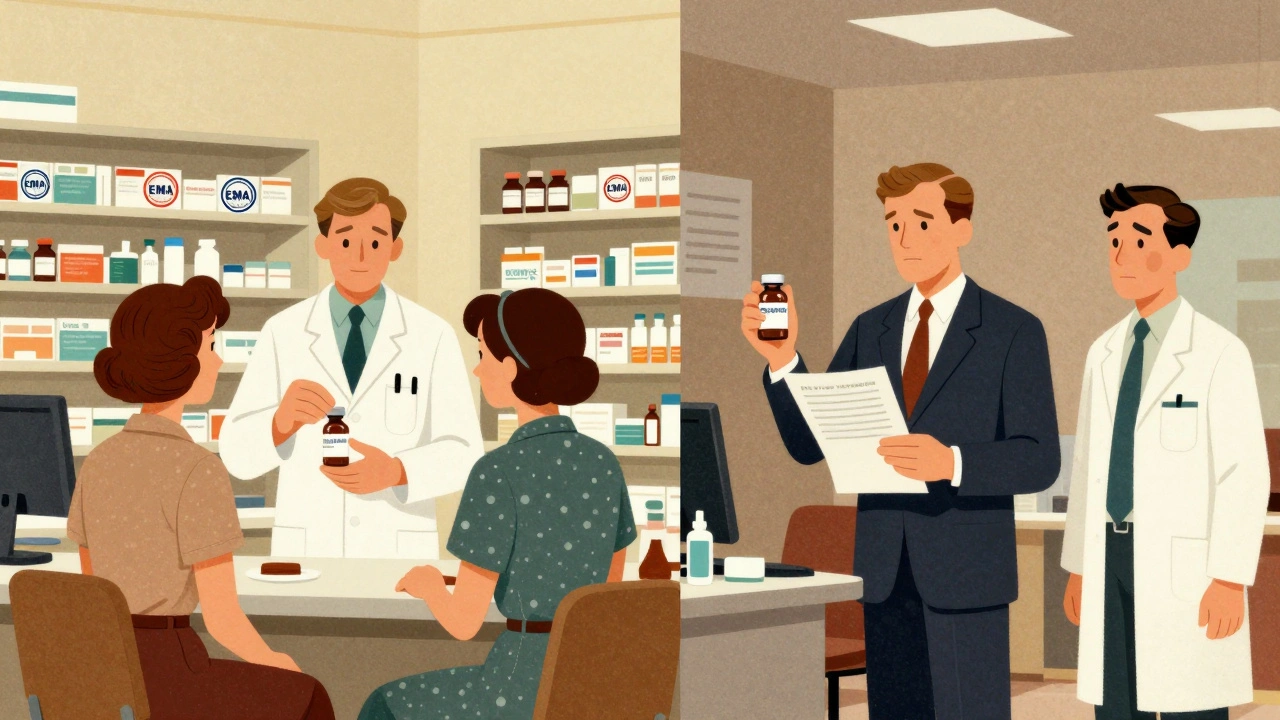
Global Biosimilar Markets: Europe vs United States - Adoption, Regulation, and Growth
Europe led the world in biosimilar adoption with a mature regulatory system, while the US lagged due to patent battles and strict rules. Now, FDA changes and new laws are accelerating US growth, setting up a global race for cost-effective biologic treatments.