
Vitamin Deficiency After Surgery
When you have surgery, your body doesn’t just heal the incision—it has to rebuild its entire nutrient system. vitamin deficiency after surgery, a frequent but underdiagnosed issue where the body can’t absorb or use key vitamins after surgical stress. Also known as post-operative nutrient depletion, it’s not just about eating less—it’s about your gut, your liver, and your metabolism all changing overnight. Many people assume they’ll bounce back with rest and painkillers, but without the right vitamins, healing slows, fatigue sticks around, and complications like infections or blood clots become more likely.
Two vitamins show up again and again in post-surgery cases: vitamin D, critical for bone repair, immune function, and muscle strength, and vitamin B12, essential for nerve recovery and red blood cell production. After gastric bypass, for example, up to 70% of patients develop B12 deficiency within a year. Even routine procedures like hip replacements can drop vitamin D levels because you’re not moving much, not getting sunlight, and your digestive system is temporarily shut down. The body doesn’t store enough to cover the extra demand. And here’s the catch: you won’t feel it until you’re already struggling—weak muscles, tingling hands, brain fog, or slow wound healing.
It’s not just about what you eat. Surgery changes how your body absorbs nutrients. If you had bowel surgery, your intestines can’t grab vitamins like they used to. If you’re on antibiotics after surgery, you kill off the gut bacteria that help make vitamin K and B vitamins. Diuretics? They flush out magnesium and potassium. Pain meds? They can mess with appetite and digestion. All of these are hidden reasons why your vitamins are dropping—even if you’re taking a multivitamin. That’s why doctors who focus on recovery don’t just hand you a pill and say "take this." They test your levels, track your symptoms, and adjust based on your procedure type and recovery pace.
You’re not alone in this. Many patients don’t realize their tiredness or numbness isn’t normal—it’s a vitamin problem. And the good news? It’s fixable. With the right tests, the right supplements, and the right timing, you can get your levels back up fast. Below, you’ll find real stories and science-backed advice from people who’ve been through it: how to spot the signs early, which tests actually matter, what supplements work (and which ones don’t), and how to talk to your doctor without sounding like you’re guessing. This isn’t about guessing what’s wrong. It’s about knowing what to ask for.
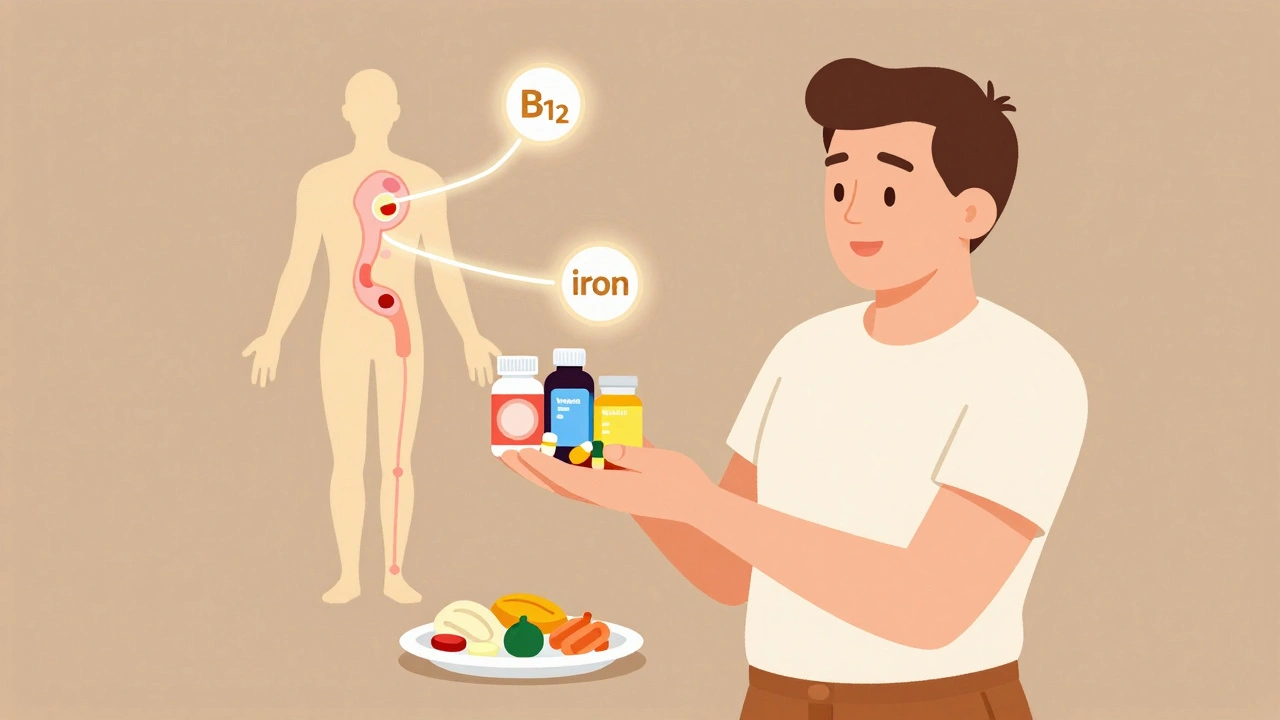
Bariatric Vitamins: Essential Supplements to Prevent Deficiencies After Weight-Loss Surgery
After bariatric surgery, your body can't absorb nutrients like before. Bariatric vitamins prevent life-threatening deficiencies in B12, iron, vitamin D, and calcium. Without them, you risk nerve damage, bone loss, and anemia.