
Medication Side Effect Resource Finder
Finding the right information depends on who you are and what you need. Select your profile below to get a personalized recommendation.
Recommended Resources
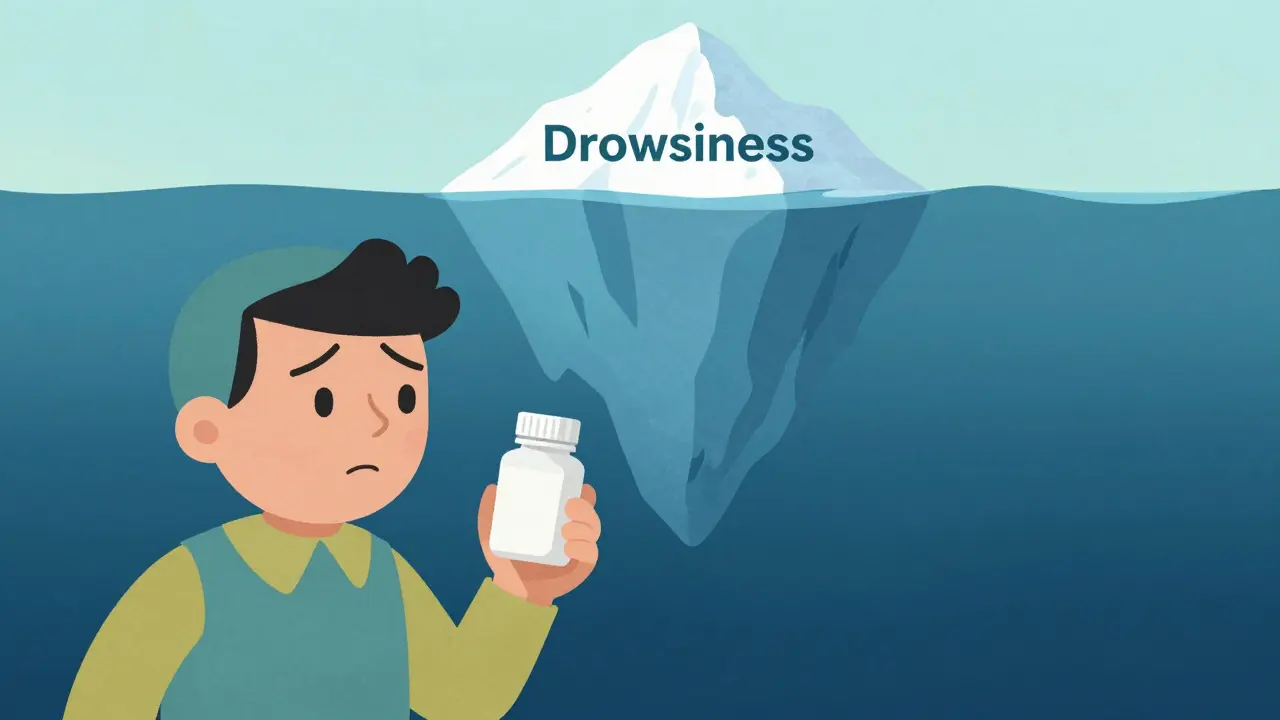
You take a pill. You feel weird. Is it the medication, or is it something else? This question haunts millions of people every day. The label on your bottle might list 'drowsiness' or 'nausea,' but that’s often just the tip of the iceberg. Real-world experiences can reveal rare or unexpected reactions that clinical trials missed. Finding accurate, detailed side effect information isn’t just about curiosity; it’s about safety. But where do you look when the internet is flooded with conflicting advice?
The good news is that authoritative, free resources exist. They are maintained by government agencies, medical libraries, and research institutions. However, navigating them requires knowing which tool fits your specific need. Are you a patient looking for plain language? A researcher hunting for statistical correlations? Or a clinician checking for drug interactions? Each group needs a different source. Let’s break down exactly where to find this data, how to interpret it, and what limitations you must keep in mind.
Key Takeaways
- DailyMed (FDA) is the official source for manufacturer labeling, providing the most authoritative 'on-label' side effects approved by regulators.
- MedlinePlus translates complex medical jargon into plain English, making it the best starting point for patients seeking understandable information.
- VigiAccess offers real-world global reporting data from the WHO, helping identify rare or long-term effects not seen in initial trials.
- OnSIDES uses advanced AI to extract over 3.6 million side effect pairs from labels, offering deeper insights than older databases like SIDER.
- SIDER 4.1 is outdated (data from 2015) and should be avoided for current medication queries despite its historical significance in research.
The Gold Standard: Official Drug Labels via DailyMed
When you need the definitive answer on what a drug manufacturer claims their product does, you go to the source. That source is DailyMed, a service provided by the National Library of Medicine (NLM). It serves as the primary repository for Structured Product Labeling (SPL) documents submitted to the Food and Drug Administration (FDA).
DailyMed contains over 140,000 SPL documents. These are not summaries written by third parties; they are the exact legal labels manufacturers submit. For prescription drugs, you need to navigate to section '6 ADVERSE REACTIONS'. For over-the-counter medications, look for the 'Warnings' section. This data is updated daily as new approvals occur and existing labels change.
| Resource | Data Source | Best For | Limitation |
|---|---|---|---|
| DailyMed / FDALabel | FDA-approved manufacturer labels | Authoritative, legal side effect lists | Complex language; lacks off-label data |
| MedlinePlus | NLM curated content | Patient-friendly explanations | Less detailed than raw labels |
| VigiAccess | WHO Global Individual Case Safety Reports | Rare, real-world adverse events | No frequency context; underreporting bias |
| OnSIDES | NLP-extracted from DailyMed labels | Research & comprehensive ADE mapping | Technical access required |
While DailyMed is the gold standard for accuracy, it has a steep learning curve. A 2023 study published in *JAMA Network Open* found that healthcare professionals spend an average of 3-5 minutes locating specific side effect information per drug. For the average person, reading a dense PDF filled with medical terminology can be overwhelming. This is why secondary sources like MedlinePlus exist.
Patient-Friendly Explanations: MedlinePlus
If DailyMed is the textbook, MedlinePlus is the helpful tutor. Maintained by the U.S. National Library of Medicine, MedlinePlus focuses on readability. Its drug information section averages a search time of just 1.5 minutes, with a 92% user success rate in finding needed information.
A 2023 survey of nearly 3,000 users showed that 87% found MedlinePlus side effect information significantly easier to understand than FDA labels, rating its clarity at 8.2 out of 10. It strips away the legalistic phrasing and presents risks in bullet points. For example, instead of listing 'gastrointestinal distress,' it might say 'upset stomach or diarrhea.'
However, simplicity comes with trade-offs. MedlinePlus provides a summarized view. If you are managing a complex condition with multiple interacting medications, you may need the granular detail found in the original FDA labels. Use MedlinePlus for your initial check, but verify critical concerns with the full label if necessary.
Real-World Data: VigiAccess and the WHO Database
Clinical trials last months or years and involve thousands of participants. But once a drug hits the market, millions of people take it. Rare side effects-those occurring in 1 in 10,000 or 1 in 100,000 people-often only appear after widespread use. This is where VigiAccess, operated by the Uppsala Monitoring Centre for the World Health Organization (WHO), becomes invaluable. It provides public access to VigiBase, the world's largest database of individual case safety reports.
As of January 2024, VigiBase contained over 35 million case reports. When you search for a drug and a symptom, VigiAccess tells you how many times that combination has been reported globally. This is powerful for signal detection. If you experience a unique reaction, you can see if others have reported it.
But there is a major catch: VigiAccess shows counts, not rates. Knowing that 287 cases of 'rash' were reported for Drug X is useless unless you know how many people took Drug X. Did 287 people get rashes out of 100 users (terrible risk)? Or out of 100 million users (negligible risk)? Without exposure data, these numbers can be misleading. Experts warn against interpreting these raw counts as probability. They indicate possibility, not likelihood.
Advanced Research Tools: OnSIDES vs. SIDER
For researchers, pharmacists, and those interested in deep data analysis, newer platforms offer more than just text labels. The landscape here has shifted dramatically in recent years.
Historically, SIDER (Side Effect Resource) was a go-to database developed by the European Molecular Biology Laboratory. Version 4.1, released in 2015, covered 1,430 drugs and 5,880 adverse reactions. However, the EMBL explicitly states on their website that development has stopped due to lack of funding. The data is from 2015. Using SIDER today for current medication questions is risky because it misses all drugs and side effects discovered in the last decade. Avoid it for practical health decisions.
The modern alternative is OnSIDES, part of the nSIDES platform launched in 2023. Using natural language processing (specifically a fine-tuned PubMedBERT model), OnSIDES extracts side effects directly from DailyMed labels. As of November 2023, it hosts over 3.6 million drug-adverse event pairs for 2,793 drug ingredients. This represents a massive increase in coverage compared to older tools. It also includes specialized subsets like OnSIDES-PED for pediatric-specific effects.
Another notable resource is the Offsides database, created by Columbia University Medical Center. It identifies 'off-label' side effects-reactions not listed on the official FDA label but supported by strong statistical evidence from adverse event reports. Offsides contains 438,801 such associations. Dr. Nicholas P. Tatonetti, who leads the lab behind Offsides, notes that while FDA labels list an average of 69 on-label events, Offsides identifies 329 high-confidence off-label events per drug. This highlights a significant gap between what is officially known and what is observed in practice.

How to Interpret What You Find
Finding the data is step one. Interpreting it correctly is step two. Here are three rules to follow:
- Correlation is not causation. Just because a side effect is reported alongside a drug doesn't mean the drug caused it. Patients often take multiple medications. VigiAccess and FAERS (FDA Adverse Event Reporting System) capture reports, not proof. Always discuss unusual symptoms with your doctor to rule out other causes.
- Check the date. Drug labels evolve. A side effect added in 2024 won't appear in a 2020 summary. Always ensure your source is updated. DailyMed updates daily. OnSIDES updates quarterly. Static databases like SIDER are obsolete.
- Context matters. A side effect listed as 'common' (occurring in >1% of users) is very different from 'rare' (<0.01%). Manufacturer labels usually categorize frequencies. If a source doesn't provide frequency, treat the information as anecdotal until verified.
Common Pitfalls to Avoid
In the rush to find answers, people often fall into traps that lead to misinformation.
- Relying on commercial apps with paywalls. Services like Physician's Desk Reference (PDR.Net) charge annual fees (around $50/year) and have faced criticism for potential industry bias. Free, government-backed sources like DailyMed and MedlinePlus are generally more transparent and unbiased.
- Ignoring drug interactions. Side effects aren't just about one drug. They often emerge from combinations. While some databases show interaction scores, none replace a pharmacist's review of your full regimen. Polypharmacy increases risk exponentially.
- Misreading 'adverse event' vs. 'side effect.' An adverse event is any bad outcome during treatment. A side effect implies the drug caused it. Databases like FAERS and VigiBase collect adverse events. Many are unrelated to the drug. Don't panic over a report count without understanding this distinction.
Next Steps for Your Health
If you are concerned about a medication, start with MedlinePlus for a clear overview. If you need legal certainty or detailed frequency data, download the label from DailyMed. If you suspect a rare or unusual reaction, check VigiAccess to see if others have reported it, but remember to contextualize the numbers. For research purposes, explore OnSIDES for comprehensive data extraction.
Never stop taking prescribed medication based solely on online information. Share what you find with your healthcare provider. They can help you distinguish between normal adjustment periods, manageable side effects, and serious adverse reactions requiring intervention. Knowledge empowers you, but professional guidance ensures your safety.
Is DailyMed free to use?
Yes, DailyMed is completely free. It is a service of the National Library of Medicine and provides direct access to FDA-approved drug labeling information without any subscription fees or ads.
Why is SIDER no longer recommended for current drug research?
SIDER 4.1 data is from 2015. The developers at EMBL have ceased updates due to lack of funding. Since then, thousands of new drugs have been approved, and many new side effects have been identified. Using SIDER now means missing over a decade of critical safety data.
Can I trust side effect reports on VigiAccess?
VigiAccess provides valuable real-world signals, but it has limitations. It shows the number of reports, not the percentage of users affected. Underreporting is common, and not all reported events are caused by the drug. Use it to identify possibilities, not probabilities, and always consult a doctor.
What is the difference between on-label and off-label side effects?
On-label side effects are those identified during clinical trials and listed on the official FDA drug label. Off-label side effects are adverse reactions detected after the drug is on the market through post-marketing surveillance. Databases like Offsides specialize in identifying these off-label risks, which are often more numerous than on-label ones.
Which database is best for finding pediatric side effects?
The OnSIDES database includes a specialized subset called OnSIDES-PED, which focuses on pediatric-specific adverse events. This is particularly useful because children often react differently to medications than adults, and general databases may not highlight these nuances.
Lee Coates
June 15, 2026 AT 08:37Another day, another government database telling us what to think about our own bodies. DailyMed? MedlinePlus? Sounds like a cult recruitment drive for the medical industrial complex. They want you scared so you stay dependent on their 'experts' who can't even agree on whether coffee is good or bad. I stick to my gut and common sense, which tells me these pills are poison wrapped in white plastic. :P
Miranda River
June 15, 2026 AT 15:39oh look someone wrote a blog post about reading labels how revolutionary i never knew that doctors were liars until today really mind blown here the fact that you need an article to tell you to check the fda site is just pathetic honestly its not rocket science its basic literacy but sure lets act like weve all lost our minds since 2015 when sider died rest in peace outdated data
Brandon Brodsky
June 17, 2026 AT 12:39I suppose this is groundbreaking journalism. Truly. The revelation that one should consult official sources rather than Dr. Google is staggering. I’ve been using DailyMed since 2012 and I feel like I’ve unlocked a secret society of informed citizens. Thank you for this eye-opening piece on how to read text. My brain hurts from the effort.
Ganesh Honikol
June 17, 2026 AT 19:31It is truly commendable that you have taken the time to compile such a comprehensive guide for individuals seeking clarity regarding their pharmaceutical regimens. In my experience working within the healthcare sector in India, I have observed that patients often struggle with the dense terminology found in official documentation, and resources like MedlinePlus serve as an invaluable bridge between clinical data and patient understanding. It is essential that we empower ourselves with knowledge, for health is wealth, and ignorance is indeed bliss only until it becomes a crisis. Please continue to share such informative content, as it fosters a community of well-informed individuals who can make better decisions for their wellbeing. :)
Callie Skipper
June 17, 2026 AT 19:31i just looked up my blood pressure meds on vigiaccess and saw 400 reports of insomnia so now im convinced thats why ive been tired for years lol anyway thanks for the links i guess
AnneKatherine Stiekes
June 18, 2026 AT 21:05its interesting how different people react to this info some get angry some get confused but at the end of the day knowing your meds helps everyone stay safe i always try to keep things peaceful and just appreciate the effort put into organizing this stuff
Christina S.
June 20, 2026 AT 08:32You're doing great by looking into this! It's totally normal to feel overwhelmed by all the medical jargon out there. I remember when I first started researching my own medications, I felt like I was drowning in acronyms. But taking it one step at a time really helps. Try starting with MedlinePlus like the post suggests, and don't be afraid to ask your pharmacist questions too. You've got this!
Talilla Bailey
June 21, 2026 AT 10:27The dissemination of accurate pharmacological information is imperative for public health safety. It is encouraging to see resources such as OnSIDES being highlighted for their advanced natural language processing capabilities. However, it is crucial to maintain rigorous standards in interpreting these data sets to avoid misinformation. Let us proceed with diligence and ensure that all stakeholders are adequately informed.
Aditya Singh
June 21, 2026 AT 20:33This is a fantastic resource for understanding the pharmacovigilance landscape! The integration of NLP models like PubMedBERT in platforms such as OnSIDES represents a significant leap forward in extracting actionable insights from unstructured clinical data. In our region, we often face challenges with access to real-time adverse event reporting, so tools like VigiAccess are particularly valuable for benchmarking local trends against global signals. Keep exploring these technological advancements!
Brett Webster
June 22, 2026 AT 15:44Great summary. One thing to add: if you're dealing with polypharmacy (taking multiple drugs), checking for interactions is just as important as side effects. Drugbank.org is a solid free resource for that. Also, don't ignore the 'black box warnings' on DailyMed-those are the most serious risks flagged by the FDA. Stay safe out there.