
Acid Reflux Medication Strategy Checker
Your Current Regimen
Select your regimen above and click Analyze to see if your current strategy aligns with clinical guidelines.
Have you ever walked into a pharmacy with two different prescriptions for heartburn, only to wonder if taking them together is actually helping? You are not alone. Millions of patients take H2 blockers and proton pump inhibitors (PPIs) at the same time. Doctors often prescribe this combination out of habit or fear that one drug isn't enough. But here is the hard truth: for most people, stacking these medications does more harm than good.
Combining an H2 blocker like famotidine (Pepcid) with a PPI like omeprazole (Prilosec) is a common practice in hospitals and clinics. However, recent data suggests this "double therapy" approach is largely unnecessary. It costs billions in wasted healthcare spending and exposes patients to serious health risks without providing significant extra relief from acid reflux symptoms. Let's break down why this happens, what the science says about mixing these drugs, and when-if ever-it might make sense.
How These Acid Suppressors Actually Work
To understand why combining them is tricky, you first need to know how each drug fights stomach acid. They attack the problem from different angles, but they don't always play nice together.
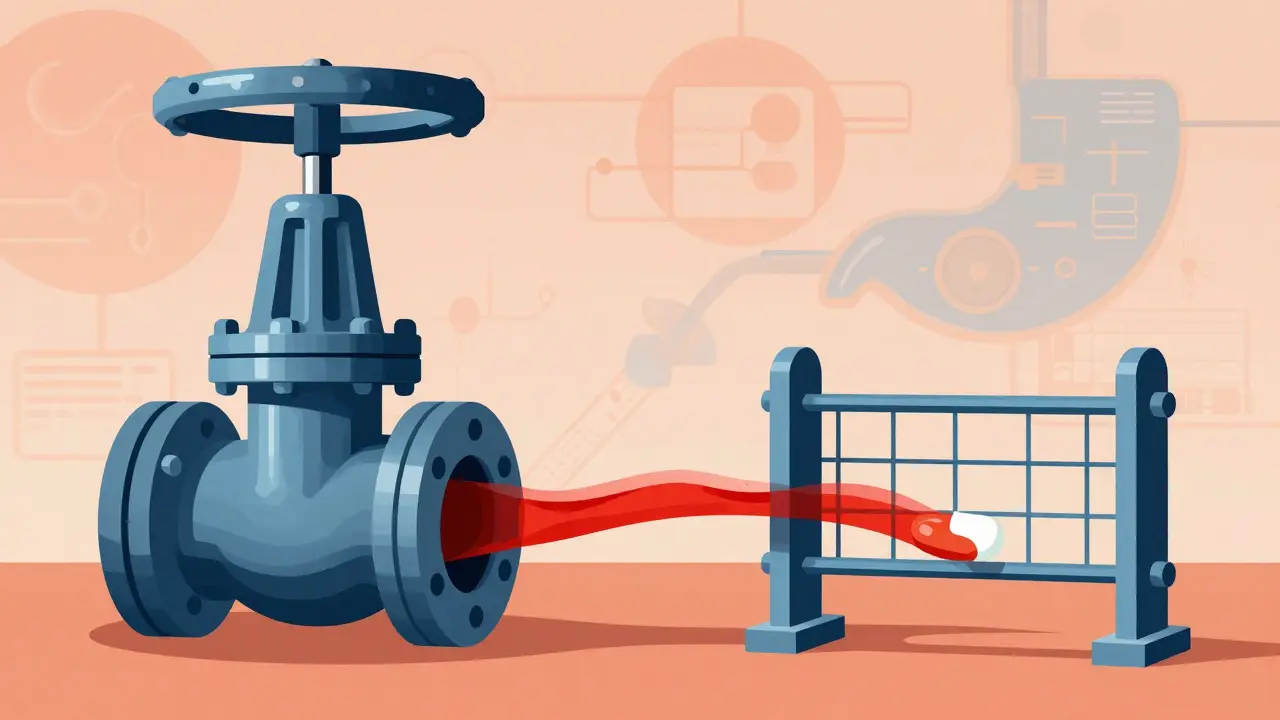
Proton Pump Inhibitors (PPIs) are the heavy hitters of acid suppression. Drugs like omeprazole, lansoprazole (Prevacid), and pantoprazole (Protonix) work by permanently shutting down the proton pumps in your stomach lining. Think of these pumps as the faucets that release acid. PPIs turn off the main valve. Because they block the final step of acid production, they are incredibly potent, reducing acid secretion by up to 98%. However, they aren't instant. It can take 2 to 5 days for a PPI to reach its full effect because it needs time for new cells to grow without active pumps.
H2 Blockers (also known as Histamine-2 Receptor Antagonists) work differently. Medications such as famotidine (Pepcid) and cimetidine (Tagamet) block histamine signals that tell your stomach to produce acid. They reduce acid output by about 50% to 70%. The big advantage here is speed. H2 blockers start working within an hour. Their downside? The effect wears off faster, usually lasting 6 to 12 hours.
The logic behind combining them seems sound on paper: use the PPI for all-day control and the H2 blocker for quick relief or nighttime coverage. But biology doesn't always follow simple logic. When a PPI suppresses acid so profoundly, there is very little histamine activity left for the H2 blocker to block. Essentially, the H2 blocker has nothing left to do.
The Myth of Better Relief
You might think that two drugs are better than one. In this case, the evidence says otherwise. A major review published in the Journal of Clinical Gastroenterology looked at patients with GERD (gastroesophageal reflux disease) who were already taking a PPI. When doctors added an H2 blocker like ranitidine to their regimen, the additional reduction in acid exposure was a marginal 5%. That tiny gain did not translate into meaningful symptom improvement for most patients during the day. There was a slight benefit for some people suffering from nocturnal acid breakthrough (nighttime heartburn), but even then, the results were modest.
The American College of Gastroenterology (ACG) released clinical guidelines in 2022 based on 12 trials involving nearly 3,000 patients. Their conclusion was clear: long-term combination therapy does not offer additional benefit for managing GERD. If your PPI isn't working, adding an H2 blocker rarely fixes the issue. Instead, clinicians should look at whether you are taking the PPI correctly (e.g., 30 minutes before breakfast) or if a higher dose is needed.
| Feature | PPIs (e.g., Omeprazole) | H2 Blockers (e.g., Famotidine) |
|---|---|---|
| Acid Reduction | 90-98% | 50-70% |
| Onset of Action | 2-5 days for max effect | Within 1 hour |
| Duration | 24 hours | 6-12 hours |
| Best For | Severe GERD, ulcers | Mild heartburn, occasional use |
Serious Side Effects of Dual Therapy
If combining these drugs doesn't help much, why is it dangerous? Because both classes of drugs carry significant risks, and taking them together amplifies those risks. Here is what the research shows.
Infections: Stomach acid acts as a barrier against bacteria. When you crush that barrier with strong acid suppression, bad bugs get through. A landmark study in JAMA Internal Medicine analyzed nearly 80,000 ICU patients. It found that PPI use was associated with a 30% higher risk of hospital-acquired pneumonia and a 32% higher risk of Clostridium difficile infection compared to using H2 blockers alone. Adding an H2 blocker to a PPI pushes acid levels even lower, potentially increasing this risk further.
Kidney Damage: Your kidneys are sensitive to medication changes. A 2021 study in BMC Nephrology followed over 3,600 patients with chronic kidney disease. Those taking PPIs had a 28% higher risk of progressing to end-stage kidney disease compared to those on H2 blockers. While H2 blockers are generally safer for kidneys, the cumulative burden of multiple acid-suppressing drugs can still strain renal function over time.
Nutrient Deficiencies: Low stomach acid interferes with the absorption of vital nutrients. Long-term use of PPIs is linked to lower levels of magnesium, calcium, and vitamin B12. Magnesium deficiency can cause muscle cramps and heart rhythm issues. Calcium malabsorption increases the risk of bone fractures, especially in older adults. The FDA issued warnings about these risks back in 2011 and 2014, yet many patients remain unaware until symptoms appear.
Drug Interactions: Not all H2 blockers are created equal. Older ones like cimetidine inhibit liver enzymes (cytochrome P450) that break down other medications. This can cause dangerous spikes in blood levels of drugs like warfarin, phenytoin, or certain antidepressants. Newer H2 blockers like famotidine have fewer interactions, but the potential for confusion remains high when patients juggle multiple prescriptions.
When Is Combination Therapy Actually Appropriate?
Is there any scenario where taking both makes sense? Yes, but it is rare and requires strict criteria. The ACG guidelines state that combination therapy may be appropriate only as a short-term option for patients with documented nocturnal acid breakthrough. This means you are already on a twice-daily PPI, and 24-hour pH monitoring proves your stomach acid drops below safe levels between midnight and 6 AM.
Even in these cases, the strategy is temporary. Doctors typically add the H2 blocker for 4 to 8 weeks. If symptoms don't improve, the H2 blocker should be stopped. The Department of Veterans Affairs recommends a "PPI time-out" every 90 days to assess if you still need the medication at all. Many patients find they can taper off entirely or switch to a lower dose once lifestyle changes take effect.

What You Should Do Instead
If you are currently taking both an H2 blocker and a PPI, don't stop cold turkey. Acid rebound can make symptoms worse. Instead, talk to your doctor about a deprescribing plan. Here are some practical steps to manage acid reflux without relying on double therapy:
- Optimize PPI Timing: Take your PPI 30 to 60 minutes before your largest meal. This ensures the drug is active when the proton pumps are most active.
- Use H2 Blockers Sparingly: Keep famotidine on hand for occasional breakthrough symptoms, but limit use to a few times a week to avoid tolerance buildup.
- Address Lifestyle Triggers: Elevate the head of your bed, avoid eating within 3 hours of bedtime, and identify food triggers like caffeine, alcohol, or spicy foods.
- Consider Alternatives: For mild symptoms, antacids like Tums or Gaviscon provide immediate, short-term relief without affecting long-term acid physiology.
Remember, the goal is not just to suppress acid, but to heal the esophagus and prevent complications. Using the lowest effective dose of medication is key. If you have been on dual therapy for years, ask your doctor for a trial period off the H2 blocker. You might be surprised by how well you feel.
The Bottom Line
Taking H2 blockers with PPIs is a widespread habit that lacks strong scientific support. For the vast majority of patients, it adds cost, complexity, and risk without delivering meaningful benefits. Save the H2 blocker for occasional rescue use, rely on your PPI for daily control, and focus on lifestyle changes to address the root causes of your reflux. Your stomach-and your wallet-will thank you.
Can I take Pepcid and Prilosec at the same time?
Technically yes, but it is rarely recommended. Studies show that adding famotidine (Pepcid) to omeprazole (Prilosec) provides minimal additional acid suppression. It may be useful short-term for severe nighttime heartburn if confirmed by testing, but long-term use increases the risk of infections and nutrient deficiencies without significant benefit.
Which is stronger: H2 blockers or PPIs?
PPIs are significantly stronger. They reduce stomach acid by 90-98%, while H2 blockers reduce it by 50-70%. PPIs are the gold standard for treating severe GERD and ulcers, whereas H2 blockers are better suited for mild, intermittent heartburn.
Does taking both increase the risk of kidney damage?
Yes, particularly due to the PPI component. Research indicates that long-term PPI use is associated with a higher risk of chronic kidney disease progression. While H2 blockers are generally safer for kidneys, the cumulative effect of prolonged acid suppression can still pose risks, especially for those with existing renal issues.
Why do doctors still prescribe both medications?
Often, it is due to habit or patient pressure for immediate relief. Some physicians believe the complementary mechanisms provide better coverage, despite limited evidence. Additionally, in hospital settings, protocols may automatically include both for stress ulcer prophylaxis, though guidelines are shifting away from this practice.
How do I safely stop taking my acid reducers?
Never stop abruptly. Taper slowly under medical supervision. Start by reducing the frequency of your PPI (e.g., every other day) and replace it with an H2 blocker or antacid as needed. This helps minimize acid rebound, which can cause severe temporary heartburn. Lifestyle changes like weight loss and dietary adjustments are crucial during this transition.